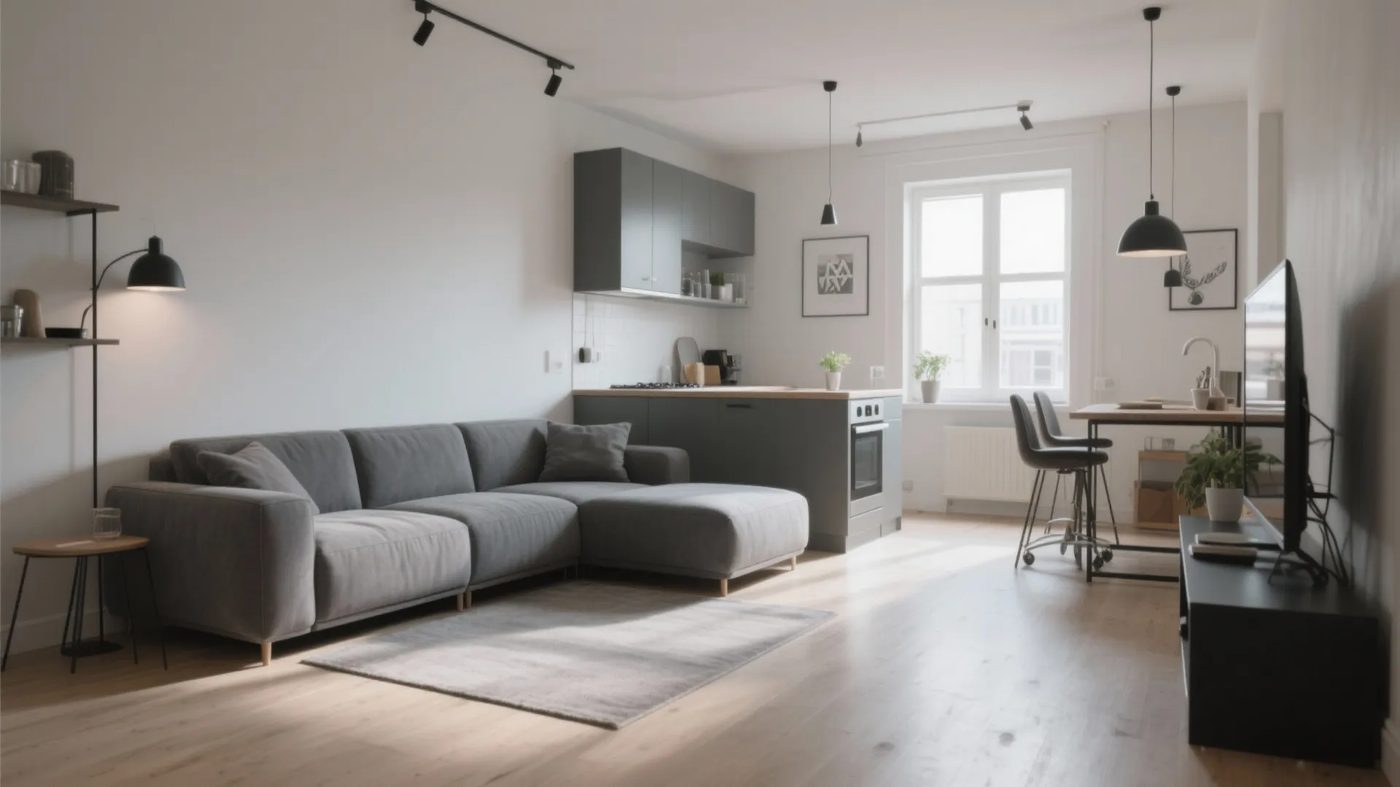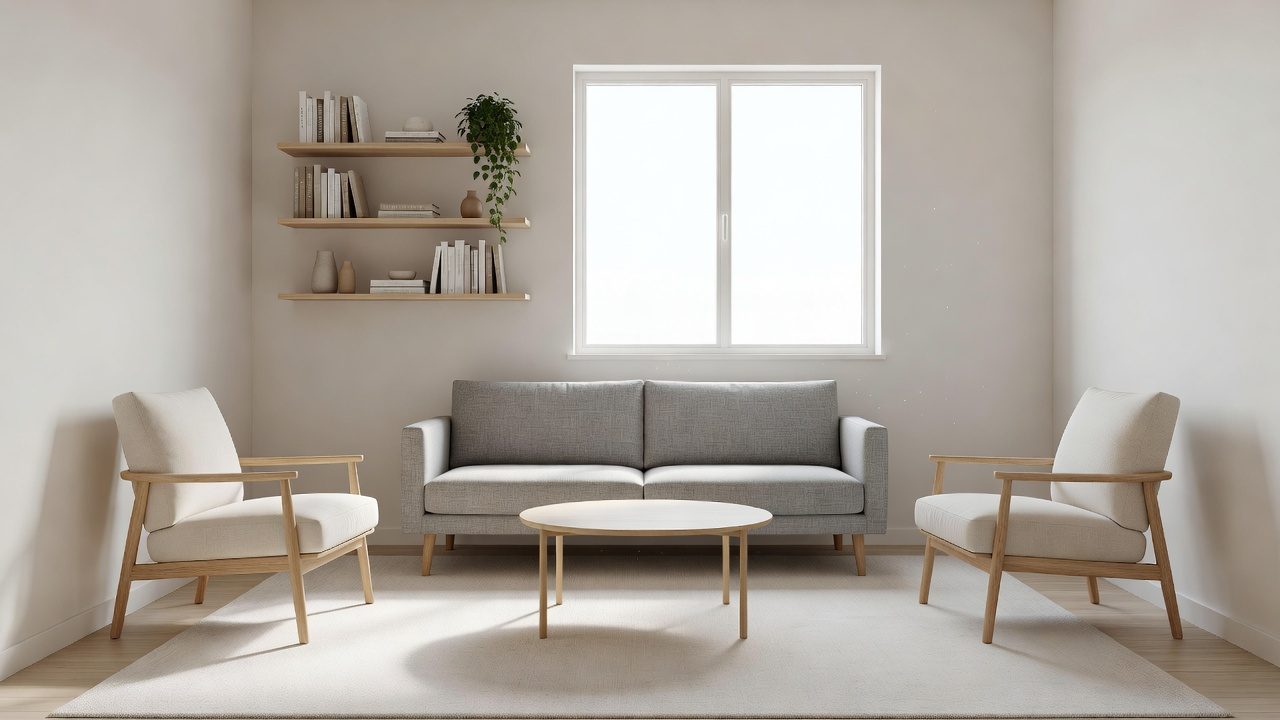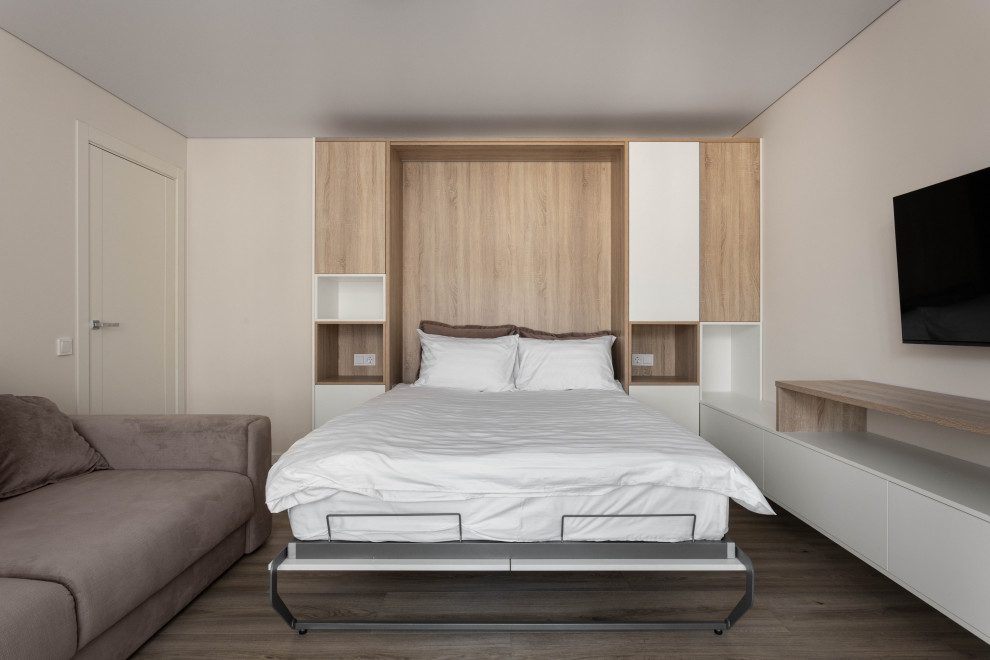
When Dana moved into her 420-square-foot studio in Brooklyn, the apartment was one white box with a kitchen along one wall. Within a month she had a problem she could not name: she was eating dinner in bed, answering work emails from the couch, and falling asleep to the glow of her laptop. Every part of her life was happening in the same ten feet, and her brain had stopped distinguishing rest from work.
The fix was not more space. It was zones — visual and physical cues that tell your brain "this corner is for sleep, that corner is for work." A studio with clear zones feels twice as large as the same square footage without them, because each activity gets its own place to happen.
Start With the Bed
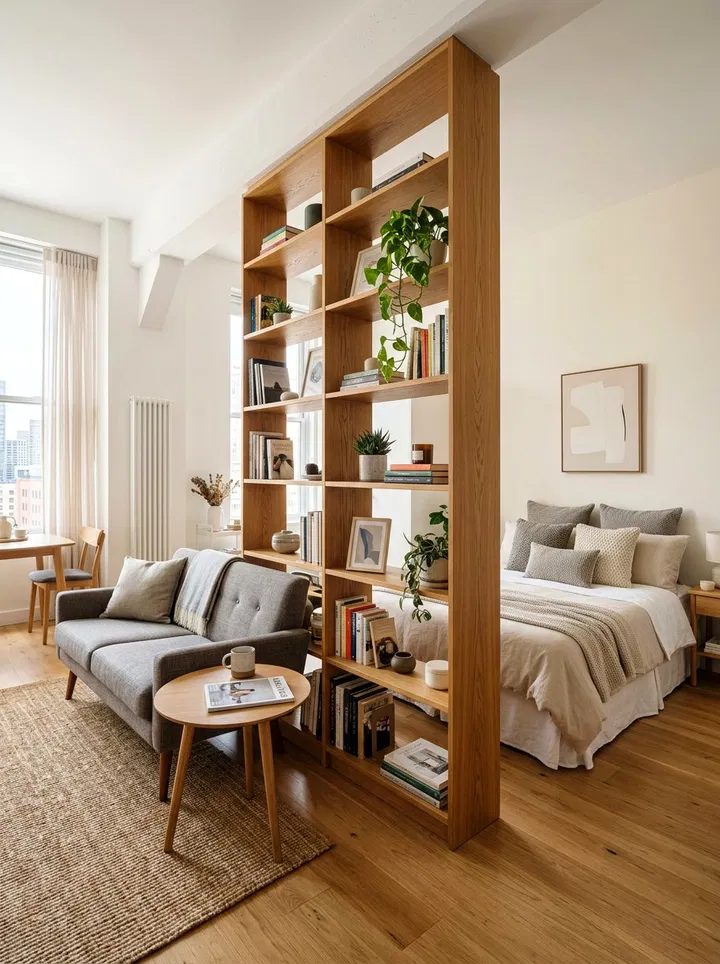
The sleeping zone is the most important one to define, because bad sleep poisons everything else. If you can only afford one divider, put it between the bed and the front door. Guests, delivery people, and your own evening self should not see the bed first thing. A folding screen, a tall bookshelf, or ceiling curtains all work — pick based on how much light you can spare.
Eight Ways to Draw the Lines
1. A folding room divider. The fastest, most reversible option. Place it at an angle rather than straight across — angled dividers feel intentional instead of improvised.
2. A bookshelf as a wall. A low, open-backed shelf perpendicular to the wall divides without darkening. Keep the top surface styled, not cluttered, or it reads as a barrier instead of furniture.
3. Ceiling curtains. The closest thing to a real wall. Close them at night for genuine privacy; open them in the morning so the studio breathes.
4. Rugs as borders. Put a rug under the seating area and a different one (or none) under the bed. Your feet learn the zones before your eyes do.
5. An arc lamp over the sofa. Light is a zoning tool. One dramatic lamp over the living area and a small warm lamp by the bed creates two "rooms" after dark.
6. Paint or wallpaper one zone. Even renters can do this with removable wallpaper. A deep green wall behind the bed and white everywhere else separates sleep from everything without a single piece of furniture.
7. Back-to-back furniture. Float the sofa with its back to the bed, and add a narrow console table behind it. The sofa back becomes a wall, and the console gives the "living room" side a finished edge.
8. A change in lighting temperature. Cool white (4000K) over the desk for focus, warm (2700K) everywhere else for rest. Your circadian rhythm will thank you.
The Traffic Rule
Whatever you build, keep one clear path from the front door to the kitchen to the bathroom. Zones that force you to squeeze past the bed to reach the fridge will be resented within a week. Walk the path yourself before you commit to furniture placement.
Zoning Mistakes to Avoid
The most common error is over-dividing. Three dividers in 420 square feet turns a studio into a maze of fabric and regret. One strong division — usually around the bed — plus soft cues like rugs and light everywhere else is plenty. The second mistake is blocking the window. Natural light is a studio's most valuable asset; never put a solid divider between the window and the rest of the room. If the bed must go near the window, use sheers or an open shelf there. Third, do not zone with clutter. A "divider" made of stacked boxes is not a zone, it is a storage problem wearing a costume.
Frequently Asked Questions
Will dividers make my studio feel smaller? Only if they block light. Open-backed shelves, sheer curtains, and low furniture divide sightlines while letting light travel — the room keeps its brightness and gains structure.
What is the cheapest way to zone a studio? Rugs and lighting. A $90 rug and a repositioned floor lamp can define a living zone for under $120 total, with nothing to install.
How do I zone a studio I share with a partner? Give each person one defined territory — even a desk nook counts. Shared studios fail when every square foot is communal; a little claimed space prevents a lot of friction.
Can I do this as a renter? All eight methods are renter-friendly. The only one needing permission is ceiling-mounted tracks, and adhesive ceiling mounts exist for most track systems.
Three weeks after zoning her studio, Dana told me she had started sleeping through the night again. Same 420 square feet. Different apartment.
Our Top Picks
Wovengrain Freestanding Room Divider
A three-panel woven divider, 71 inches tall, typically $70 to $90. It screens the bed from the front door without blocking light, and folds flat when you want the room open.
- Lets light through while blocking sightlines
- Folds to four inches for storage
- Lightweight — anchor it if you have a curious cat
Halo Arc Floor Lamp
A 78-inch arc lamp with a marble-look base, usually around $110. Draping light over the sofa literally draws a circle that reads as 'living room'.
- Defines a zone with light alone
- Heavy base stays put on carpet
- The arc needs two feet of clearance behind the sofa
Kallax-Style Cube Shelf Divider
A 4x2 cube shelf unit, typically $80 to $120, that stands perpendicular to the wall as a see-through divider. Storage on both sides, sightlines preserved.
- Storage and division in one footprint
- Open back keeps the room feeling airy
- Needs wall anchoring to be tip-safe
Linenweave Ceiling Curtain Track
A flexible ceiling-mounted curtain track, usually $30 to $45. Hang curtains to close off the sleeping area at night and slide them open by day.
- True privacy when closed
- Track bends around corners
- Ceiling mounting needs landlord approval or adhesive mounts
Terra Jute Round Area Rug
A 6-foot round jute rug, typically $90 to $130. A rug under the coffee table is the oldest zoning trick there is — it tells your brain where the living room ends.
- Instant visual boundary, zero installation
- Natural texture hides wear well
- Jute sheds fibers for the first weeks