When Priya moved into her one-bedroom last spring, the living room measured exactly 10 by 12 feet, and she treated it like a puzzle she was losing. She pushed the sofa flat against the longest wall, wedged a coffee table in front, and lined a bookshelf along the last free wall. On paper, everything fit. In person, it felt like a hallway with a couch — she shuffled sideways past the coffee table every time someone sat down.
Her mistake is one most of us make: assuming every piece of furniture should touch a wall. Wall-hugging layouts waste the center of the room and trap your traffic paths. The nine moves below borrow inches from where you don't need them, so a 10x12 room feels like it breathes.
1. Float the Sofa Off the Wall
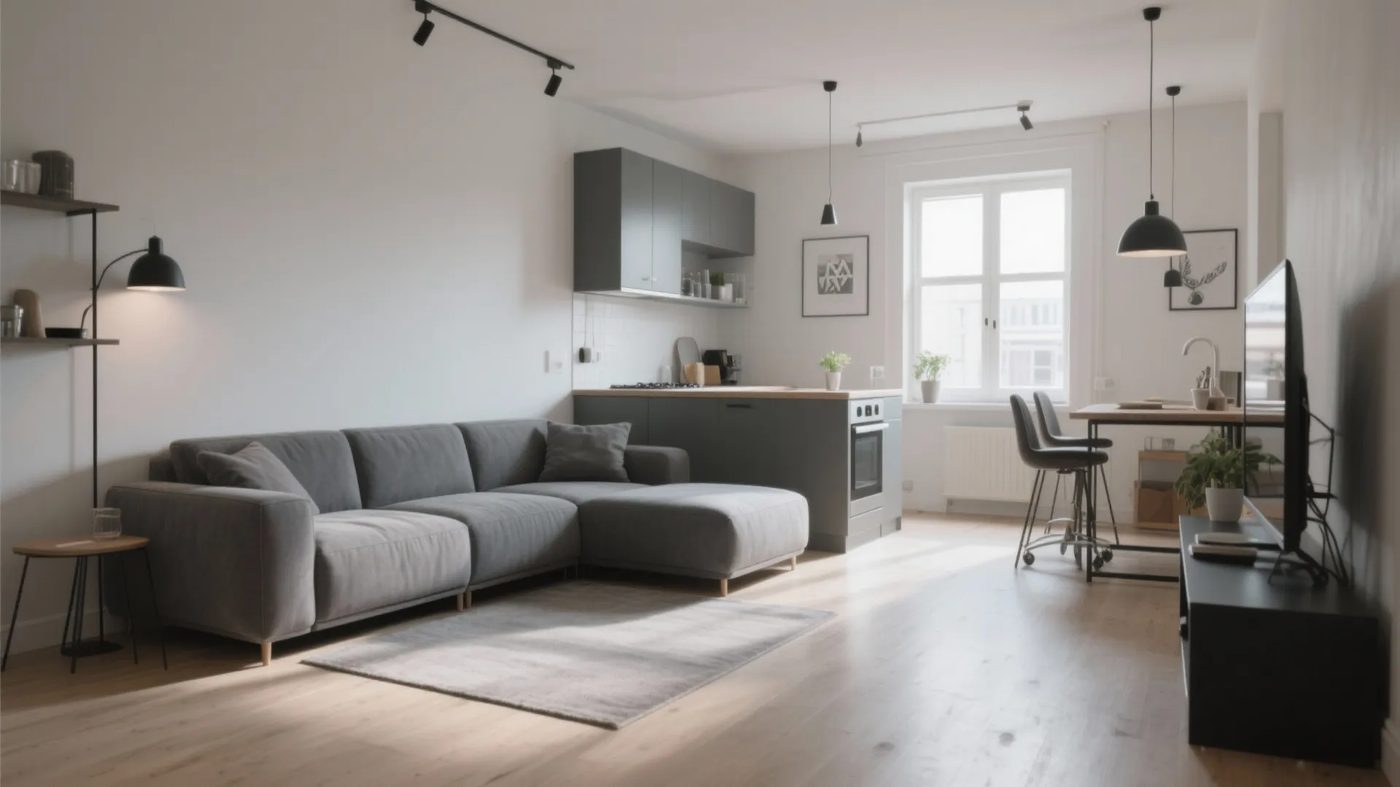
Pull the sofa six to eight inches off the wall. That sliver reads as depth behind the seating, and it leaves room for a floor lamp or a narrow console if you want one. Center the sofa on the 12-foot wall, then set the coffee table 14 to 18 inches out from it.
2. Give Traffic a 30-Inch Highway
Every small living room has one main walking path — usually from the door toward the kitchen or hallway. Protect it with 30 to 36 inches of clear width, measured with a tape measure rather than your eyes. If two people can't pass without turning sideways, something is still in the way. The fix is often small:
- Shift the sofa two inches one way and the chair two inches the other
- Swap a square coffee table for a narrower rectangular one
- Angle a chair slightly so its corner stops poking into the path
3. Angle One Chair on Purpose
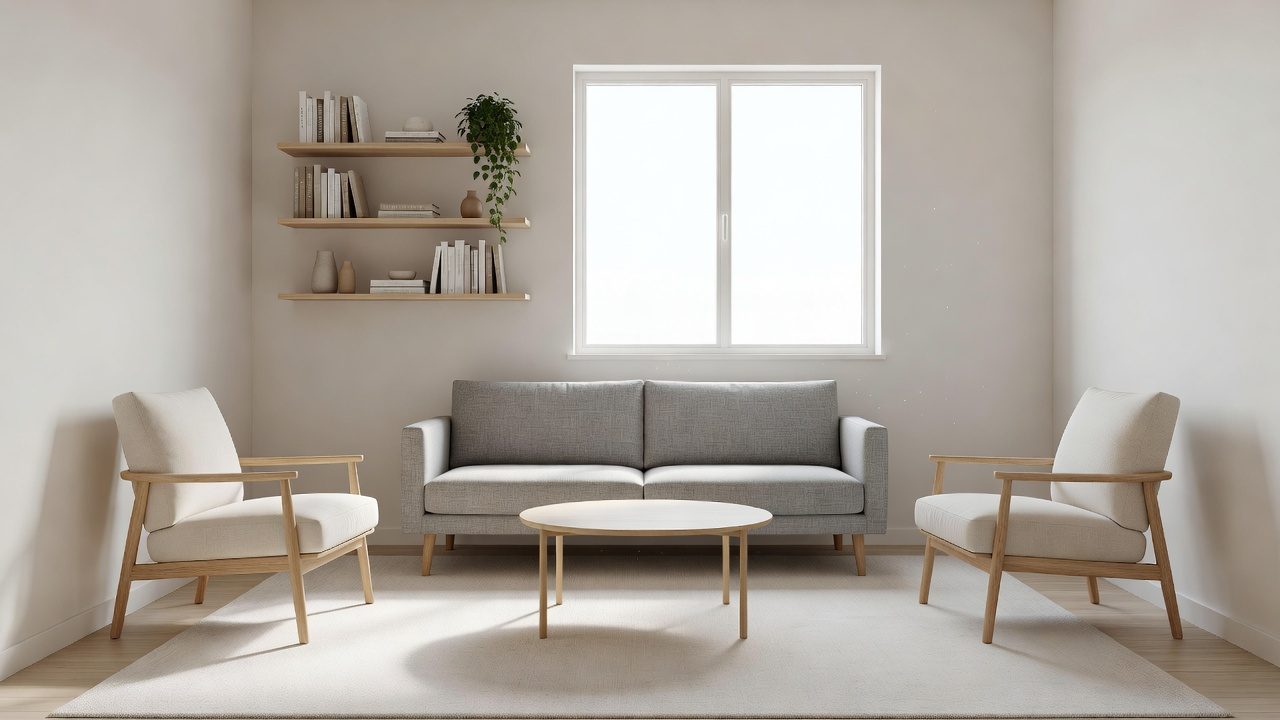
Angle one chair 30 to 45 degrees toward the sofa to break up the boxy feel of a room that is itself a box. Keep its front legs near the rug edge and leave about 12 inches to the nearest piece so nobody's knees collide.
4. Point Everything at a Real Focal Point
Left to habit, every seat aims at the TV like a theater. Choose the room's real focus instead — a window, a favorite piece of art, a reading corner — and arrange the largest pieces around it. Let the TV sit off to the side or above a slim console. The room reads as a living room again, not a waiting room for screen time.
5. Use One Rug to Anchor the Zone
A 5x8 or 6x9 rug suits most 10x12 seating groups, with the front legs of the sofa and chairs resting on it. In open plans, the rug does the work of a wall, showing where the living room starts and ends. Skip a tiny decorative rug floating in the middle — it visually shrinks the floor around it.
6. Keep the TV Low and Off-Center
Don't banish the TV, but don't let it run the room. A slim media console about 14 to 16 inches deep keeps the footprint shallow, and placing the TV slightly off the main axis stops it from dictating every seat. A wall mount with a floating shelf saves even more floor space.
7. Go Vertical When the Floor Is Gone
Small rooms run out of floor long before they run out of wall. Tall, narrow bookshelves draw the eye upward and store more per square foot than low cabinets, and floating shelves above the sofa hold books without touching the floor. Hang curtain rods six to eight inches above the frame with panels running to the floor, and the ceiling reads taller.
8. Give Dead Corners a Job
Unused corners are square footage you pay rent on. A reading corner needs only a chair, a lamp, and a small side table — about a 3-by-3-foot footprint. When every corner has a job, the room feels designed at exactly this size.
9. Edit Before You Add
The highest-impact move costs nothing: remove one piece. In a 10x12 room, three seating pieces plus a coffee table is plenty. The unused ottoman, the fourth chair, the plant stand blocking the window — each one removed gives the rest room to breathe. Try one fewer piece for a week; if nobody misses it, you gained the spaciousness you were shopping for.
Frequently Asked Questions
How far should furniture sit from the wall in a small living room?
Six to eight inches is the sweet spot for a sofa — enough breathing room without wasting floor space. Keep chairs and side tables close to the pieces they serve: about 12 inches from sofa arm to chair feels comfortable.
What size rug works for a 10x12 living room?
A 5x8 rug fits most setups; a 6x9 suits larger groups. Keep the front legs of all main seating on the rug — anything smaller than 5x8 looks like an island in the middle of the floor.
How much space do I need for a walkway behind the sofa?
Aim for 30 to 36 inches on a main walkway; a tighter pass-through can manage with 24. Anything less feels like squeezing. If the room can't spare a full walkway, float the sofa with a small gap — the goal is visual depth, not a second hallway.
Can a sectional work in a small living room?
A compact sectional under 90 inches wide can work when it replaces a sofa plus a chair. Skip wide chaises — one can swallow the traffic path you need.
Priya floated her sofa eight inches off the wall, angled one chair toward the window, and swapped her bulky coffee table for a narrower one. Same 120 square feet, same furniture count — but the walkway to the kitchen cleared 32 inches, and the corridor feeling was gone. Small rooms don't need less furniture; they need every piece in the right place.
Our Top Picks
Larkspur 72-Inch Apartment Sofa
A compact three-seater with slim arms and raised legs that keep the floor visible, so the sofa reads as lighter in a small room.
- Compact 72-inch width suits 10x12 rooms
- Raised legs make cleaning underneath easy
- Seat depth runs shallow for very tall people
Merritt Round Nesting Side Tables, Set of 2
Two round tables that tuck together as one and pull apart when guests need a landing spot for drinks.
- Nests to a single footprint when not needed
- Round edges soften tight traffic paths
- Small top surface won't hold much more than a mug and a book
Hartwell 44-Inch Slim Media Console
A narrow media console that holds a small TV without jutting far into the room or dominating the wall.
- Shallow depth keeps walkways clear
- Open shelves fit media boxes and baskets
- Not ideal for TVs over 50 inches
Dune Armless Accent Chair
A light, armless accent chair that can slide under a console or rotate to face conversation without blocking sightlines.
- Armless profile saves several inches per side
- Easy to reposition for movie night or guests
- No arm support for long lounging sessions