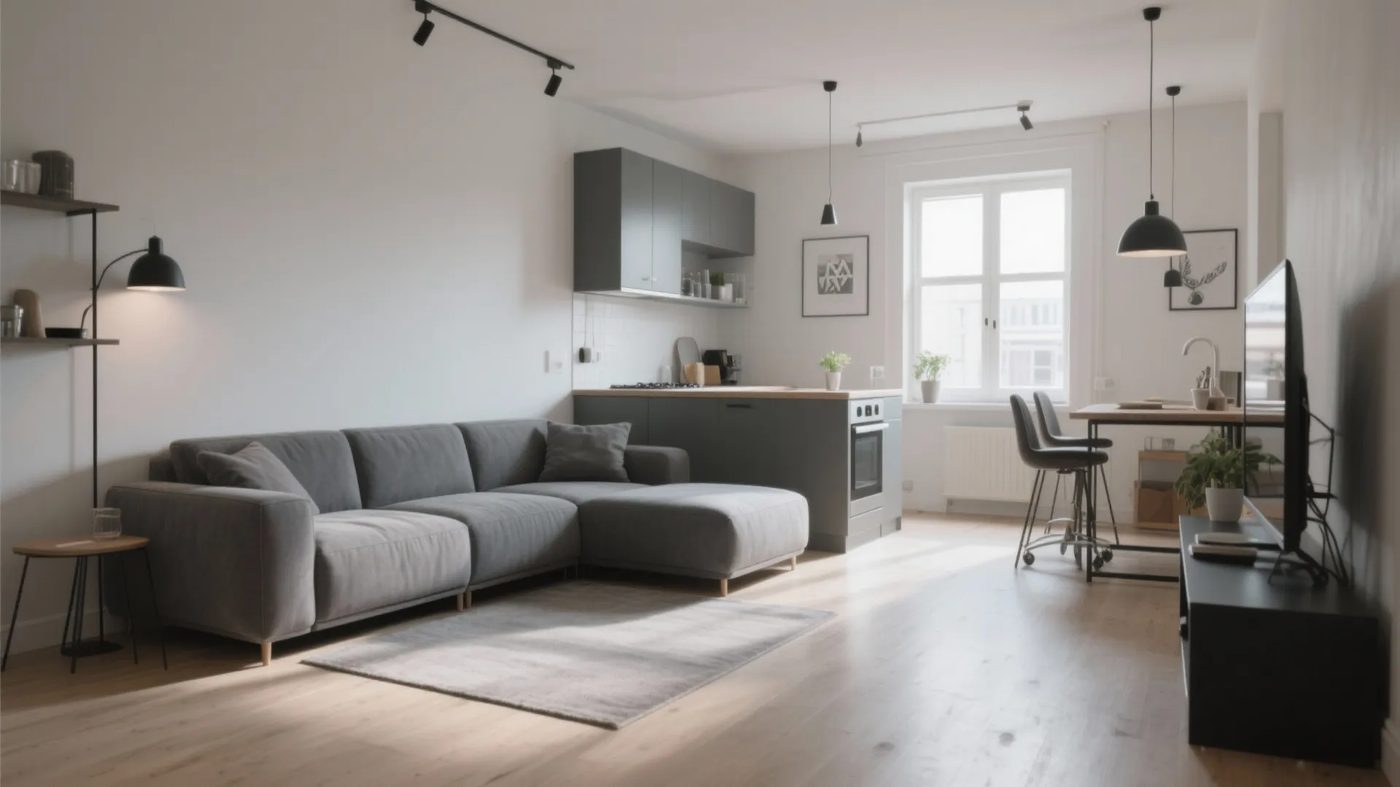
Priya, 29, rents a 450-square-foot studio in Chicago. Her full-size bed eats one entire corner of the only room she has, and by evening it is buried under a laptop, a laundry basket, and the book she swears she is still reading. She has stopped inviting friends over because there is nowhere to sit that is not, technically, the bed.
This is the exact problem wall beds were invented to solve. Folded up, they give you back the floor; folded down, they give you a real bed with a real mattress. For a studio where one room does everything, that trade is hard to beat. But the category has quirks that matter in a rental: mattress thickness limits, wall-anchoring rules, and the open footprint nobody puts in the listing photos.
Vertical vs Horizontal: Which Mount Suits Your Studio?
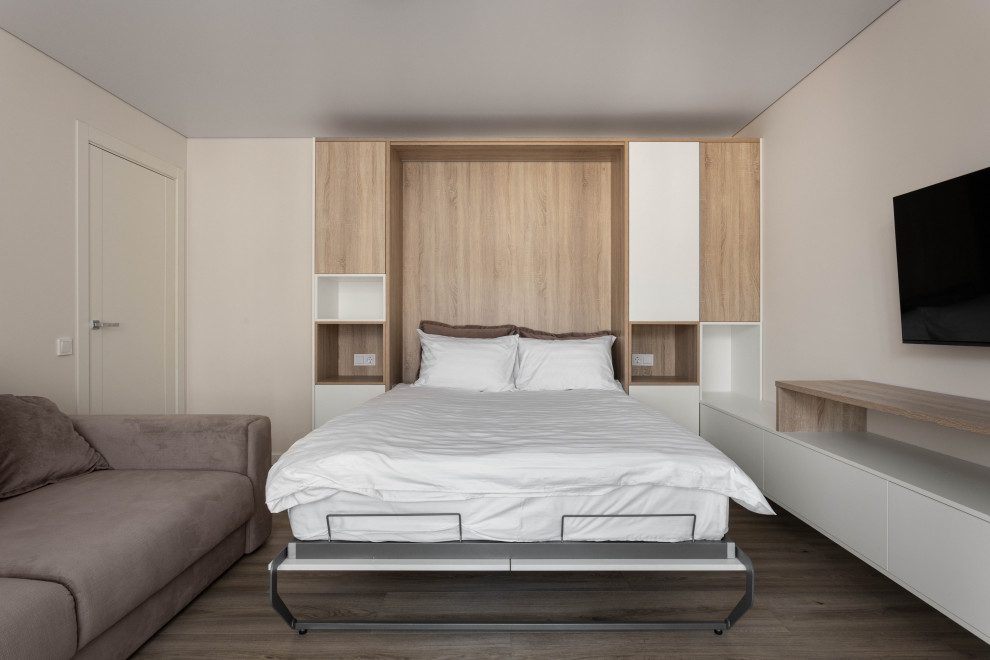
A vertical murphy bed folds up head-first, so the cabinet stands tall, usually 85 to 90 inches. That suits a long, uninterrupted wall, and the open bed projects less into the room. The downside is visual: against eight-foot ceilings, a closed vertical cabinet can read as a wall of furniture.
A horizontal mount folds sideways, so the cabinet runs wide but stays low, often around 50 inches tall. It can sit under a window or serve as a console surface when folded. The catch is width: it needs a clear stretch of wall as long as the bed, which many small studios do not have.
Cabinet Beds: The Fold-Out for Renters Who Cannot Drill
If your lease forbids wall anchors, look at folding cabinet beds. They look like a deep dresser, and the front face hinges down into a sleeping platform. The mattress folds inside in thirds, and nothing touches the wall. You get the freed floor space plus a piece of storage furniture.
The compromise is the mattress. It has to be thin and flexible to fold into the cabinet. Many people sleep on them nightly and sleep well, but side sleepers and anyone with a bad back should try one in person first.
Measuring: What "Full-Size Folded Footprint" Really Means
Listings love the folded footprint, but folded is not how you live with the bed. What matters is the open footprint: the floor the bed covers when down, plus room to stand beside it. Tape this out in your room before you buy:
- The open size (54 by 75 inches for a full, 60 by 80 for a queen) exactly where it would land.
- At least 24 inches of walkway along one side.
- What the open bed blocks: closet doors, the fridge door, the 2 a.m. bathroom path.
- Your doorways and hallway turns for delivery; cabinets ship flat but assemble into something wide.
The folded footprint is marketing. The open footprint is your life.
Mattress Thickness Limits and Sleeping Comfort
This causes the most returns. The mattress straps to the frame and must fold shut inside the cabinet, so most designs cap thickness between 8 and 12 inches. Plush pillow-tops usually will not clear the doors. Choose your mattress before you buy the frame, not after.
Comfort itself is not the issue people fear. A sturdy platform base with a supportive mid-firm mattress sleeps like a regular bed. The complaints come from cheap frames that sag within a year, so read owner reviews about sagging before trusting the price.
Installation and Safety Realities
A wall-mounted murphy bed holds a few hundred pounds and must be anchored into wall studs, not drywall. If your walls are concrete, plaster over brick, or metal studs, talk to an installer before you order.
A pro installer finds the studs, levels the cabinet, balances the mechanism, and confirms the bed locks in both positions. Expect a couple of hours and a fee in the low hundreds. Going DIY? Bring a real stud finder, a level, and a second person. In homes with kids or pets, confirm the bed locks positively upright; a wall bed a toddler can pull down is a hazard, not furniture.
The Daily Fold: Effort and Routine
A well-balanced wall bed takes about thirty seconds to open and close, and most owners fold it every morning. But be honest: if you will not fold it, a murphy bed becomes an expensive regular bed, and a cabinet bed becomes a dresser you never open.
Tie the fold into an existing habit, like making the bed before you start the coffee. Keep bedding minimal, because every pillow is something you move twice a day.
Frequently Asked Questions
Can I put a murphy bed in a rental apartment? It depends on your lease. Wall mounts require drilling into studs, which many leases forbid. If anchoring is off the table, a freestanding cabinet bed or rolling fold-out needs no drilling and is fully renter-safe.
How much floor space does an open murphy bed really take? An open full-size wall bed covers roughly 55 by 80 inches including the frame, plus walking clearance beside it. Tape out the open position, including the swing path of any doors it might block.
Can I use my existing mattress? Probably not unless it is relatively thin. Most wall beds accept 8 to 12 inches of mattress strapped to the frame. Thick pillow-tops usually will not fold shut safely.
Are murphy beds comfortable for everyday sleep? Yes, with the right base and mattress. A sturdy platform with a supportive mid-firm mattress sleeps like a regular bed. Skimp on the frame and it sags; skimp on the mattress and you feel the slats.
Priya taped out a horizontal mount on her longest wall and found it blocked her closet door. She switched to a freestanding cabinet bed, and now her studio holds a desk, a reading chair, and, in the evenings, an actual bed. Pick the bed your room, your lease, and your routine can honestly live with.
Our Top Picks
Mason & Grey Full Vertical Murphy Bed Cabinet
A classic wall-mounted cabinet that folds up to look like a wardrobe. The wood finish is warm and furniture-like, and the fold-down motion is smooth enough to do one-handed once it is balanced.
- Folds completely flat against the wall, freeing the whole floor zone
- Built-in side shelving keeps books and a lamp in place while folded
- Must be anchored into wall studs, so it is a non-starter for strict leases
Weston Sleep Full Cabinet Bed
A freestanding cabinet that looks like a dresser until you flip the front panel down into a full sleeping platform. No wall mounting required, and it assembles in an afternoon with basic tools.
- Zero drilling or wall anchors, ideal for renters
- Doubles as a real storage dresser while folded
- The fold-out mechanism needs a firm two-handed pull, not a one-hand flip
Harbor Lane Rolling Tri-Fold Sleeper
The simplest route to a disappearing bed: a sturdy tri-fold mattress frame on casters that unfolds into a full bed and rolls into a closet or behind a sofa. It is the least elegant option, but the most commitment-free.
- Rolls away in seconds with no installation of any kind
- Budget-friendly and easy to resell or move to your next place
- Thin mattress means this is better as a guest bed than nightly use
Nook & Nest Horizontal Queen Wall Bed
A premium horizontal-mount wall bed that opens sideways, so it works in studios where a tall vertical cabinet would tower over the room. The piston mechanism feels effortless, and the folded face takes a full art print.
- Lower folded height keeps small rooms feeling open
- Premium hardware that stays quiet and smooth for years
- Costs more than double most freestanding options before you add installation