David's phone was ruining his sleep, and he knew it. He'd plug it in across the room with the best intentions, then get up "just to check the time" and lose forty minutes to the news. When he finally bought a ten-dollar alarm clock at a drugstore, the ticking drove him insane by night three. "I went from one sleep problem to a different sleep problem," he laughed.
He's describing the two failure modes of ditching the phone: either you cave and bring the phone back, or you buy a clock so annoying it becomes its own problem. The sweet spot is a clock designed for actual sleep — dim or invisible at night, pleasant to wake to, and boring enough that it never tempts you. Here's how to choose one.
What Makes a Good Bedside Clock
Nighttime invisibility. The number-one feature is a display you can barely see in the dark. Auto-dimming LEDs, sound-activated displays, or warm analog faces all work. A clock that lights up the room defeats the purpose of banishing the phone.
A humane alarm. Jarring beeps spike cortisol. Look for crescendo alarms that start soft, nature sounds, or light-based waking. If you're a heavy sleeper, you need volume plus vibration — not just a prettier beep.
Simplicity. The best alarm clocks do one job. Every extra feature — Bluetooth speakers, USB hubs, weather stations — is another glowing thing on your nightstand and another menu to fumble through at 11 p.m.
Power backup. A clock that forgets the time in a power outage will betray you exactly once, and once is enough. Battery backup (even just for the timekeeping) is non-negotiable if you have morning commitments.
Matching the Clock to Your Sleep Style
Light sleepers do best with sunrise-simulation clocks or dim analog faces — anything without sudden noise or light. Heavy sleepers need the opposite: vibrating pucks, 90-decibel bells, or dual alarms. Couples with different schedules should look at vibrating alarms or light-based waking that won't rouse a partner. And if your main goal is simply keeping the phone out of the bedroom, prioritize a clock with a visible-but-dim display so you're never tempted to check the time on your phone.
Setting Yourself Up for Phone-Free Mornings
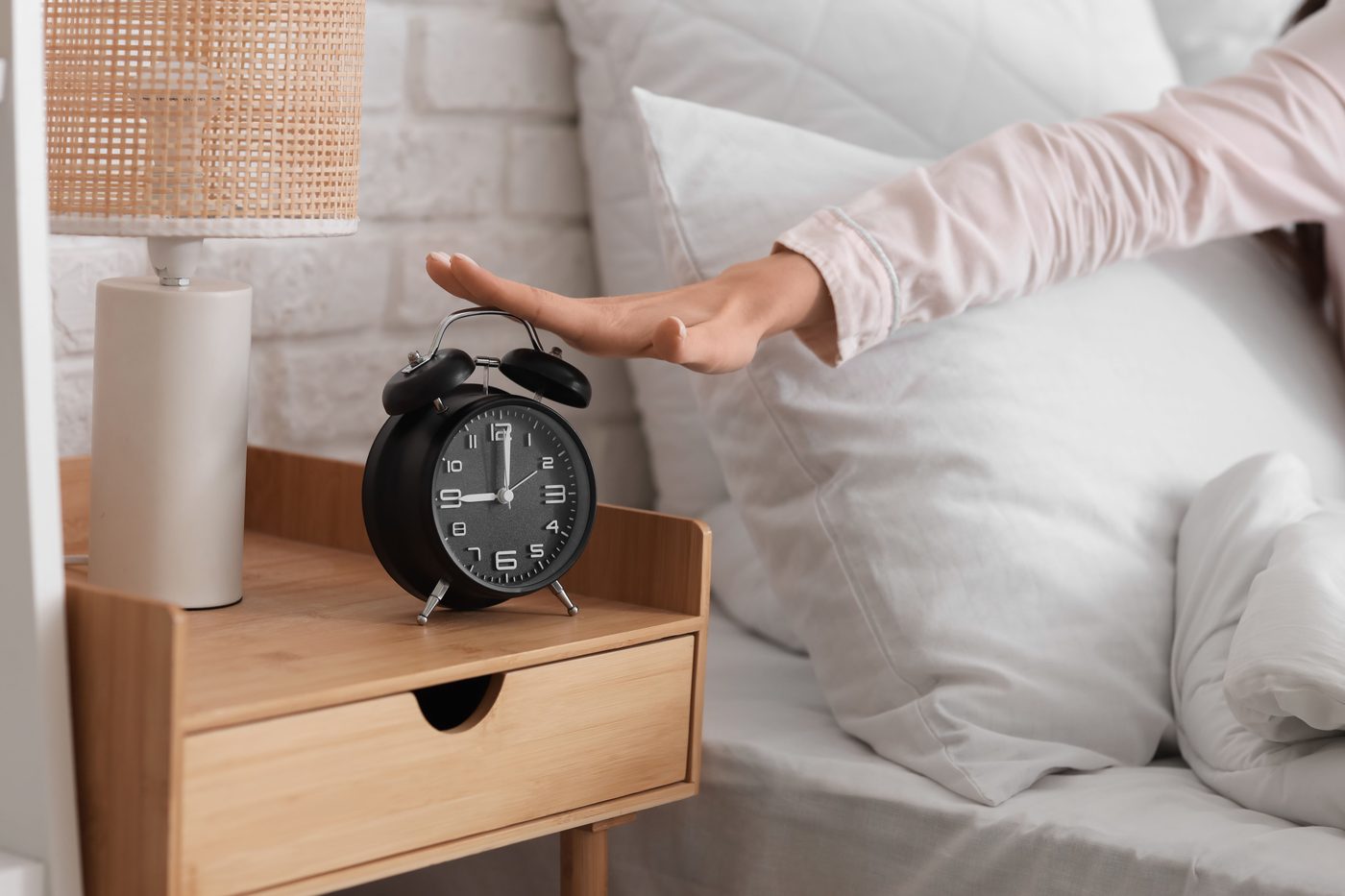
The clock is only half the system. Put it across the room so you have to stand up to silence it — that single step is what breaks the snooze loop. If you use your phone as a backup alarm, leave it charging in the kitchen, not the bedroom; a backup you can't reach still works as a safety net. And keep your wake time consistent on weekends within about an hour. A regular rhythm makes the alarm almost redundant within a couple of weeks, which is the real goal: waking up because your body expects to, with the clock as insurance.
Frequently Asked Questions
Is it really better to use an alarm clock instead of a phone? For most people, yes — not because of the alarm itself, but because the phone brings the entire internet into bed with you. Removing the scroll temptation is the real sleep upgrade; the clock is just the enabler.
What about smart speakers as alarm clocks? They work, but they keep a microphone in your bedroom and their displays are often too bright. If you go this route, enable the night mode and turn the microphone off overnight.
Do sunrise alarm clocks actually work? For many people, genuinely yes. Gradual light suppresses melatonin and eases you out of deep sleep, so you wake during a lighter sleep phase. They're most effective in dark bedrooms where morning light doesn't already do the job.
How loud should an alarm be? Loud enough to wake you, not your neighbors. Around 70 to 80 decibels suits most sleepers; true heavy sleepers may need 90 dB or vibration. Crescendo alarms that ramp up are kinder than instant full-volume blasts.
Your phone is a slot machine that also tells time. A dedicated alarm clock is just a clock — and on the nightstand, boring is beautiful. Give it two weeks, and you'll wonder how you ever slept with the internet six inches from your pillow.
Our Top Picks
SunriseGlow Wake-Up Light Alarm Clock
Simulates dawn with a gradually brightening light over 30 minutes, then adds gentle nature sounds. Waking up stops feeling like an ambush.
- Gentle light-based waking
- Doubles as a dimmable bedside lamp
- Bulky for small nightstands
RetroFlip Classic Bell Alarm Clock
A twin-bell analog clock with a satisfyingly loud ring and zero electronics. Wind it, set it, and enjoy the gloriously simple ticking.
- No EMF, no apps, no fuss
- Loud enough for deep sleepers
- Ticking bothers light sleepers
DreamDim Smart Display Clock
A minimalist digital clock whose display auto-dims to near-invisible at night. Shows time, date, and temperature with a tap.
- Display virtually disappears in the dark
- Clean modern look
- Needs an outlet — no battery backup
VibeShake Vibrating Alarm Clock
A puck that slides under your pillow and shakes you awake silently — plus a loud backup alarm. Made for heavy sleepers and shared bedrooms.
- Wakes you without waking a partner
- Strong vibration plus 90dB backup
- Charging cable is short
WoodGrain Minimalist Alarm Clock
A small wooden-look clock with sound-activated display — the time appears when you clap or tap, then fades away. Beautiful on a nightstand.
- Gorgeous furniture-like design
- Display only shows when you want it
- No battery backup on some versions
GentleRise Projection Alarm Clock
Projects the time onto your ceiling in soft red digits, with a crescendo alarm that starts as a whisper. Check the time without lifting your head.
- Ceiling projection is genuinely useful
- Crescendo alarm avoids jolting awake
- Projection angle needs fiddling to align