Maya is 34, works as a graphic designer in Austin, and spends nine hours a day at a desk. For the past year she has woken up every morning with a dull ache across her lower back that fades by lunchtime. Her mattress is six years old — not wrecked enough to justify the $1,200 replacement she keeps pricing out, but no longer the supportive surface it used to be.
She tried a new pillow, stretching before bed, even a week sleeping on the guest-room floor. (Do not recommend.) What finally helped was a $90 three-inch memory foam topper she had dismissed as a gimmick.
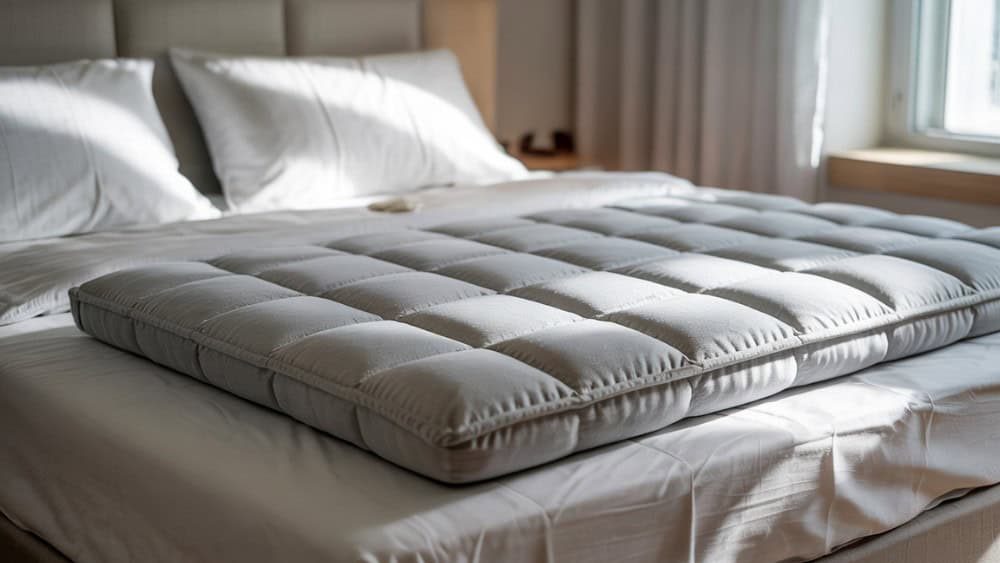
A topper will not resurrect a truly dead mattress. But if yours is too firm, lightly worn, or no longer matched to how you sleep, the right topper can change how your spine rests for eight hours a night.
What a Topper Can (and Can't) Do for Your Back
A good topper does two things: it adds pressure relief so your shoulders and hips sink just enough, and it fills small gaps — like the curve of your lower back — so your spine stays closer to neutral. For side sleepers especially, that extra contouring can mean the difference between waking up stiff and waking up fine.
It cannot fix structural failure. Lay a broom handle across the mattress: if the sag runs deeper than about an inch and a half, a topper will follow the dip down. Put the money toward a new mattress instead.
The Three Materials Worth Considering
Memory foam contours closely, spreading weight away from pressure points — the most popular pick for back pain. Choose gel-infused or open-cell versions if you sleep warm. Downsides: a slow, sinking feel, and cheap foam that softens within months.
Latex is bouncier and more supportive: instead of cradling you, it pushes back, keeping hips level — often better for back sleepers and heavier people. It sleeps cooler and lasts longer than memory foam, but costs more.
Down alternative and fiberfill pads add surface plushness and are cheap and washable, but they compress quickly and provide almost no spinal support. Fine as a comfort layer on a decent mattress; not a back-pain solution.
Thickness and Density: The Two Numbers That Count
Thickness decides how much the feel changes:
- 2 inches — a subtle tweak for a mattress that is nearly right but a touch too firm.
- 3 inches — the sweet spot for most back-pain sufferers: real pressure relief without lost support.
- 4 inches — only for very firm mattresses or higher body weights; on a soft bed it creates a hammock effect.
Density matters as much as thickness. In memory foam, look for 3 to 4 pounds per cubic foot — cheap 2-pound foam flattens within a year. The same holds for latex: bargain blends break down faster.
Match the Topper to Your Sleep Position
- Side sleepers: You need pressure relief at the shoulder and hip. Choose 3 inches of medium-soft memory foam or soft latex.
- Back sleepers: You need lumbar fill without hip sink. Choose 2 to 3 inches of medium-firm foam or medium latex.
- Stomach sleepers: You need to stay as level as possible. Choose a thin, firm 2-inch topper — or skip the topper and address the mattress itself.
- Combination sleepers: Latex or a zoned topper handles position changes better than slow-responding memory foam.
Common Mistakes to Avoid
The biggest one is buying too soft. A topper that is too plush lets the midsection sag, straining the lower back — when in doubt, go one firmness level up from your instinct.
Other missteps: skipping a protector (moisture breaks foam down fast), forgetting deep-pocket sheets (a 3-inch topper on a 12-inch mattress needs 15-inch pockets), and judging it on night one. Give your body ten days and keep a simple morning pain note.
How to Test a Topper at Home
Use the 30-night trial most sellers offer. Let foam expand 24 to 48 hours after unrolling, then sleep on it for at least a week, noting each morning where you feel stiffness and how fast it fades. If mornings are clearly better by night ten, keep it. If nothing changed, the mattress underneath is the problem — return the topper.
Frequently Asked Questions
Will a mattress topper fix a sagging mattress? No. A topper conforms to whatever is underneath it, so a deep sag dips right along with it. Toppers fine-tune; they do not repair structure.
Memory foam or latex for back pain? Memory foam wins on pressure relief and price; latex wins on support, cooling, and durability. Side sleepers with sharp pressure points often prefer memory foam, while back sleepers and hot sleepers often prefer latex. There is no universal winner — match the material to your sleep position.
How thick should my topper be? Three inches suits most adults with back pain. Choose two inches if your mattress only needs a slight softening, and four inches only if the mattress is very firm or you are above 230 pounds. Thicker is not automatically better.
How long do mattress toppers last? Two to four years for quality foam or latex with a protector; cheap low-density foam may flatten within a year. Rotate it head-to-foot every few months.
A topper is one of the highest-value bedroom upgrades: for under $150 you can change how your back feels every morning. Measure the sag, know your sleep position, buy enough density, and give it ten nights.
Our Top Picks
SleepWell 3-Inch Gel-Infused Memory Foam Topper
The sweet spot for most back-pain sufferers: three inches of medium-density gel memory foam that cushions pressure points without letting hips sink too deep.
- Excellent pressure relief for side sleepers
- Gel infusion sleeps noticeably cooler than basic foam
- Heavy to maneuver when changing sheets
EverRest 2-Inch Natural Latex Topper
A responsive latex topper with a firmer, buoyant feel that keeps the spine level. Ideal if you sleep hot or dislike the sinking feeling of memory foam.
- Supportive pushback keeps hips aligned
- Naturally breathable and durable
- Premium price compared with foam options
AlignRest Zoned Support Topper
A zoned design that's softer under shoulders and firmer under hips, aimed at keeping the spine neutral for combination sleepers.
- Targeted zones suit back and side sleeping
- Removable washable cover included
- Zoning feels subtle if you're under 150 pounds
CozyNest Down-Alternative Pillow-Top Pad
A budget-friendly quilted pad that adds surface plushness. Best for mattresses that are only slightly too firm, not for real support needs.
- Very affordable and machine washable
- Adds cozy surface softness fast
- Offers almost no spinal support on its own
CloudRest 4-Inch Dual-Layer Topper
A premium two-layer topper combining responsive foam over dense support foam. The thickest option here, best for mattresses that have lost their comfort layer.
- Four inches meaningfully changes mattress feel
- Dual layers balance softness and support
- May make deep fitted sheets too tight
FirmSupport 2-Inch High-Density Foam Topper
A budget high-density foam topper that firms up a too-soft mattress rather than softening a firm one. Aimed at back and stomach sleepers.
- Adds support instead of just softness
- Very affordable for the quality
- Too firm for side sleepers' shoulders
CoolTouch Copper-Infused Topper
A mid-priced memory foam topper infused with copper, marketed for heat dissipation. Hot sleepers with back pain get cooling plus contouring.
- Sleeps noticeably cooler than plain memory foam
- Good pressure relief for hips
- Copper infusion adds cost without proven medical benefit
WoolNest Natural Wool Topper
A natural wool-filled topper that regulates temperature in both directions. A good pick for sleepers who want support without synthetic foam.
- Natural materials, no off-gassing smell
- Warm in winter, breathable in summer
- Heavier than foam and harder to wash
PressureEase Egg-Crate Foam Topper
A classic convoluted foam topper at a rock-bottom price. The peaks and valleys improve airflow and take the edge off a firm mattress.
- Cheapest meaningful upgrade available
- Air channels keep it cooler than solid foam
- Thins out and flattens within a year or two