Nobody warns you when you buy stainless steel appliances. The showroom models gleam under perfect lighting, handled by no one. Then the delivery truck leaves, your family touches the refrigerator exactly once, and suddenly you're living with a giant fingerprint museum. Every wipe with a paper towel just rearranges the smudges into new and interesting streak patterns.
Here's the truth appliance stores don't mention: stainless steel isn't hard to clean — it's just easy to clean wrong. The streaks come from three mistakes: wiping against the grain, using the wrong cloth, and leaving residue behind. Fix those three and the whole job takes five minutes.
The Grain Rule (The One That Matters Most)
Stainless steel has a grain — faint vertical or horizontal lines in the finish, like wood grain. Always wipe with the grain, never against or across it. Wiping across the grain pushes cleaner and oils into the microscopic grooves, which is exactly what creates those cloudy streaks that won't buff out.
Find your grain by looking closely in raking light. Most refrigerators run vertical; many dishwasher panels run horizontal. Once you see it, you'll never unsee it — and your cleaning results will change immediately.
The Streak-Free Method, Step by Step
- Dust first. Wipe the surface with a dry microfiber cloth to remove loose dust and crumbs. Cleaning over grit just grinds it around.
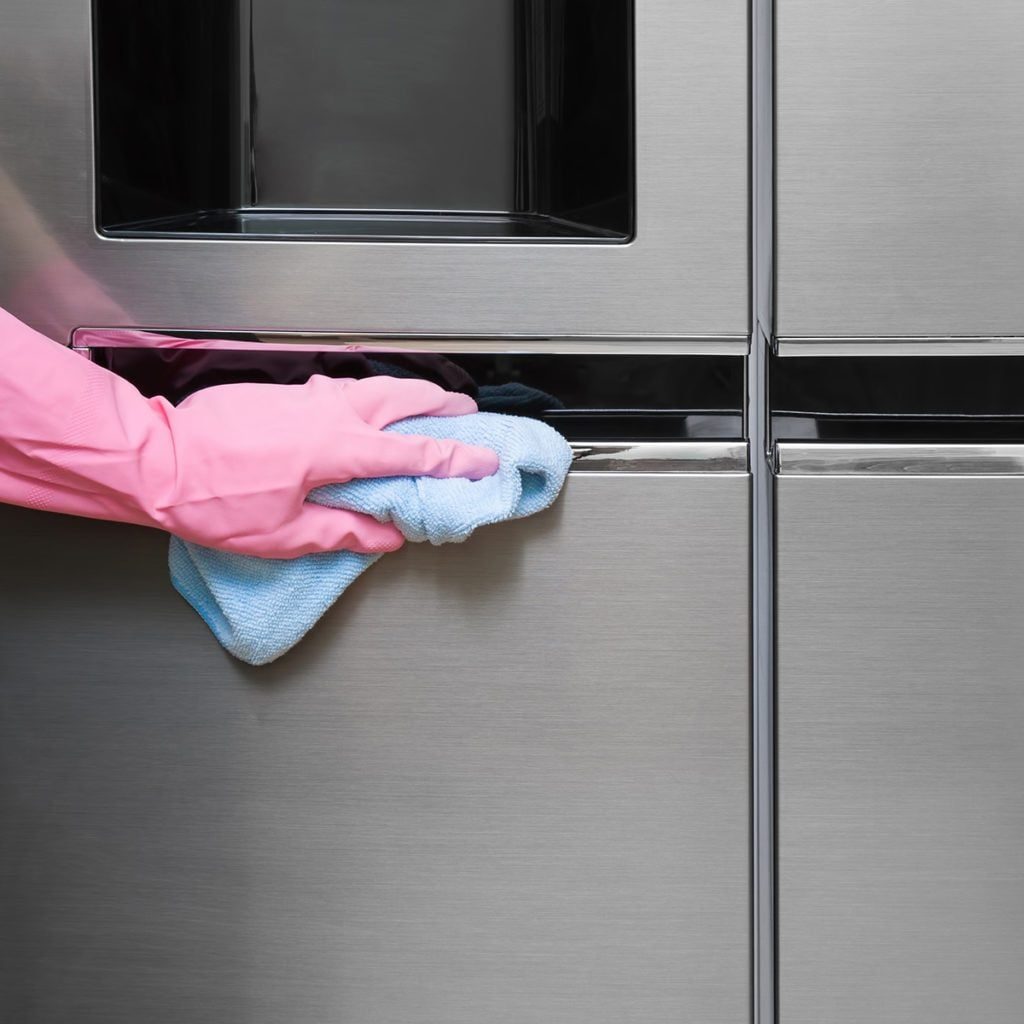
- Apply cleaner to the cloth, not the appliance. Spraying directly creates drips and uneven coverage. Two to three sprays on the cloth is plenty.
- Wipe with the grain in long, overlapping strokes. Don't scrub in circles — circles are streak factories.
- Buff dry immediately with a second, clean, dry microfiber cloth, still with the grain. This step is what separates "clean" from "showroom."
- For stubborn spots, let the cleaner sit for 30 seconds before wiping. Patience beats pressure.
The whole refrigerator door takes about five minutes once you have the rhythm.
What to Never Use
- Paper towels. They leave lint and can micro-scratch over time. Microfiber or nothing.
- Abrasive pads or powders (except Bar Keeper's Friend used carefully, and only on true stainless — never on black stainless or smudge-proof coatings).
- Bleach or chlorine cleaners. They can pit and discolor stainless steel permanently.
- Tap water for the final buff in hard-water areas. Mineral deposits cause spots — use distilled water or dry-buff instead.
- Oven cleaner, obviously. But people try. Don't.
Special warning for black stainless and "smudge-proof" finishes: these are coated, not bare steel. Treat them like coated surfaces — mild soap and water only, no stainless steel polishes, which can damage the coating. Check your manual.
DIY vs. Commercial Cleaners
The dish-soap-and-water method genuinely works for routine cleaning and costs almost nothing. Where commercial cleaners like Weiman earn their keep is the polish step: they leave a thin protective layer that resists fingerprints for days instead of hours. If your household touches the fridge fifty times a day (kids, I'm looking at you), that protective layer is worth the few dollars.
For greasy kitchens — the range hood, the area around the stove — degrease first with dish soap, then polish. Trying to polish over grease just seals it in.
Frequently Asked Questions
Why do I still see streaks after cleaning? Almost always one of three things: you wiped against the grain, the cloth wasn't clean (oily cloths redistribute oil), or you skipped the dry-buff step. Try again with a fresh dry microfiber, with the grain.
How often should I clean stainless appliances? High-touch areas (fridge handles, dishwasher front): weekly. Full polish: monthly. A quick daily wipe of handles with a damp microfiber prevents buildup.
Can I use vinegar on stainless steel? Diluted white vinegar works for light cleaning, but rinse and dry-buff after — undiluted or prolonged vinegar exposure can dull the finish over time.
What about water spots? Dry-buffing immediately after cleaning prevents them. For existing spots, a 50/50 mix of distilled water and white vinegar, wiped with the grain and buffed dry, usually clears them.
The Bottom Line
With the grain, microfiber only, buff dry. That's the entire secret. Pick a cleaner that fits your household — commercial polish for heavy-traffic kitchens, dish soap for the rest — and the fingerprint museum closes for good.
Our Top Picks
Weiman Stainless Steel Cleaner and Polish
The classic spray that cleans and leaves a protective layer to resist future fingerprints. The benchmark product.
- Cleans and polishes in one step
- Protective finish slows re-smudging
- Strong smell — ventilate while using
Microfiber Cleaning Cloths (12-Pack)
The real hero of streak-free stainless. Lint-free microfiber does more than any cleaner paired with paper towels.
- Washable and reusable hundreds of times
- No lint left behind
- Lose effectiveness if washed with fabric softener
Therapy Stainless Steel Cleaner Kit
A plant-based cleaner plus microfiber cloths in one kit. Good for households avoiding harsh chemicals.
- Gentler formula, pleasant scent
- Includes quality microfiber cloths
- Needs a second pass on heavy grease
Bar Keeper's Friend Soft Cleanser
For the tough jobs — rust spots, hard-water marks, and baked-on grime that regular cleaners won't touch.
- Removes stains nothing else will
- A little goes a long way
- Mildly abrasive — test spot first, always
Spray Bottle + Dish Soap (DIY Method)
A few drops of dish soap in warm water in a spray bottle. The cheapest streak-free method when paired with microfiber.
- Costs pennies per use
- No harsh chemicals
- No protective finish — smudges return faster