The Alvarez family couch is three years old, fabric, and has seen everything: juice box explosions, a toddler's peanut butter phase, a beagle who considers the left cushion his personal throne, and one memorable incident involving chocolate ice cream and a white throw pillow. It does not look dirty from across the room. Up close, the arms are darkened, the seat cushions smell faintly of dog, and there is a constellation of spots that regular wiping never touched.
Most couches can be brought back dramatically with a proper deep clean. But upholstery is unforgiving of the wrong method: the wrong cleaner on the wrong fabric can set a stain permanently or leave a water ring worse than the original spot. The entire game is knowing your fabric's code and working in the right order.
Step 1: Read the Tag
Flip a cushion or check under the sofa for the manufacturer's tag. You will see one of four codes, and everything flows from it:
- W: Water-based cleaners are safe. This is the easiest fabric to deep clean.
- S: Solvent-based cleaners only. Water can leave rings or shrink the fabric.
- WS: Either water- or solvent-based cleaners work. Most family-friendly fabrics are WS.
- X: Vacuum only. No liquids at all. If your couch is X, stop here and call a professional for anything beyond vacuuming.
If the tag is missing, treat the fabric as S and test carefully, or check the manufacturer's site by model.
Step 2: Vacuum Like You Mean It
Remove all cushions and vacuum every surface with the upholstery attachment: seat decks, backs, sides, and both faces of every cushion. Then vacuum the crevices with the crevice tool, where crumbs, pet hair, and lost objects accumulate. Most of what makes a couch look dingy is dry soil, and removing it first keeps you from turning dust into mud in the next step.
Step 3: Spot Test, Then Treat Stains
Whatever cleaner you plan to use, test it first on a hidden spot, like the back of a cushion or the fabric under the sofa skirt. Wait for it to dry fully and check for discoloration or texture change. For stains, work from the outside in to avoid spreading, blot instead of rubbing, and give enzyme cleaners the dwell time the label asks for. Patience outperforms pressure.
Step 4: Clean by Code
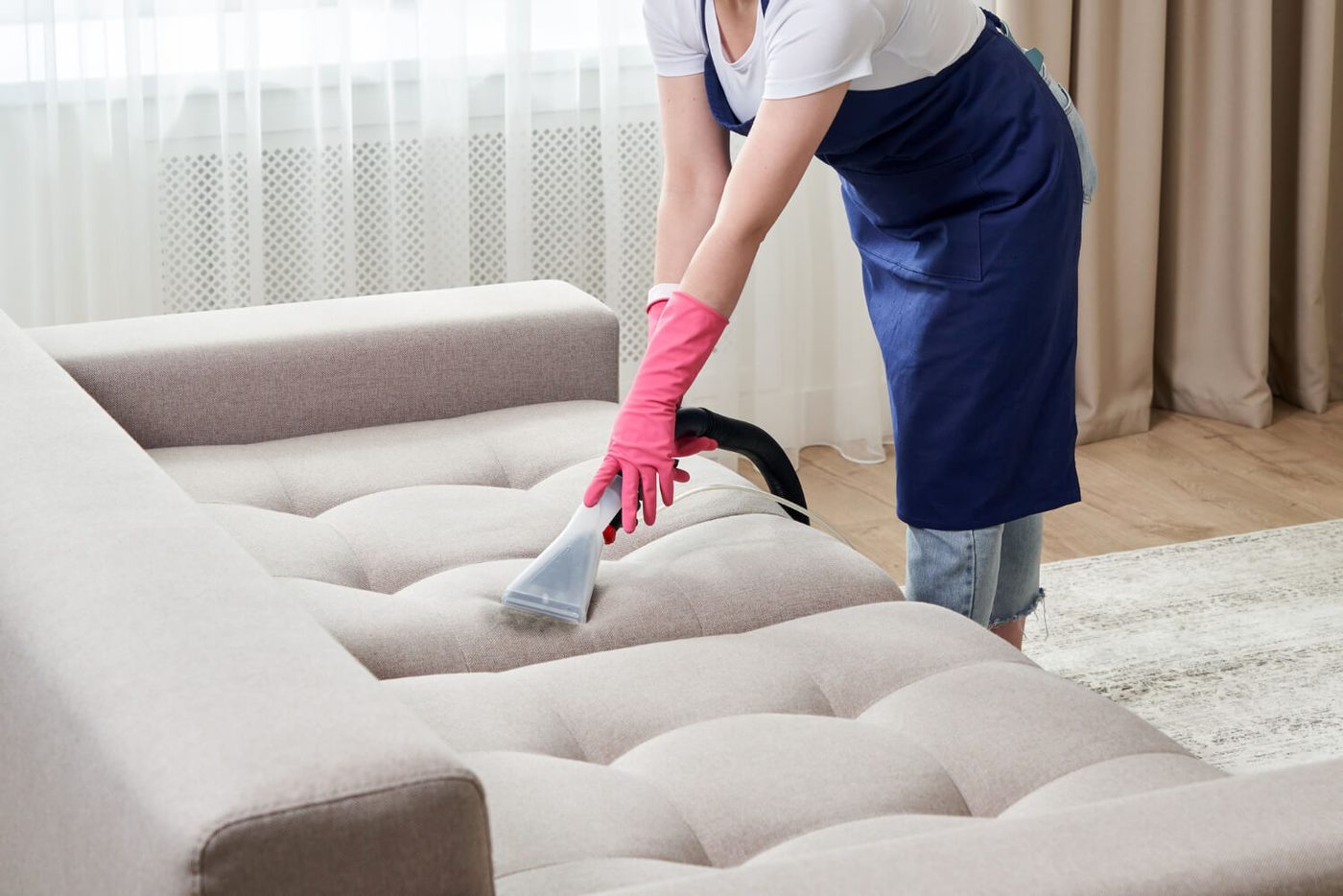
For W and WS fabrics, a water-based upholstery cleaner or a handheld extractor works well. Apply foam or solution sparingly, agitate gently with a soft brush, and extract or blot thoroughly. For S fabrics, use a solvent-based upholstery cleaner applied to a cloth, never poured directly on the fabric, and ventilate the room. For X, vacuum thoroughly and stop.
Step 5: Deodorize and Dry
Sprinkle baking soda liberally over dry fabric, let it sit for at least 30 minutes (overnight for strong pet odor), then vacuum thoroughly. For drying after any wet cleaning, point a fan at the couch and give cushions several hours, standing them on edge for airflow. Never put cushions back damp; trapped moisture breeds mildew.
Common Mistakes to Avoid
Soaking the cushions is the number one error; upholstery foam holds water far longer than you expect. Using water-based cleaners on S-coded fabric is the second, and it can leave permanent rings. Skipping the spot test has ruined more couches than any stain. Using heat, like a hair dryer, on a protein stain such as milk or egg can cook it in permanently. And scrubbing aggressively frays fabric and spreads stains wider.
Frequently Asked Questions
What do the W, S, WS, and X codes actually mean? They tell you which cleaning agents are safe: W for water-based, S for solvent-based, WS for either, X for vacuum only. Always follow the code on your specific piece.
Can I use a steam cleaner on my couch? Only on W or WS fabrics, and even then with caution: excess moisture is the enemy. Never steam S or X coded upholstery.
How often should a couch be deep cleaned? Once or twice a year for most households, more often with kids or pets. Vacuum the crevices monthly and treat spots as they happen.
How do I get pet urine out of a cushion? Blot up as much as possible immediately, treat with an enzyme cleaner made for pet stains (enzymes break down the odor compounds), and let it dwell fully. If the foam core is saturated, the cushion cover may need professional cleaning or replacement.
The Alvarez couch took a Saturday: vacuum, spot test, extraction on the WS fabric, baking soda overnight. The arms are their original color again, the dog smell is gone, and the spot constellation has faded to a couple of faint ghosts. It is still the same hardworking family couch. It just looks like one you would choose on purpose.
Our Top Picks
FabricFresh Enzyme Upholstery Spot Cleaner
An enzyme-based spot cleaner that breaks down food, drink, and pet stains on water-safe upholstery without harsh bleaching agents.
- Enzymes digest organic stains instead of just masking them
- Safe for most water-cleanable fabrics
- Requires blotting and dwell time; not an instant spray-and-wipe fix
SofaCare Handheld Extraction Machine
A compact heated extractor that sprays cleaning solution and vacuums it back out, pulling embedded dirt from cushions and arms.
- Lifts deep-set dirt a surface wipe cannot reach
- Heated cleaning improves results on old stains
- Cushions need hours to dry fully after extraction
SoftBrush Upholstery Brush Set
Soft-bristled brushes that lift matted nap, loosen surface dirt, and work cleaning foam into fabric gently.
- Revives flattened velvet and microfiber nap
- Gentle enough for regular maintenance use
- Manual effort; not a substitute for extraction on deep soil
OdorOut Baking Soda Deodorizer
A fine-grain deodorizing powder designed for upholstery that absorbs odors from cushions, arms, and pet-favorite spots.
- Inexpensive and genuinely effective on absorbed smells
- No fragrances masking the problem
- Needs thorough vacuuming afterward or residue remains