When Lauren and Tom had white oak floors installed in their 1960s ranch, the installer gave them one warning on his way out: water is the enemy. Then Lauren went online and found chaos. One site swore by steam mops. Another said vinegar and water was all anyone ever needed. A third insisted any wet mopping would void the finish warranty. Their beautiful new floors sat under a growing layer of dust while they argued about it.
Here is the settled truth: hardwood floors can be damp-mopped safely, but the margin for error is real. Too much water seeps into seams and edges, swelling boards and clouding finishes. The right mop is one that cleans with minimal moisture and maximum control.
Why Water Is the Enemy
Finished hardwood is sealed on top, but the seal is not armor. Standing water, repeated soaking, and steam can work past the finish at board edges and seams, causing cupping, swelling, and dull spots. Engineered hardwood is even more vulnerable at its joints. This is why the golden rule of wood floors is simple: the mop should feel barely damp, never wet.
The Mop Types, Ranked for Hardwood
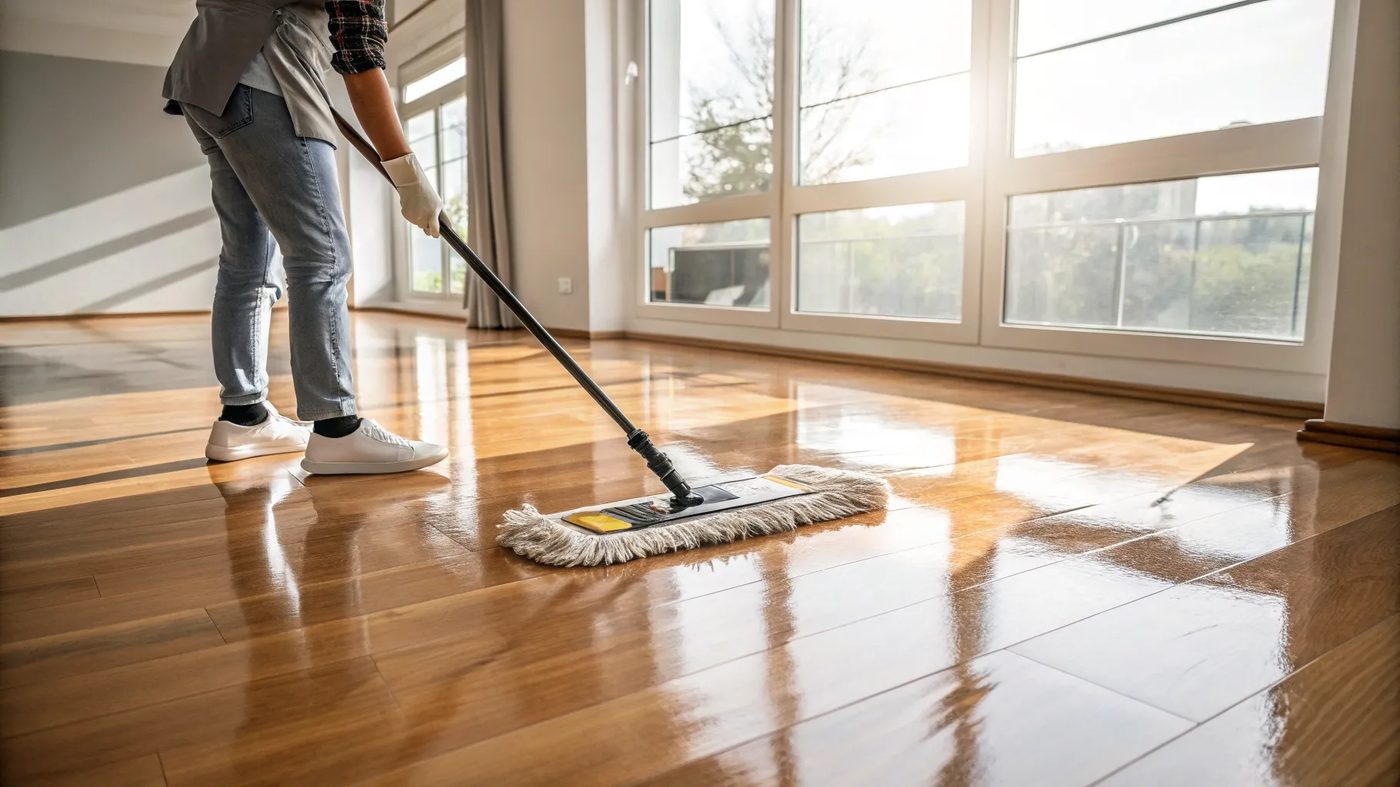
Flat microfiber mops are the top pick. The flat head covers ground quickly, microfiber grabs fine dust and grime, and a good wringer leaves the pad just damp enough. Washable pads make them economical over time.
Refillable spray mops are the convenience pick. They mist a fine, controlled spray ahead of the pad, so you physically cannot soak the floor the way a bucket mop can. Refillable tanks let you use a proper pH-neutral cleaner instead of being locked into proprietary solution.
Dry dust mops are the daily-driver pick. For day-to-day grit, pet hair, and dust, a wide dry mop with no water at all is the safest routine there is. Many wood-floor owners dust-mop daily and damp-mop weekly.
String and sponge mops are the avoid pick for hardwood. They hold far too much water, are hard to wring adequately, and push dirty water into seams. Retire them to the tile bathroom.
Steam mops deserve their own warning. Manufacturers market them for sealed wood, but the combination of heat and moisture is risky, especially on older finishes, engineered floors, or any floor with worn spots. Most flooring pros advise against them, and some warranties exclude steam damage.
What to Look For
Prioritize wringing control above all else: a mop is only as safe as its ability to get almost dry. Microfiber pads outperform cotton and disposable sheets for pickup. Choose a pH-neutral cleaner made for wood; harsh or acidic cleaners dull finishes over time. And check the mop head size against your home: a small pad in a large open plan turns mopping into an endurance event.
Common Mistakes to Avoid
Mopping with a soaking-wet mop is the classic error; wring until the pad feels just damp. Mopping before sweeping or dust-mopping grinds grit across the finish like sandpaper, so always remove dry soil first. The vinegar habit is widespread but misguided: used regularly, its acidity dulls polyurethane finishes. Using a steam mop on unsealed, worn, or engineered wood courts real damage. And never let water pool: work in small sections and never leave puddles to air-dry.
Frequently Asked Questions
Are steam mops safe for hardwood? Most flooring professionals say no, or only with extreme caution on well-sealed solid wood. The heat-plus-moisture combination risks finish damage, and many warranties exclude it. A damp microfiber mop is safer.
Can I use vinegar and water on wood floors? Occasionally in heavy dilution it will not cause instant harm, but regular use dulls finishes over time. A pH-neutral wood floor cleaner is the better long-term choice.
How often should I mop hardwood? Dust-mop or vacuum weekly, damp-mop every one to two weeks in lived-in areas, less in low-traffic rooms. Kitchens and entryways need it most.
Does engineered hardwood need different care? The same rules apply, with extra caution around moisture at the seams. Never steam-mop engineered floors, and wipe spills promptly.
Lauren and Tom settled on a flat microfiber mop, a dust mop for daily passes, and a pH-neutral cleaner. The floors get mopped every other Saturday, dust-mopped in between, and the installer, on a follow-up visit, asked what they had been doing because the finish still looked new. Barely damp. That is the whole secret.
Our Top Picks
FloorGuard Flat Microfiber Mop
A flat-head mop with a wringer that leaves pads barely damp, plus machine-washable microfiber pads you reuse for years.
- Wrings pads nearly dry, which is exactly what hardwood needs
- Washable pads eliminate disposable pad costs
- Pads need laundering after nearly every use in busy homes
MicroShine Refillable Spray Mop
A spray mop with a refillable tank that mists a controlled amount of cleaner ahead of the pad, so floors never get soaked.
- Controlled mist prevents over-wetting
- Refillable tank works with your own pH-neutral cleaner
- Small tank needs refilling for larger homes
GentleGlide Hardwood Dust Mop
A wide dry dust mop that sweeps up grit and pet hair daily with no water at all, the safest possible routine for wood.
- Zero water means zero risk to the finish
- Wide head covers open floor plans fast
- Handles dry soil only; will not touch stuck-on grime
PureWash pH-Neutral Floor Concentrate
A concentrated pH-neutral cleaner made for finished wood that cleans without dulling or leaving residue.
- pH-neutral formula is safe for polyurethane finishes
- Concentrate makes dozens of buckets, reducing waste
- Not a disinfectant; it cleans but does not sanitize
SpinCycle Hands-Free Spin Mop
A mid-priced spin mop with a foot-pedal wringer that keeps the mop barely damp — exactly what hardwood needs. No hands in dirty water.
- Wringer controls moisture precisely
- Hands never touch the dirty mop
- Bucket is bulky to store
SteamLite Quick-Heat Steam Mop
A budget steam mop that heats in 30 seconds. Use sparingly on sealed hardwood only — check the article's warnings before buying.
- Sanitizes without chemicals
- Heats up fast
- Risky on unsealed or worn finishes; test first
PadPack Washable Mop Pad Refills 4-Pack
A budget 4-pack of washable microfiber pads compatible with most flat mops. Rotating pads means always cleaning with a fresh one.
- Machine washable hundreds of times
- Cheaper than disposables over time
- Check compatibility with your mop head