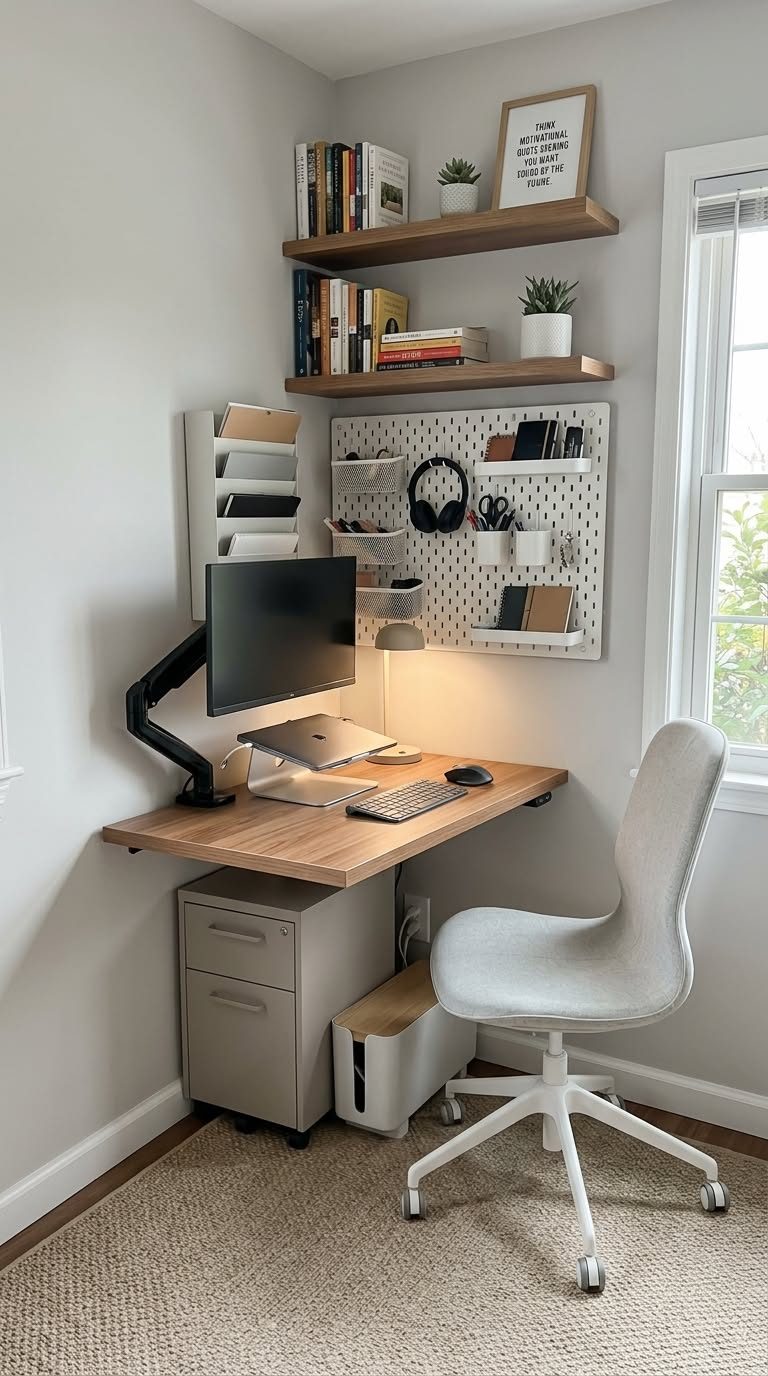
After eighteen months of working from his kitchen table, then a cheap fixed desk, Andre's lower back filed a formal complaint. He wanted a standing desk, but his "home office" was a nine-by-ten-foot spare bedroom that also held a bookshelf, a printer, and a guitar. Every standing desk he found online looked built for a corner office — 60 inches wide, deep enough to land a plane on.
Small-space standing desks are their own category. The good ones shrink the footprint without shrinking the ergonomics: full height range, stable at standing height, and sized for real rooms.
What to look for
Size first. Measure your space and your gear. A 48-by-30-inch top fits a monitor, laptop, and notebook comfortably. If your room is truly tight, 40-inch widths exist and work fine for single-monitor setups. Depth matters too — 24 inches is the minimum for a monitor at a healthy viewing distance.
Electric versus manual versus converter. Electric desks (single or dual motor) adjust with a button and usually include memory presets — worth it if you switch positions several times a day. Manual crank desks cost less and need no outlet, but you will switch less often because cranking is a chore. Desktop converters sit on your existing desk and are the right answer when you cannot replace your furniture, though they eat desk space and rarely feel as solid.
Stability at height. This is where cheap desks fail. A desk that wobbles while you type standing up is worse than no standing desk. Dual-motor frames with a crossbar are the most stable; read reviews specifically about wobble at max height with monitors mounted.
Height range and weight capacity. Check that the desk goes low enough for your seated elbow height (around 25 to 28 inches for most people) and high enough for standing (up to 48-plus inches for taller users). Capacity of 150 pounds or more handles monitors, arms, and a desktop PC without strain.
Common mistakes
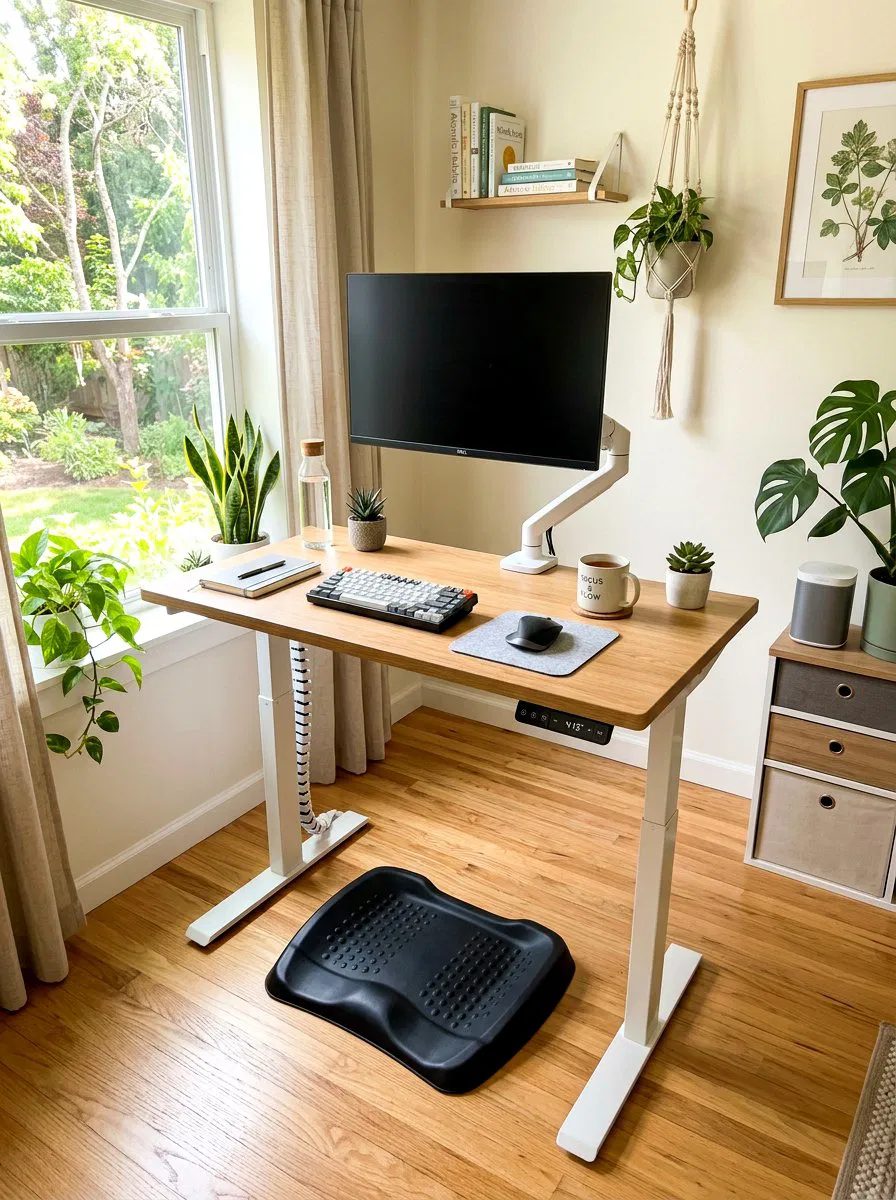
Buying the 60-inch default when a 48-inch fits your gear — measure your actual equipment, not your aspirations. Second: forgetting cable management. A standing desk with cables dangling to the floor defeats the purpose and looks terrible; budget for a cable tray or spine. Third: skipping the anti-fatigue mat. Standing on hard floors all day trades back pain for foot pain.
Converters versus full desks: an honest comparison
If you already own a desk you like, a converter is tempting — and for light use it works. But be honest about the trade-offs. Converters typically offer a smaller work surface, less stability, and a keyboard tray that may sit too high or too low for your body. They also consume a large chunk of your existing desk, leaving little room for anything else. A full replacement desk costs more and means disposing of the old one, but the ergonomics and stability are in a different league. Rule of thumb: if you will stand more than an hour a day, get the full desk. If standing is an occasional stretch break, a converter is fine.
Setup tips
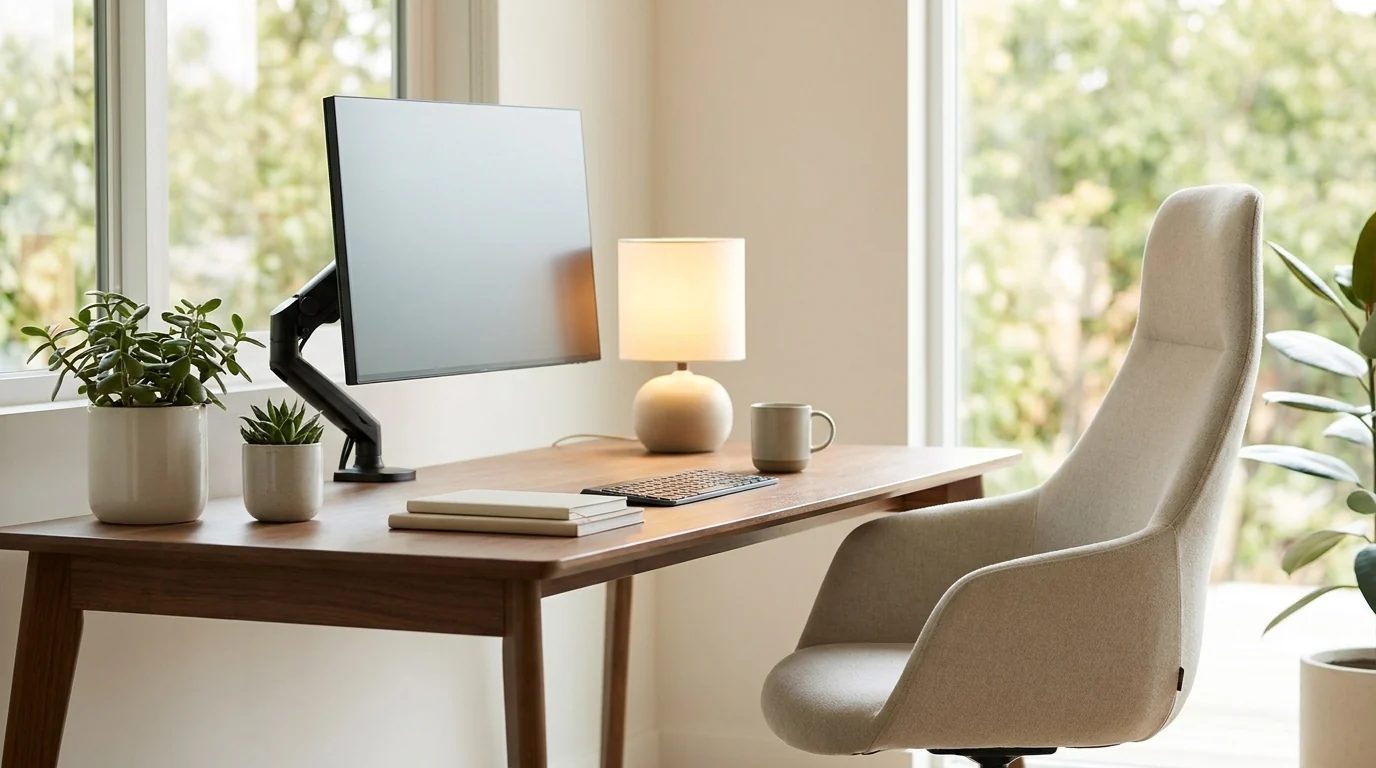
Position the monitor so the top of the screen is at or just below eye level, about an arm's length away. Keep elbows near 90 degrees whether sitting or standing — that is the whole point of adjustability. Alternate positions every 30 to 60 minutes rather than standing all day; the research consensus favors movement over any single posture.
Frequently Asked Questions
Are standing desks actually good for you? They help when used to break up sitting, not as an all-day standing station. Alternate sitting and standing every half hour to an hour for the best results.
How much should I spend on a standing desk? The sweet spot is 300 to 600 dollars for a reliable electric frame in a small size. Under 200 usually means manual or a converter; over 700 buys premium stability and warranty.
Will a standing desk fit in a small bedroom? Yes — 40 and 48-inch models are designed for exactly this. Measure your wall space and allow two feet of clearance in front for your chair.
Do I need a special chair with a standing desk? No, but a stool or perching chair for the in-between moments helps. Many people pair a standing desk with their existing chair and an anti-fatigue mat.
Andre ended up with a 48-inch electric desk against the bedroom wall, monitor on an arm, cables in a tray. His back stopped complaining within a month — and the guitar still fits.
Our Top Picks
FlexiSpot E7 Pro Standing Desk 48x30
A rock-solid dual-motor electric desk in a genuinely small 48-inch size, with a 10-year frame warranty.
- Excellent stability at full height
- Quiet dual motors
- Assembly takes a full hour
SHW 48-Inch Electric Height Adjustable Desk
The budget electric pick that covers the basics — up, down, and a memory preset — for half the price of premium frames.
- Best value electric desk
- Simple assembly
- Slight wobble at max height with heavy monitors
VIVO 32-Inch Desk Converter
A sit-stand converter that sits on your existing desk, ideal when you cannot replace your furniture.
- No need to replace your desk
- Keyboard tray included
- Eats into your existing desk surface
FEZIBO 40-Inch Electric Standing Desk
A compact 40-inch electric desk that fits alcoves and bedroom corners other desks cannot.
- True small-footprint size
- Anti-collision sensor
- Single motor is slower than dual-motor desks
IKEA BEKANT Desk 47x31
IKEA's sit-stand desk with a clean look and a 10-year warranty, easy to test-drive in person.
- Try before you buy in store
- Clean Scandinavian design
- Heavier and harder to move than rivals
UPLIFT V2 48x30 Standing Desk
The premium pick with best-in-class stability, a huge accessory ecosystem, and a 15-year warranty.
- Most stable frame in its class
- 15-year warranty
- Premium price
HUANUO Manual Crank Standing Desk 40-Inch
A no-electronics crank desk for rooms without a nearby outlet — or anyone who distrusts motors.
- No power outlet needed
- Very affordable
- Cranking gets old if you switch often