When my sister got married, she received a 15-piece cookware set in a giant box. Shiny. Impressive. Within two years, she used exactly four pieces of it regularly: the big skillet, the saucepan, the stockpot, and the nonstick pan for eggs. The rest — the tiny saucepans, the novelty griddle pan, the steamer insert — lived in a cabinet, untouched, taking up space she did not have in her small kitchen.
Cookware sets are the wedding-registry trap of the kitchen world. They look like value — fifteen pieces for the price of six! — but they bundle pieces you will never use with quality compromises on the pieces you will. Most home cooks need fewer pieces than they think, in better materials than a set provides. Here is the honest breakdown.
What you actually need
For the vast majority of home cooking, five pieces cover everything:
- 12-inch skillet — cast iron or tri-ply stainless. For searing, sauteing, roasting, and pan sauces. The single most-used pan in most kitchens.
- 10-inch nonstick skillet — for eggs, pancakes, and delicate fish. Nothing else releases like nonstick.
- 3-quart saucepan — for sauces, grains, reheating, and small-batch cooking.
- 6 to 8-quart stockpot or Dutch oven — for pasta, soups, stews, and braises. Enameled cast iron if you can swing it.
- Sheet pan — technically bakeware, but it roasts vegetables, bakes chicken, and catches drips. Get a heavy-gauge half-sheet.
That is it. Everything else — the wok, the grill pan, the copper saucier — is a specialty purchase to make after you know you need it, not before.
Materials: the honest tradeoffs
Cast iron. Unbeatable for searing, naturally nonstick when seasoned, lasts forever, costs little. Heavy, needs hand-drying to prevent rust, and reacts with highly acidic foods (long tomato simmers can taste metallic and strip seasoning). Every kitchen should have one skillet.
Enameled cast iron. All the heat retention of cast iron with a glass coating — no seasoning, no rust, no reactivity. Ideal for braises, bread, and stews. Expensive at the premium end, but budget brands perform surprisingly well.
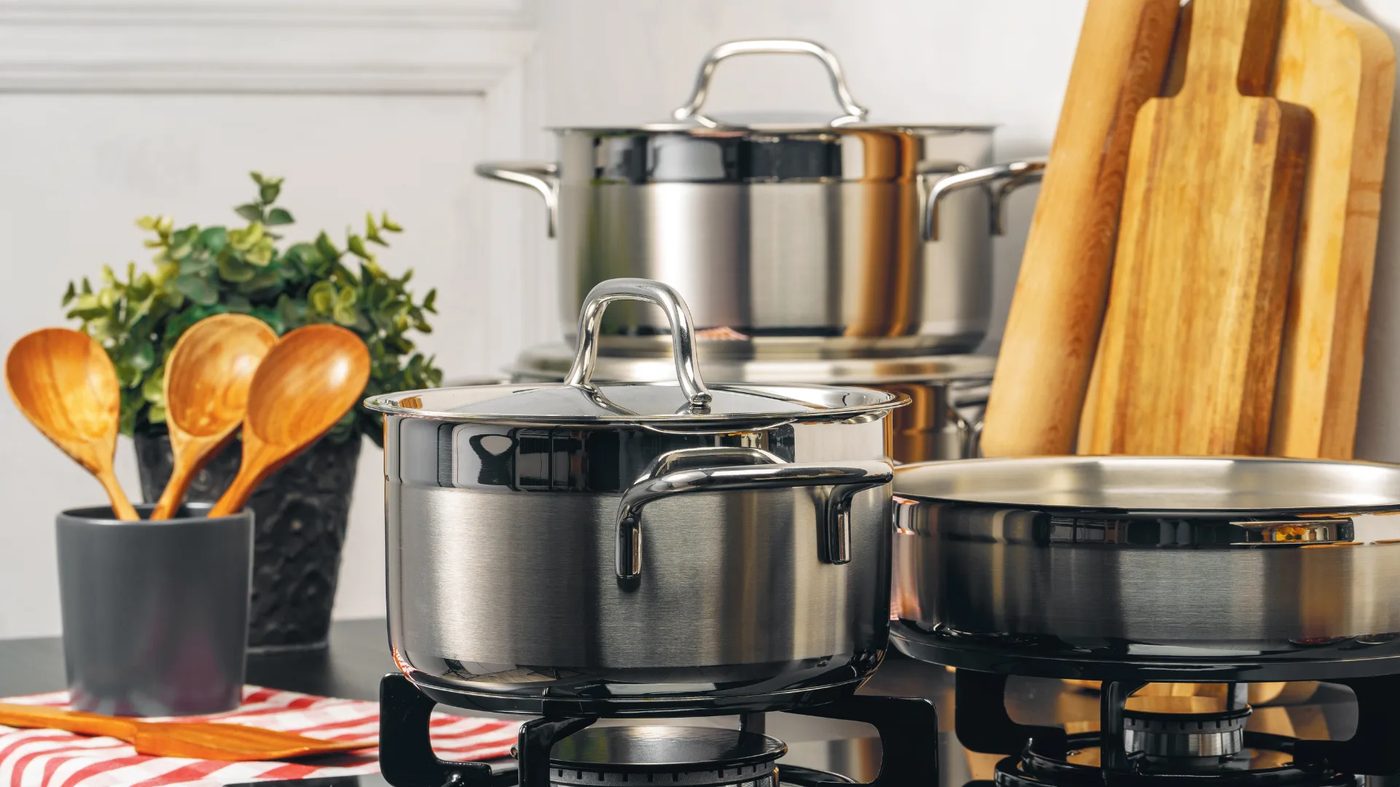
Tri-ply stainless steel. Aluminum or copper core sandwiched in stainless. Heats evenly, goes from stovetop to oven, lasts decades, dishwasher safe. The learning curve: food sticks until you learn proper preheating (hot pan, then oil, then food). Once learned, it is the most versatile material.
Nonstick. Essential for eggs and delicate foods, and genuinely easier for beginners. But the coating is consumable — expect 2 to 3 years of good performance with careful use (no metal utensils, no high heat, hand wash). Buy inexpensive and replace without guilt.
Carbon steel. The professional's choice for woks and crepe pans — lighter than cast iron, seasons like it. Wonderful, but a second-tier purchase for most home cooks.
What to skip
- Huge cookware sets. You will use a third of the pieces. Buy open stock in the materials you want for each job.
- Copper cookware. Beautiful, responsive, and wildly expensive with demanding maintenance. Tri-ply stainless gives you 90 percent of the performance for a fraction of the cost and effort.
- Grill pans. The ridges that promise grill marks mostly just make food steam and are miserable to clean. A ripping-hot cast iron skillet sears better.
- Anything "as seen on TV" with miraculous claims. If a pan promises to replace every pan you own, it replaces none of them well.
- Expensive knife sets in the same box. Not cookware, but the same trap — a good 8-inch chef's knife beats a 15-piece block set.
Buying tips that save money
Buy the pieces you use most in the best material you can afford, and economize on the rest. A great skillet and a decent stockpot beat a mediocre set every time. Check restaurant supply stores for sheet pans and stockpots — commercial-grade, no branding markup. And remember that induction stovetops require magnetic cookware: if you have or might get induction, test pieces with a fridge magnet before buying.
Care basics
Preheat stainless properly, never plunge hot cast iron into cold water, hand-wash nonstick, and dry everything thoroughly before storing. Stacked pans scratch each other — a paper towel or pan protector between them costs nothing and prevents most damage.
Frequently Asked Questions
Is expensive cookware really better? For core pieces, yes — up to a point. A well-made tri-ply skillet heats more evenly and lasts far longer than a thin discount pan. But the returns diminish fast past the mid-range; a 60-dollar tri-ply pan performs close to a 200-dollar one.
How do I know if my cookware works on induction? Hold a magnet to the bottom. If it sticks firmly, it works on induction. Cast iron, enameled cast iron, and most stainless steel pass; aluminum and copper do not unless they have a magnetic base layer.
When should I replace nonstick pans? When food starts sticking despite proper use, or when the coating is visibly scratched or flaking. With gentle care — wooden or silicone utensils, low to medium heat, hand washing — expect two to three years.
Can I put cast iron in the dishwasher? No. Dishwasher detergent strips seasoning and promotes rust. Hand wash, dry immediately on a warm burner, and wipe with a thin layer of oil. It takes ninety seconds and the pan will outlive you.
My sister eventually donated the unused pieces from her set and bought a cast iron skillet and a Dutch oven with the shelf space she reclaimed. Her cooking did not change. Her cabinet did — and she uses every pan she owns now. Buy the five pieces. Skip the box.
Our Top Picks
Lodge 12 Inch Cast Iron Skillet
The pre-seasoned workhorse that sears, bakes, and lasts generations. Under thirty dollars for a pan your grandchildren could inherit.
- Nearly indestructible with basic care
- Unbeatable sear for the price
- Heavy — not for anyone with wrist issues
Tramontina Tri-Ply Clad 12 Inch Fry Pan
Tri-ply stainless construction at a fraction of premium-brand prices. Heats evenly, deglazes beautifully, and goes from stovetop to oven.
- Even heating without hot spots
- Oven safe and dishwasher friendly
- Handles get hot — keep a mitt handy
T-fal Professional Nonstick 10 Inch
An affordable nonstick for eggs and delicate fish — the two jobs nonstick actually excels at. Treat it as a replaceable tool, not an heirloom.
- Excellent egg release
- Thermo-spot indicator shows when preheated
- Coating wears — plan to replace every 2-3 years
Le Creuset Signature Dutch Oven 5.5 Qt
The splurge that earns its keep: braises, bread, soups, and stews for decades. Enameled cast iron needs no seasoning and cleans easily.
- Generational durability
- Even heat for slow braises
- Premium price — buy once, cry once