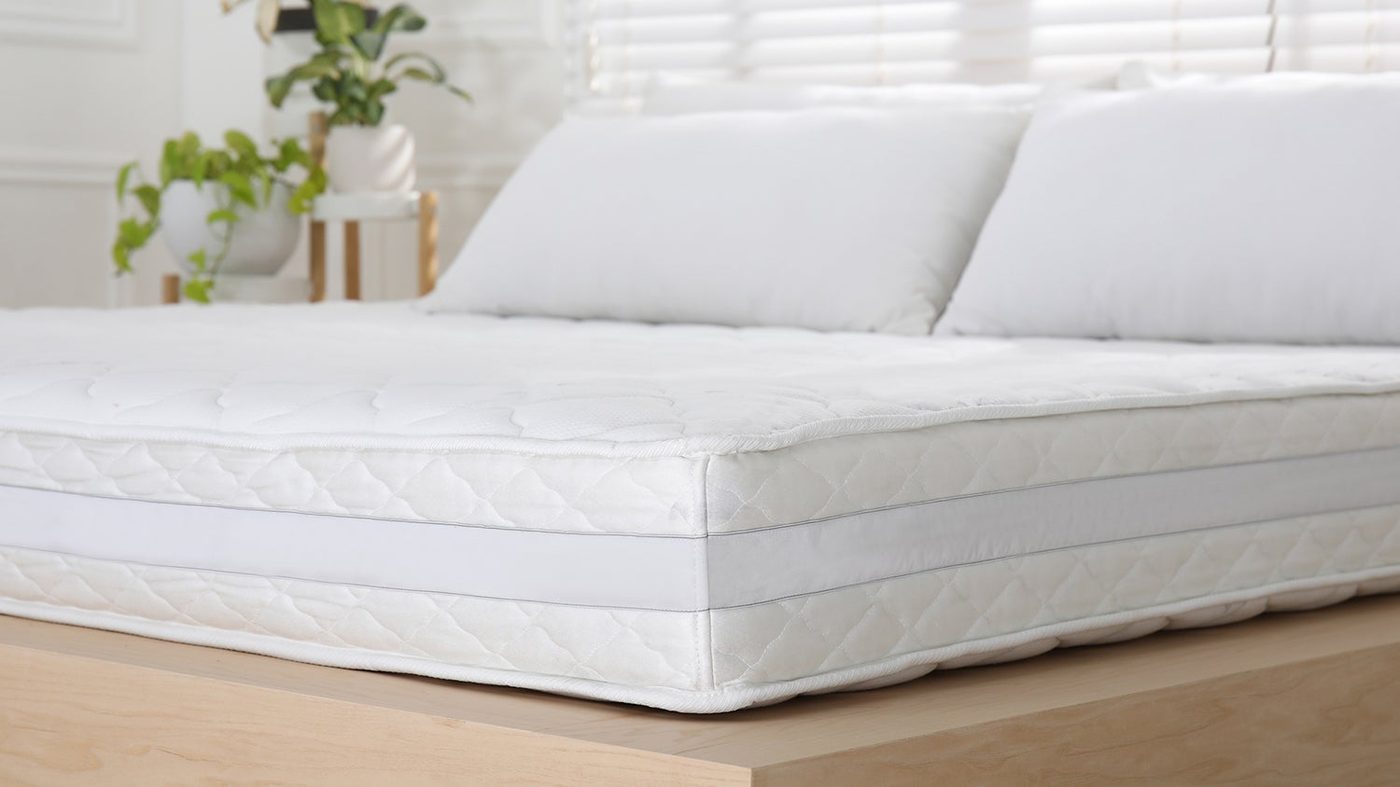
David had been waking up with a stiff lower back for months. He blamed his desk chair, his age, his workout routine — everything except the ten-year-old mattress with a visible dip in the middle where he slept. When he finally replaced it, the back pain faded within two weeks. He told me he felt ridiculous for waiting so long, which is exactly what most people say after buying a decent mattress.
A mattress is the rare purchase where the cheap option costs you every single night. You spend roughly a third of your life on it, and a bad one charges interest in the form of poor sleep, morning aches, and the groggy feeling that follows you through the day. The good news is that the online mattress market has made the process far less painful than the old showroom gauntlet — if you understand the types, the firmness scale, and how trials work.
The four main mattress types
Memory foam. Contours closely to your body, relieves pressure points, and isolates motion — your partner's tossing will not wake you. The tradeoffs: it sleeps warm, some people dislike the "stuck" feeling, and cheaper foams develop permanent body impressions. Best for side sleepers and light sleepers with restless partners.
Innerspring. The traditional coil mattress. Bouncy, breathable, with strong edge support. Modern versions use individually pocketed coils that reduce motion transfer compared to old connected-coil designs. Best for back and stomach sleepers, heavier sleepers, and anyone who sleeps hot.
Hybrid. Pocketed coils plus foam or latex comfort layers on top. The current sweet spot for most people — pressure relief from the foam, support and airflow from the coils. Hybrids suit combination sleepers who change positions through the night.
Latex. Made from natural or synthetic latex rubber. Responsive, durable (often 10-plus years), naturally cool, and resistant to dust mites. The downsides are weight, price, and a distinctive bouncy feel that some love and some do not.
Firmness: what the numbers mean
Firmness is rated on a 1-to-10 scale, where 1 is cloud-soft and 10 is floor-hard. Most adults land in the medium to medium-firm range:
- Soft (3-4): side sleepers under 130 pounds who need deep pressure relief at shoulders and hips.
- Medium (5-6): the versatile zone. Side sleepers of average weight, combination sleepers, and couples with different preferences.
- Medium-firm (6.5-7.5): back sleepers, stomach sleepers, and anyone over 230 pounds who needs more support to keep the spine aligned.
- Firm (8+): stomach sleepers and heavier back sleepers. Most people find true firm uncomfortable for side sleeping.
Your sleep position matters more than any marketing claim. Side sleepers need softness at the shoulders and hips; back and stomach sleepers need support that keeps the hips from sinking.
Trial periods and warranties: read the fine print
The online mattress industry runs on trial periods — typically 100 nights, sometimes up to a full year. This is genuinely useful, because a mattress needs three to four weeks for your body to adjust. Key things to verify:
- Is there a break-in requirement? Many companies require you to keep the mattress 30 days before initiating a return.
- Who pays return shipping? Reputable companies arrange free pickup or donation. Avoid any trial where you pay return freight on a 100-pound item.
- What does the warranty actually cover? Look for at least 10 years covering sagging beyond a specified depth (usually 0.75 to 1.5 inches). Warranties cover defects, not comfort preference — that is what the trial is for.
- What happens to returns? Most are donated or recycled locally, which is worth knowing if it matters to you.
What to ignore
Coil counts above a reasonable threshold are marketing noise — coil gauge and design matter more than raw numbers. "Orthopedic" or "doctor recommended" labels are unregulated. Thread counts on mattress covers are irrelevant to comfort. And the old "replace every 8 years" rule is a sales guideline, not a law of physics — replace when you see sagging, feel pain, or sleep worse than you used to.
Common mistakes to avoid
- Buying too firm. Most people overestimate how firm they want. Medium-firm outsells firm for a reason — very firm mattresses cause pressure points for side sleepers.
- Skipping the foundation check. A new mattress on a worn-out box spring or slats spaced too far apart will sag prematurely and can void the warranty. Check the required support type.
- Ignoring your pillow. A new mattress changes your spinal alignment, which can make your old pillow wrong overnight. Budget for a pillow reassessment.
- Not measuring the stairs. Queen and king mattresses in boxes are manageable; fully expanded hybrids are not. Confirm delivery logistics before ordering.
Frequently Asked Questions
How long does it take to adjust to a new mattress? Plan on three to four weeks. Your body has adapted to the old mattress, even a bad one. Do not judge comfort in the first week — and do not initiate a return before the break-in period ends.
Do I need a box spring? Most modern mattresses — foam, hybrid, and latex — do not need a traditional box spring. They need a firm, flat, supportive base: a platform bed, slats spaced closely together, or an adjustable base. Check the manufacturer's requirements to protect your warranty.
What is the best mattress for back pain? Medium-firm hybrids and latex mattresses have the best track record for back sleepers, because they support the lumbar region without letting hips sink. But persistent pain deserves a doctor's input, not just a new mattress.
How much should I spend? Quality queen mattresses cluster between 800 and 1,800 dollars. Below that range, materials and durability drop off; above it, you are paying for luxury materials and brand rather than proportionally better sleep.
David's only regret, in his words, was "the two years of mornings I will never get back." If your mattress is visibly sagging, older than eight years, or you wake up achy — the data from your own body is already in. Trust it.
Our Top Picks
Saatva Classic Innerspring Mattress Queen
A luxury-feel innerspring with a Euro pillow top and dual coil layers. Strong edge support and a traditional bouncy feel rather than sink-in foam.
- Excellent edge support — usable sleeping surface edge to edge
- Sleeps cooler than all-foam beds
- Heavy — plan for two people on setup
Nectar Memory Foam Mattress Queen
A classic memory foam bed with strong pressure relief and motion isolation. A good fit for side sleepers and couples with different schedules.
- Outstanding motion isolation
- Generous year-long trial period
- Sleeps warmer than hybrids — hot sleepers beware
DreamCloud Hybrid Mattress Queen
A hybrid combining pocketed coils with foam comfort layers — the middle ground between bouncy innerspring and contouring foam.
- Balanced feel suits combination sleepers
- Good pressure relief without deep sink
- Medium firmness won't satisfy true firm-mattress lovers
Zinus Green Tea Memory Foam 12 Inch Queen
The budget benchmark. CertiPUR-US certified foam infused with green tea and charcoal, at a fraction of premium prices. Surprisingly decent for the money.
- Hard to beat on price
- CertiPUR-US certified foams
- Softer feel breaks down faster — expect 5-6 years