Three weeks after the Alvarez family brought home Biscuit, a rescue beagle with enormous eyes and a tiny bladder, their cream living-room rug told the whole story. They'd tried paper towels, they'd tried a popular all-purpose spray, they'd tried pretending the smell would fade on its own. It did not fade. What they didn't know — what most pet owners don't know — is that pet stains are a chemistry problem, not a scrubbing problem. And chemistry problems need the right chemistry.
Pet urine contains proteins and uric acid crystals. Regular cleaners remove the visible stain but leave the crystals behind; humidity reactivates them, and the smell returns like a ghost every summer. The fix is a two-part approach: enzyme cleaners that digest the proteins, and extraction machines that physically pull everything out of the carpet pad. Here's how to do both right.
The Golden Rules of Pet Stain Response
Speed beats strength. A fresh accident cleaned in five minutes with a mediocre product beats a day-old stain attacked with the best machine on earth. Keep a spot cleaner or enzyme spray where you can grab it — under the sink, not in the garage.
Blot, never rub. Rubbing pushes urine deeper into the pad and frays carpet fibers. Press firmly with clean towels or paper towels, standing on them if needed, until no more moisture transfers.
Enzyme cleaner before extraction. Spray the enzyme product generously — it needs to reach as deep as the urine went — and give it the full dwell time on the label (usually 10 to 15 minutes). Enzymes are living chemistry; rushing them wastes the product.
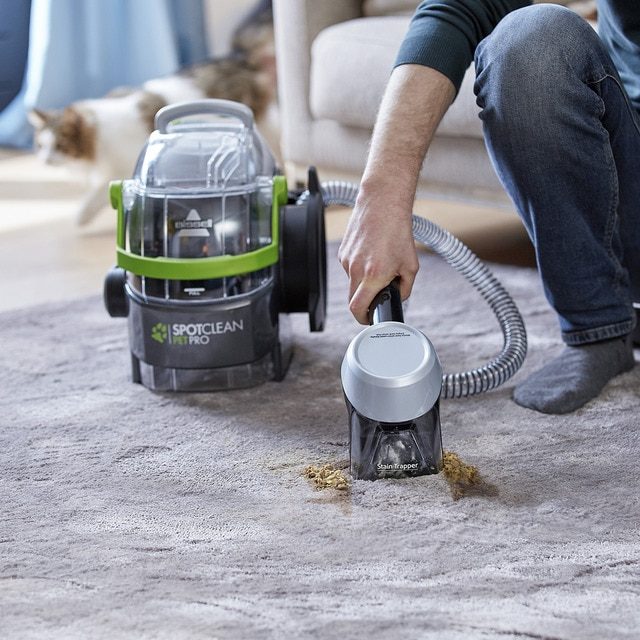
Extract, don't just spray. For anything beyond a surface dribble, a portable extraction machine (like the Little Green) sprays clean solution in and suctions the dirty mess out. Spray-only cleaning leaves residue in the pad.
Machine vs. Spray: Which Do You Need?
Sprays (enzyme cleaners) handle fresh, surface-level accidents and odor treatment. Every pet household needs one on hand. They're cheap, fast, and sufficient for maybe 70 percent of incidents.
Portable extractors (Little Green, Pet Stain Eraser) are for the other 30 percent: larger accidents, vomit, muddy paw prints ground in, and anything that reached the pad. If you have a puppy, a senior pet, or light-colored carpet, a portable extractor pays for itself the first month.
Full-size carpet cleaners (PowerDash) are for homes where accidents are frequent or you're doing whole-room refreshes. Overkill for one well-trained adult dog; essential for multi-pet chaos.
The Mistakes That Set Stains Permanently
- Using steam or hot water first. Heat bonds protein stains permanently — it's the same reason you wash blood out cold. Always start cool.
- Using ammonia-based cleaners. To a pet's nose, ammonia smells like urine. You're essentially marking the spot for a repeat performance.
- Not treating deep enough. Surface cleaning a pad-deep stain guarantees the smell returns. Saturate to the depth of the original accident.
- Skipping the blacklight check. A cheap UV flashlight reveals old stains you didn't know existed — essential before you declare victory or move furniture.
Frequently Asked Questions
Will the smell really go away completely? Yes, if you use enzyme cleaners correctly (full dwell time, deep saturation) and extract. If the pad itself is saturated after multiple incidents, the pad section may need replacing — no cleaner fixes a ruined pad.
Are enzyme cleaners safe around pets and kids? The ones listed here are formulated to be safe once dry. Keep pets off the treated area until it's fully dry, and store all cleaners out of reach as with any household product.
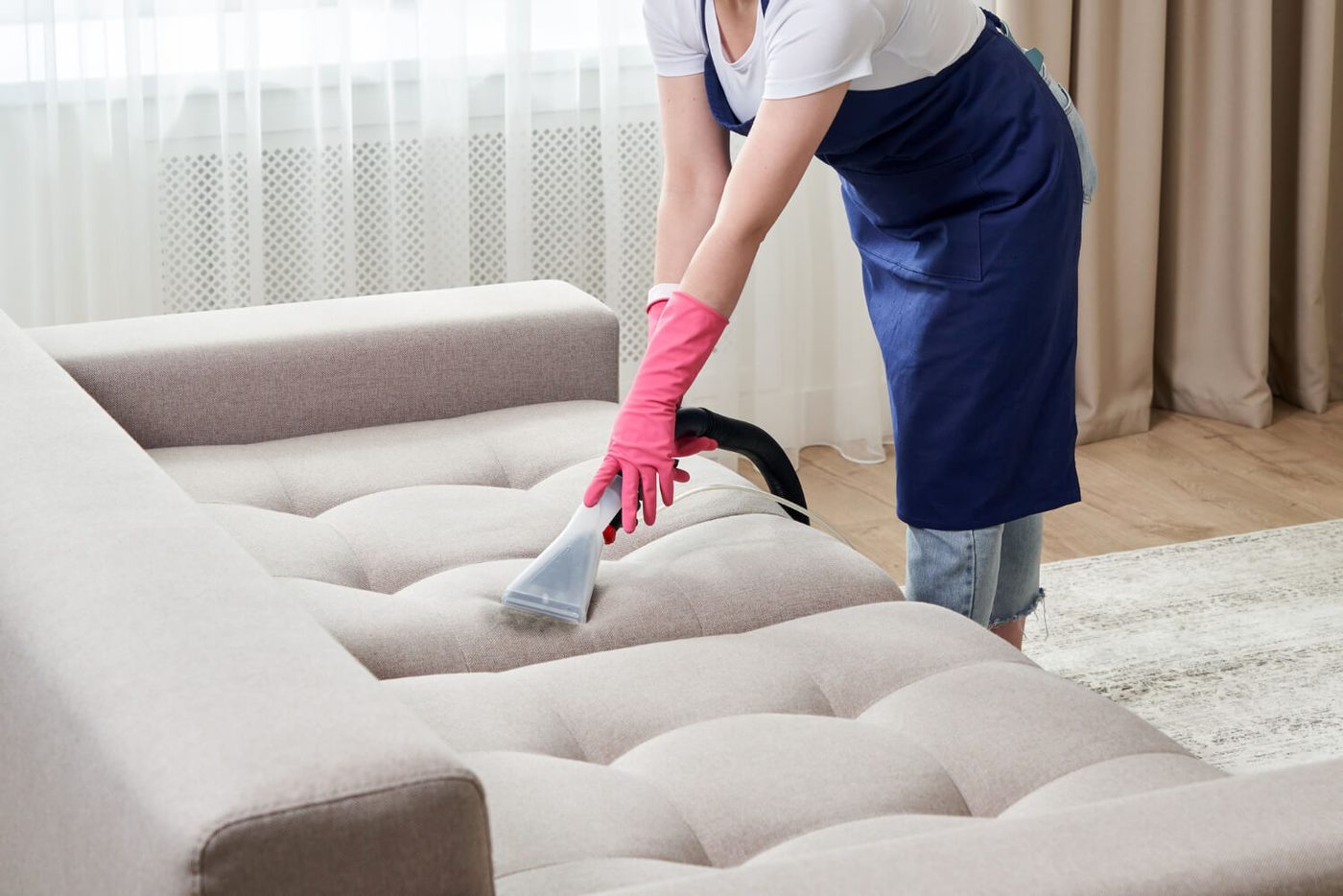
Can I use these on upholstery and rugs? Yes — portable extractors and enzyme sprays work on upholstery, area rugs, mattresses, and car interiors. Always spot-test in a hidden area first for colorfastness.
How do I prevent repeat accidents in the same spot? Clean thoroughly with enzymes (removing the scent marker), then make the spot unattractive or unavailable for a few weeks — a laundry basket over the area works. And rule out medical issues with your vet if accidents are new behavior.
The Bottom Line
Act fast, blot don't rub, enzymes before extraction, and never use heat first. Keep a spray within arm's reach and an extractor within the house, and pet stains become a five-minute inconvenience instead of a permanent feature of your decor.
Our Top Picks
Bissell Little Green Portable Carpet Cleaner
The cult-favorite spot cleaner that sprays, scrubs, and suctions pet messes out of carpet, upholstery, and car interiors.
- Extraction removes stains instead of spreading them
- Works on upholstery and stairs too
- Small tank means frequent refills on big jobs
Rocco & Roxie Enzyme Stain Remover
An enzyme-based spray that breaks down the proteins in urine and vomit — the key to eliminating odor, not masking it.
- Enzymes destroy odor at the source
- Safe for carpets, upholstery, and laundry
- Needs 10-15 minutes of dwell time to work
Hoover PowerDash Pet Compact Cleaner
A lightweight full-size machine for homes where pet accidents are a regular event, not a rare emergency.
- Cleans full rooms, not just spots
- HeatForce speeds drying
- Heavier and louder than a spot cleaner
Nature's Miracle Advanced Stain Remover
A widely available enzyme formula that tackles old, set-in stains other sprays give up on.
- Effective on dried, older stains
- Available in most stores same-day
- Strong scent during application
Bissell Pet Stain Eraser Cordless Cleaner
A grab-and-go cordless spot cleaner for the accidents you discover at 11 p.m. — no setup, no excuses.
- Cordless — clean the moment it happens
- Compact enough to keep handy
- Battery limits it to spot jobs
Woolite Pet Stain Remover with Oxy
An oxygen-powered spray for surface stains on carpet and rugs. Good first response before bringing out machines.
- No rinsing or vacuuming required
- Oxy action lifts visible staining
- Less effective on deep or old urine