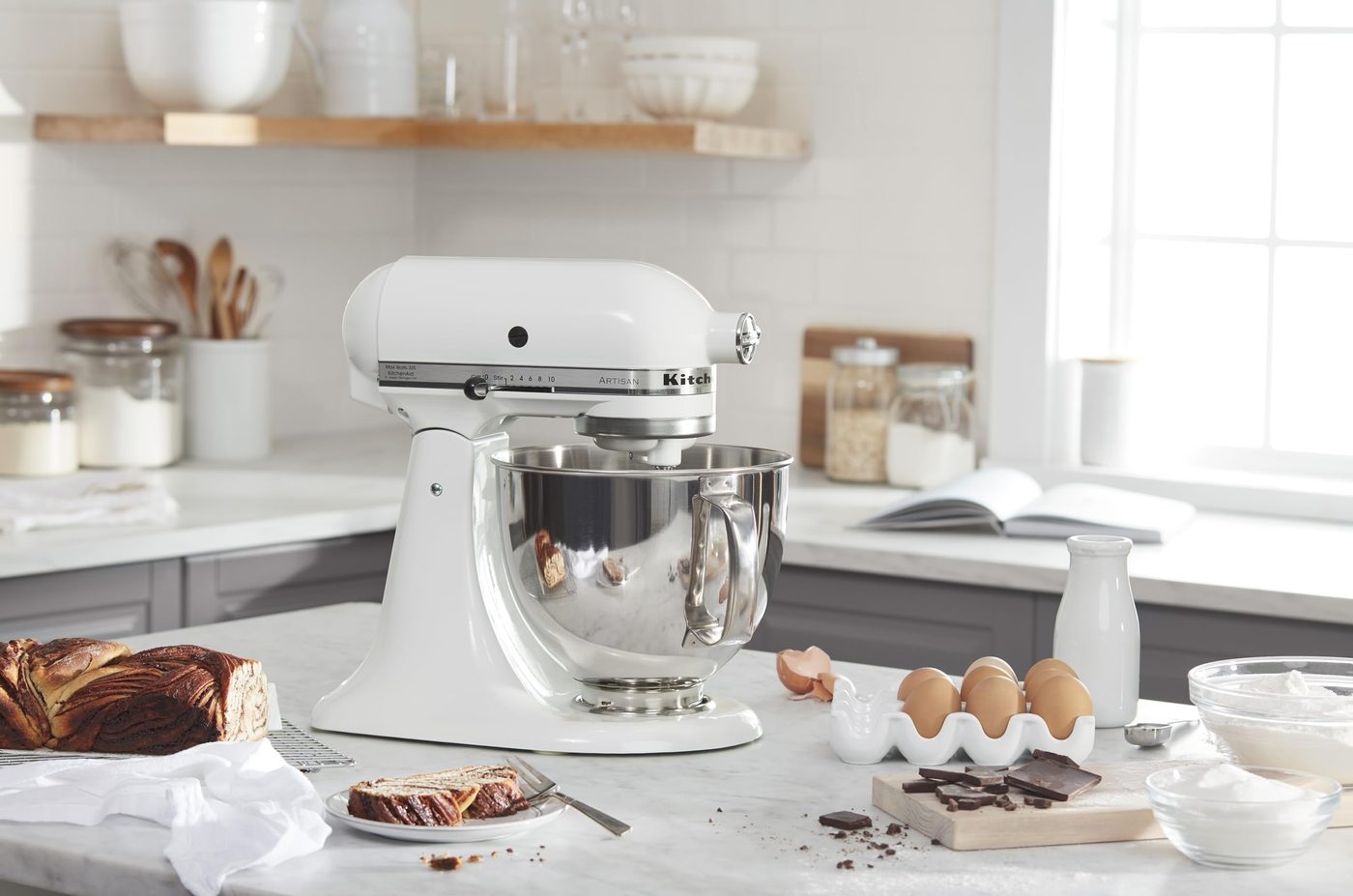
Maya bought her stand mixer in a fit of sourdough enthusiasm in 2021. It was beautiful — cream-colored, heavy, the kind of appliance that photographs well. For six months it earned its keep: bread every weekend, pizza dough on Fridays, a brief but intense bagel phase. Then the enthusiasm faded, and the mixer became the most expensive paperweight in her kitchen, occupying prime counter real estate for two years.
Maya's story is the stand mixer story in miniature. These are wonderful machines that many people buy for a fantasy version of their cooking life. A stand mixer is absolutely worth it — if you are the person who will actually use it. This guide helps you figure out whether that is you, and which one to buy if so.
Do You Actually Need One?
Be honest about your baking frequency. If you bake bread, pizza dough, or large-batch cookies at least twice a month, a stand mixer will save your arms and your schedule. If you make cake batter from a box twice a year, a $30 hand mixer does the job and stores in a drawer.
The in-between case — holiday baking marathons and occasional ambitious weekends — is where most buyers live. A mid-size tilt-head mixer handles these beautifully without the commitment of a pro machine. Also consider what you make: stiff doughs (bread, bagels, pasta) benefit enormously from a stand mixer; whipping cream and mixing muffin batter barely need one.
Counter space is the hidden cost. Measure your spot, including height under cabinets — bowl-lift models are tall. If the mixer will live in a pantry and come out monthly, buy lighter and smaller than you think.
Tilt-Head vs. Bowl-Lift
Tilt-head mixers hinge the top back so you can access the bowl easily — adding flour, scraping sides, swapping attachments. They are the most popular style, ideal for 4.5 to 5.5-quart capacities and general home baking. The trade-off: with very stiff doughs, the head can bounce or strain the hinge.
Bowl-lift mixers keep the head fixed and crank the bowl up into position. More stable, more powerful, better for heavy doughs and large batches — the choice of serious bread bakers. The trade-offs: taller, heavier, and slightly less convenient for quick ingredient additions.
For most buyers, tilt-head wins on convenience. Choose bowl-lift if bread is your primary use or you regularly mix double batches.
The Specs That Actually Matter
Capacity: 4.5 quarts handles everyday baking for one to four people. 5 to 5.5 quarts is the versatile sweet spot — double batches, party cookies. 6+ quarts is for serious bakers and big families. Bigger is not better if you mostly make small batches; ingredients get lost in an oversized bowl.
Power: Ignore wattage marketing — it measures electricity draw, not mixing strength. What matters is the motor and gearing: metal gears outlast plastic, and a well-built 300-watt mixer outperforms a cheap 600-watt one. Read reviews about dough performance, not the spec sheet.
Speeds and planetary action: Look for at least 6 to 10 speeds with a true slow stir setting (for folding flour without a dust cloud). Planetary mixing — the beater spirals while orbiting — is standard on quality machines and ensures no unmixed pockets.
Attachments included: Every mixer should come with a flat beater, dough hook, and wire whisk. Beyond that, pasta rollers, meat grinders, and grain mills are genuinely useful if you will use them — but price the base machine first, since attachment ecosystems lock you to a brand.
Care and Longevity
A good stand mixer lasts decades — which makes build quality the real value metric. All-metal bodies and metal gears are worth paying for; they are what separates the 20-year machine from the 3-year one. Warranties tell the truth: one year is standard, longer suggests the manufacturer trusts its gears.
Clean as you go: dough dries into concrete. Most bowls and standard attachments are dishwasher safe, but wire whisks often are not — check before tossing one in. Wipe the body with a damp cloth; never submerge the head.
Frequently Asked Questions
Is an expensive stand mixer worth it over a budget one? If you bake regularly, yes — the difference is gears, stability, and longevity, not branding. A $150 mixer struggling with bread dough is money wasted; a $350 one that lasts 15 years is cheap per use. Occasional bakers should save the money.
Can a stand mixer knead bread dough? Good ones, absolutely — that is their signature task. Use the dough hook on low speed (usually speed 2), and respect the flour capacity in the manual. Cheap mixers overheat on stiff dough; that is the clearest quality divide.
Tilt-head or bowl-lift for a beginner? Tilt-head. Easier to use, easier to clean around, and plenty capable for everything except heavy bread production. Upgrade to bowl-lift when your baking outgrows it.
How much counter space does a stand mixer need? Roughly a 14-by-14-inch footprint for tilt-head models, taller for bowl-lift — measure under-cabinet height before buying. Add room beside it for the bowl and ingredients during use.
Maya, for the record, kept her mixer — and started a monthly pizza night that finally justifies it. The machine was never the problem; the mismatch was. Buy the mixer for the baker you are, size it for the kitchen you have, and choose gears over glamour. Used twice a month for a decade, even the nice one costs pennies per batch.
Our Top Picks
ProBake 5.5-Qt Tilt-Head Stand Mixer
The sweet-spot mixer for most home bakers: big enough for double batches, with a tilt head for easy bowl access.
- Ideal capacity for family baking
- Tilt head makes adding ingredients easy
- Head can bounce with very stiff dough
ChefCore 4.5-Qt Classic Stand Mixer
A proven workhorse in the classic size — handles weekly baking without dominating the counter.
- Reliable, time-tested design
- Compact footprint
- Struggles with large bread dough batches
ArtisanPro 6-Qt Bowl-Lift Stand Mixer
A bowl-lift workhorse for serious bakers: stable, powerful, and built for heavy doughs and big batches.
- Extremely stable under load
- Handles stiff dough effortlessly
- Tall — check under-cabinet clearance
BakeLite 3.5-Qt Compact Stand Mixer
A genuinely small stand mixer for apartment kitchens and occasional bakers who still want real power.
- Fits small kitchens and low cabinets
- Light enough to move easily
- Too small for double batches
DoughMaster 7-Qt Commercial Stand Mixer
A high-capacity machine for bread bakers and batch cookers who regularly mix for a crowd.
- Powers through dense dough
- Huge capacity
- Overkill — and oversized — for most homes