Priya's bedroom was 9 by 11 feet, and it showed. The bed nearly touched three walls, the dresser blocked half the closet door, and the single small window faced a brick wall. "It felt like sleeping in a storage unit," she said. She assumed the only fix was moving — until a designer friend spent an afternoon rearranging what she already owned, and the room felt like it had gained fifty square feet. Nothing was renovated. Nothing was even purchased that day.
Small bedrooms feel cramped for visual reasons more than physical ones. Heavy furniture, dark corners, and blocked sightlines tell your brain the room is smaller than it is. Designers reverse all three with tricks that cost little or nothing. Here are the nine that make the biggest difference.
The Nine Tricks
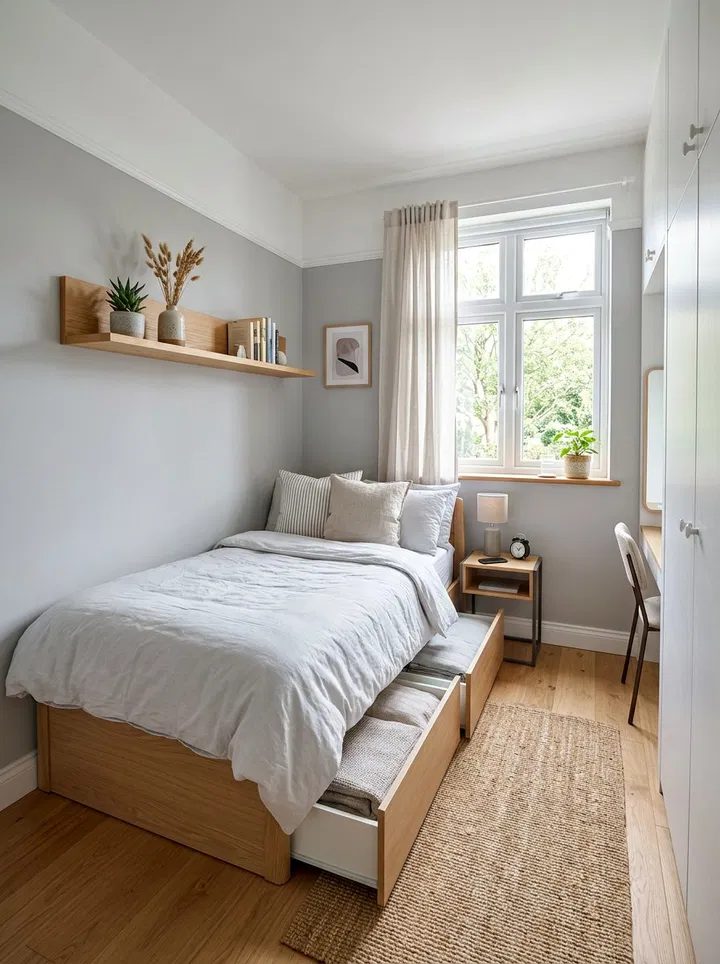
1. Hang curtains high and wide. Mount the rod 4 to 6 inches above the window frame and extend it 3 to 4 inches past each side. The window reads as dramatically larger, and the eye travels up — ceilings feel taller instantly.
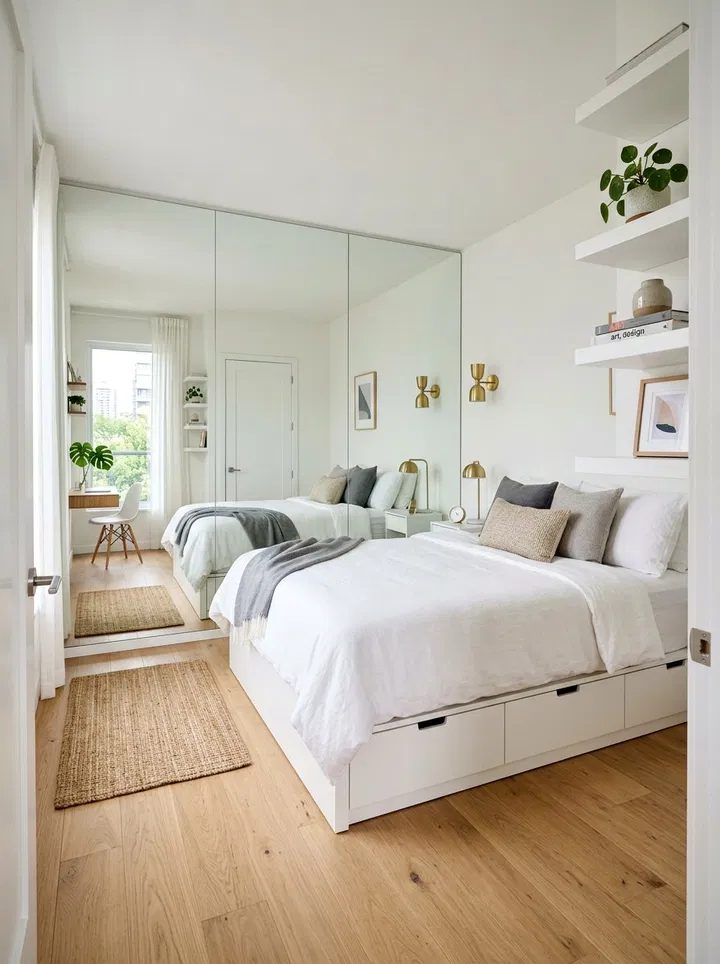
2. Lean a full-length mirror opposite the window. A mirror facing the window doubles your light source and your view. Leaner mirrors need no mounting, and the reflection creates genuine visual depth, not just brightness.
3. Choose leggy furniture. Beds, nightstands, and dressers with visible legs let you see floor underneath, and visible floor equals perceived space. A low platform bed with legs beats a boxy frame that sits on the ground.
4. Go low with the bed. The lower your mattress sits, the more wall shows above it, and tall walls read as a tall room. A 10-inch platform frame can make an 8-foot ceiling feel noticeably higher.
5. Keep one wall breathing. Resist filling every wall. One relatively empty wall — even with a single piece of art — gives the eye somewhere to rest, and resting eyes perceive calm spaciousness.
6. Use glass and lucite where you can. A glass-top side table or lucite tray holds what you need without adding a visual block. If the eye passes through it, the brain doesn't count it as clutter.
7. Light every corner. Dark corners visually shrink a room's boundaries. A small lamp, a wall sconce, or even a daylight bulb in the closet eliminates the shadows that make walls feel closer than they are.
8. Match large pieces to the wall color. A white dresser against a white wall recedes; a dark wood one advances. You don't need an all-white room — just keep your biggest pieces close to the wall tone so they don't chop up the space.
9. Declutter surfaces ruthlessly. Nothing shrinks a small room faster than visual noise. Corral the small stuff — chargers, books, bottles — into one tray or drawer. Clear surfaces read as square footage.
Common Mistakes That Shrink a Room
The biggest offender is pushing everything against the walls, which paradoxically makes a room feel smaller — a few inches of breathing room around furniture reads as generosity. Next is the too-small rug: a postage-stamp rug under the bed chops the floor into fragments, while a larger rug unifies it. And avoid heavy, dark bedding piled high; tall stacks of pillows visually lower the ceiling.
Frequently Asked Questions
What color makes a small bedroom look bigger? Light, warm neutrals — soft white, pale greige, warm cream. But the finish matters as much as the color: an eggshell or satin sheen reflects light, while flat paint absorbs it. One accent wall in a slightly deeper tone can actually add depth if the other three stay light.
Should I use a big mirror or several small ones? One big mirror, every time. A single large reflection reads as a continuation of the room; a gallery of small mirrors reads as decoration. Lean it, don't hang it — the slight tilt catches more light.
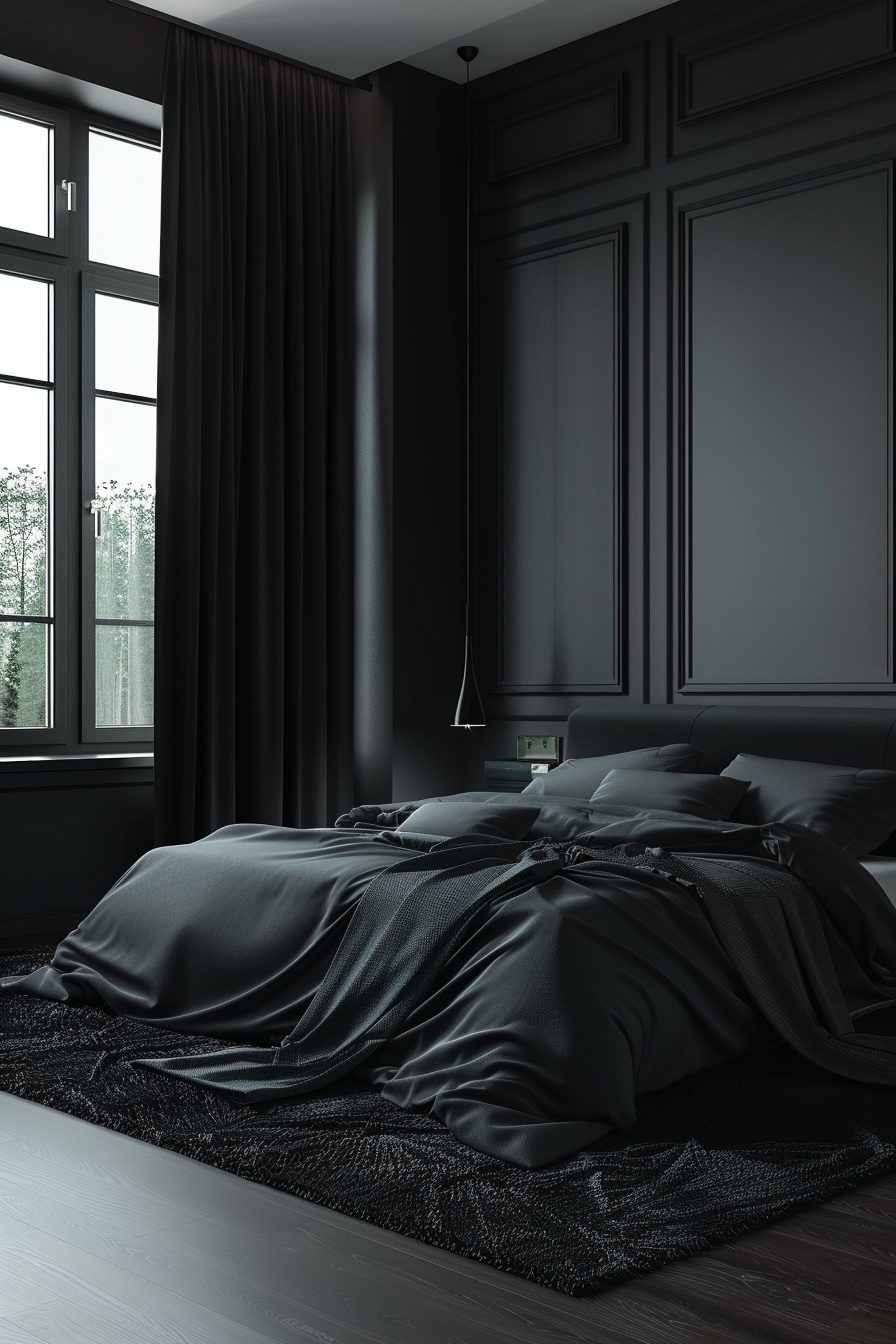
Can a small bedroom have dark walls? Yes, with discipline. Dark walls recede and can feel cocooning rather than cramped — but you must compensate with strong lighting, a large mirror, and light bedding to keep contrast. It's an advanced move, not a beginner one.
Is it better to have one big dresser or two small ones? One appropriately sized dresser. Multiple small pieces multiply visual edges and legs, which chops up the floor plane. One clean-lined dresser that fits the wall is calmer and looks more intentional.
You can't change your bedroom's square footage without a sledgehammer. But you can absolutely change how big it feels — and most of these tricks take an afternoon, not a renovation.
Our Top Picks
VistaView Leaner Floor Mirror, 65x22 Inch
A full-length leaner mirror that bounces light and doubles the visual depth of a room. No mounting hardware needed — it just leans.
- Instantly doubles perceived space
- No drilling or wall anchors required
- Needs a stable wall to lean against safely
AirFlow Sheer White Curtain Panels, 2-Pack
Light-filtering sheer panels that let daylight pour in while keeping privacy. Hang them high and wide to fake taller windows.
- Maximizes natural light
- Makes windows look larger
- Offers privacy but not darkness
LiftBase Low-Profile Platform Bed Frame
A 10-inch platform frame that lowers your sightline and exposes more wall above the bed — the oldest small-room trick in the book.
- Low profile makes ceilings feel higher
- No box spring needed
- Less under-bed clearance for storage
NestRound Glass-Top Side Table
A small round side table with a glass top that visually disappears. Holds a lamp and a book without adding visual bulk.
- Glass top keeps sightlines open
- Small footprint fits tight corners
- Shows fingerprints and dust
BrightDay 5000K LED Flush Mount Ceiling Light
A slim daylight-temperature ceiling light that washes the whole room in even, shadow-free brightness. Shadows shrink rooms.
- Even light eliminates dark corners
- Slim profile suits low ceilings
- Daylight tone feels cool to warm-light lovers