The Parkers are a family of four in a 900-square-foot rental, and their entryway is a four-by-five-foot patch of floor by the front door. Every evening, two adults and two kids kick off their shoes in the same spot. By Friday the pile is fourteen shoes deep, someone is always tripping, and weekday mornings start with a frantic hunt for one missing sneaker while the school bus idles outside.
Their problem is not laziness. It is the absence of a system. An entryway works when every arriving item has an obvious, easy landing spot within arm's reach of the door. Without that, the floor becomes the system, and the floor always loses.
These nine systems are the ones that actually end the shoe pile, whether your entryway is a grand foyer or a strip of wall beside the door.
The 9 Systems That Work
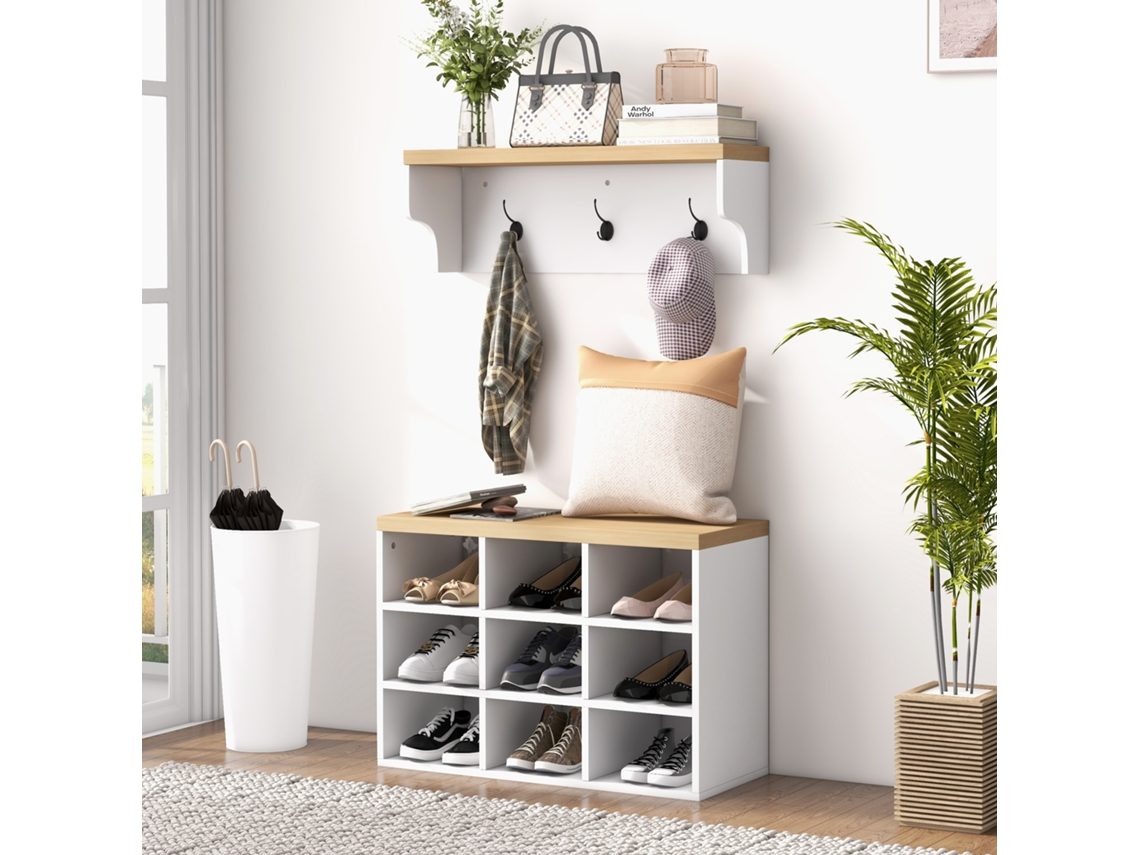
1. A storage bench. A bench with cubbies or a lift-up seat does two jobs: it stores shoes out of sight and gives everyone a place to sit while putting them on. Measure your space first; a bench deeper than 16 inches will swallow a narrow hallway.
2. Hooks at two heights. Adults get a row at 60 inches, kids get a row at 36 to 40 inches. If the hook is above a child's reach, the jacket goes on the floor. This is the single highest-impact change for families.
3. A shoe tray. One tray by the door catches the wet, muddy pair of the day. It keeps grime contained and gives dirty shoes a legitimate home instead of the middle of the floor.
4. One basket per person. Assign each family member a basket for the small stuff: gloves, sunglasses, dog leash, reusable bags. When the basket is the boundary, clutter has a limit.
5. A keys-and-mail station. A small tray or wall-mounted holder by the door ends the pat-down panic. Keys, wallet, and outgoing mail live here and nowhere else.
6. An umbrella stand. Wet umbrellas need a drip-friendly home. A narrow stand tucks into a corner and keeps them from dripping across the floor.
7. A mirror. Not storage, but it earns its place: a last look before leaving reduces the return trips that scatter freshly organized items.
8. A washable rug. A low-profile, machine-washable runner defines the zone and catches the dirt that trays miss. Low pile matters so the door still swings.
9. Seasonal rotation. Store off-season gear elsewhere. The entryway should hold this week's shoes and coats, not the whole year's. A twice-yearly swap takes twenty minutes and doubles your effective space.
What to Look For
Choose wipeable surfaces. Entryways collect mud, rain, and road salt, so sealed wood, metal, and washable fabrics beat raw wood and upholstery. Check the footprint against your actual floor space with painter's tape before ordering; a bench that blocks the door swing will be hated within a week.
Weight capacity matters for benches and hooks. A bench should hold a seated adult comfortably, and hooks should handle a loaded winter backpack without pulling out of the wall. Use proper anchors, not just the screws in the box, on drywall.
Common Mistakes to Avoid
The most common mistake is buying storage that is too deep for the space, turning a hallway into an obstacle course. The second is mounting hooks at adult height only, which guarantees kids' things end up on the floor. The third is skipping the tray: without a designated spot for wet shoes, mud goes everywhere no matter how nice the bench is. Finally, do not aim for a catalog look. An entryway that is slightly lived-in but functional beats a pristine one nobody dares to use.
Frequently Asked Questions
What if my entryway is just a wall with no closet? A narrow bench, a wall rail with hooks, and a shoe tray cover the essentials in about four feet of wall. Go vertical with hooks and skip anything deeper than 14 inches.
How do I make this work in a rental where I cannot drill? Use over-door hooks, a freestanding bench, adhesive hooks rated for the weight, and a tension rod with curtain for a makeshift closet. Everything leaves with you.
How many hooks does a family of four need? Plan two per person minimum: one for the daily jacket, one for a bag. Eight to ten hooks on two rails at different heights covers most families.
How do I handle wet winter boots? A deep-lipped tray by the door is the answer. Let boots drip there, and keep a small towel nearby for quick wipe-downs. Never store wet boots in a closed bench cubby.
The Parkers installed a bench, a low hook rail for the kids, and a tray. Mornings are not perfect, but the shoe pile is gone, the missing-sneaker hunt has dropped to nearly zero, and the entryway finally does the one job it has: getting everyone out the door on time.
Our Top Picks
EntryNest Storage Bench with Cubbies
A sturdy bench with two open cubbies underneath that swallows shoes while giving everyone a place to sit and tie them.
- Seating plus storage in one footprint
- Solid build handles daily use by kids and adults
- Each cubby fits only two to three pairs
KidHook Wall Rail with 5 Hooks
A short wooden rail with five sturdy hooks, designed to mount at kid height so backpacks and jackets actually get hung up.
- Low mounting height kids can actually reach
- Strong hooks hold loaded backpacks
- Requires wall anchors; not ideal for strict no-drill rentals
BootTray Large Shoe Tray
A deep-lipped tray that catches mud, rain, and melting snow before they reach your floors.
- Contains wet mess in one wipeable spot
- Fits neatly under a bench or against the wall
- Holds only three to four pairs at a time
SortBin Entryway Basket Set of 4
Four handled baskets, one per person, that turn the entryway into assigned parking for gloves, hats, and miscellany.
- Gives every family member a defined spot
- Sturdy handles make them easy to carry and empty
- Kids will still toss things nearby if the basket is full