When Tom and Alicia bought their first house, the dining table was an afterthought — a hand-me-down from Alicia's parents that wobbled and seated four in a room built for eight. For two years they ate Thanksgiving squeezed around it like a puzzle. Then Alicia's mother visited, took one look, and said what everyone was thinking: "You need a real table."
They spent three weekends shopping and nearly bought the wrong table twice — once too big to walk around, once a beautiful marble top that would have stained the first time someone set down a coffee mug. A dining table is one of the longest-lived furniture purchases you will make. This guide is the crash course they wish they had.
Size: Measure the Room, Not the Table
Start with the room, not the catalog. You need at least 36 inches of clearance on every side of the table for chairs to pull out and people to walk behind them. In a 10-by-12-foot dining room, that leaves room for roughly a 48-by-72-inch table — seat six comfortably, eight in a pinch.
For seating math, allow 24 inches of table width per person as a minimum, 28 to 30 for real comfort. A 60-inch rectangular table seats six; a 72-incher seats six generously or eight cozily. Round tables follow diameter: 42 to 48 inches seats four, 60 inches seats six, 72 inches seats eight.
Height is standardized at 28 to 30 inches for dining, with counter-height (34 to 36) and bar-height (40 to 42) as alternatives. Pick one height for the whole setup — mixing a standard table with counter stools is a daily annoyance, not a design choice.
Shape: Match It to the Room and the Crowd
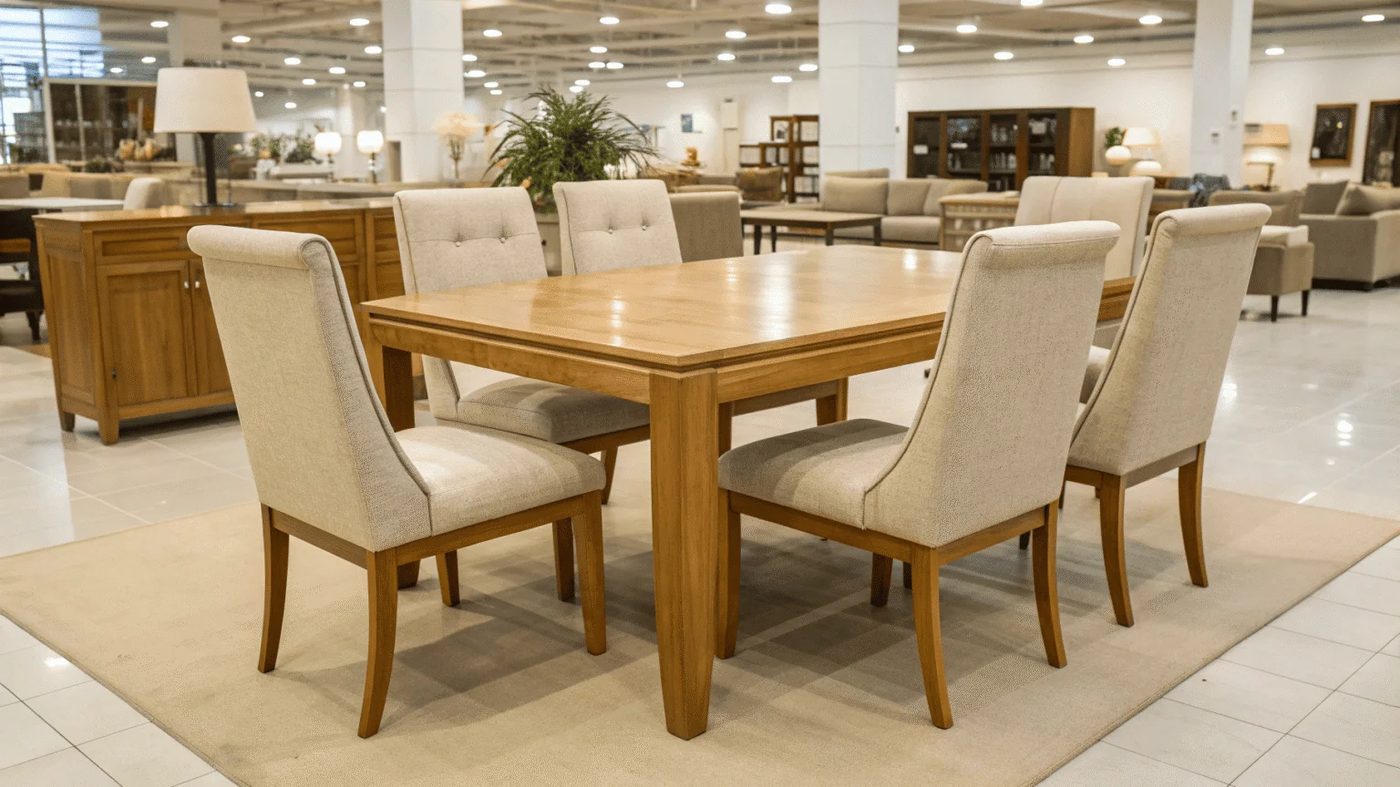
Rectangular tables are the default for good reason: they fit rectangular rooms, seat the most people per square foot, and push against a wall when you need floor space. If you host often, rectangle wins.
Round tables shine in square rooms and small spaces. Conversation flows better — everyone faces each other — and there are no corners to navigate in tight quarters. The trade-off is capacity: rounds seat fewer people than a rectangle of similar footprint, and large rounds make the center unreachable.
Oval tables split the difference, seating like a rectangle while softening a room's lines. Square tables work for intimate four-tops but scale awkwardly; an eight-person square is a conference table, not a dining table.
Materials: Honest Trade-offs
Solid wood (oak, walnut, acacia) is the lifetime buy. It can be sanded and refinished, develops character, and survives kids. It costs more and needs coasters, but it is the only top that gets better with age.
Wood veneer over engineered core looks like solid wood for less money and resists warping better in humid climates. The catch: once the veneer chips or wears through, it cannot be refinished. Fine for a five-to-eight-year table.
Glass keeps small rooms feeling open and wipes clean instantly. It shows every fingerprint and crumb, and tempered glass, while strong, can shatter dramatically if struck hard on an edge.
Stone and marble are stunning and nearly indestructible structurally — but they stain, etch with acids like lemon and wine, and weigh a ton. Beautiful for low-use dining rooms; stressful for daily family life.
Laminate and melamine are the budget workhorses: stain-proof, cheap, and convincing from a distance. They will not fool anyone up close and cannot be repaired, but for a first apartment they are entirely respectable.
The Details That Decide
Check the apron — the skirt under the tabletop. A deep apron looks substantial but steals knee room; make sure your tallest diner fits. Pedestal bases free up leg space but can wobble on large tops; four-leg tables are inherently steadier.
If you need flexibility, consider extendable tables. Butterfly leaves store inside the table and unfold in seconds; drop leaves suit daily small use. Test the mechanism in person if you can — a stiff, fiddly leaf will train you never to extend the table.
And think about the chairs now, not later. Seat height should leave 10 to 12 inches between chair seat and tabletop underside. Buying the table first and discovering your dream chairs do not fit is a classic, avoidable heartbreak.
Frequently Asked Questions
What is the most durable dining table material for kids? Solid wood with a hard finish, or a quality laminate. Solid wood can be refinished after the crayon years; laminate simply ignores them. Avoid marble and glass with young kids.
How much should I spend on a dining table? For a daily-use table you expect to keep a decade, $500 to $1,500 hits the sweet spot of solid construction without designer markup. Under $300 usually means veneer or laminate — fine, but plan on replacing sooner.
Can I put a big table in a small dining room? Only if the 36-inch clearance rule still holds. A table that forces guests to squeeze past chairs makes the whole room feel cramped, no matter how pretty the table is. When in doubt, size down and extend for parties.
Is an extendable table as sturdy as a fixed one? A well-made one, yes — look for smooth mechanisms and solid locking. Cheap extendables wobble at the seam. If you extend rarely, a separate folding table stored elsewhere is sometimes the sturdier answer.
Buy the table for the life you actually live: the Tuesday dinners more than the Thanksgiving fantasy. Measure the room, be honest about maintenance, and choose the material that forgives your household's habits. The right table disappears into daily life — which is exactly what a ten-year purchase should do.
Our Top Picks
Harlow 60-Inch Solid Wood Dining Table
A straightforward solid acacia table that seats six and shrugs off daily life, at a price that respects your budget.
- Genuine solid wood, not veneer
- Seats six comfortably
- Assembly takes two people
Nordmark Round Pedestal Table
A 48-inch round pedestal table that keeps conversation flowing and squeezes into tight dining corners.
- No corner legs to bump knees
- Great for small or square rooms
- Maxes out at four to five diners
ExtendMate Drop-Leaf Dining Table
A clever drop-leaf design that serves as a daily two-top and expands for dinner parties.
- Adapts from 2 to 8 seats
- Ideal for apartments
- Leaf seam is visible when extended
Foundry Industrial Dining Table
Reclaimed-look wood top on a black metal base — the statement piece for lofts and farmhouse-modern rooms.
- Extremely sturdy construction
- Hides wear beautifully
- Very heavy to move
Aria Glass-Top Dining Table
A tempered glass top on a slim metal base that visually disappears, keeping small dining areas feeling open.
- Makes small rooms feel larger
- Wipes clean in seconds
- Shows every fingerprint