Priya loved everything about her new apartment except the windows. The previous tenant had left behind blinds, and the living room felt like an office. So she bought curtains — pretty ones, in the exact width of the window — hung them on the rod that was already there, and stepped back. Somehow the room looked smaller.
Six months later, a designer friend visited, took one look, and diagnosed the problem in ten seconds: the curtains were too short, too narrow, and hung too low. "You basically put a Band-Aid on the window," she said. "Curtains are supposed to frame it."
Priya rehung everything that weekend — rod higher, rod wider, longer panels — and the same windows suddenly looked twice as tall. Nothing else in the room changed. This guide is the ten-second diagnosis, so you get it right the first time.
Length: The Floor Is the Target
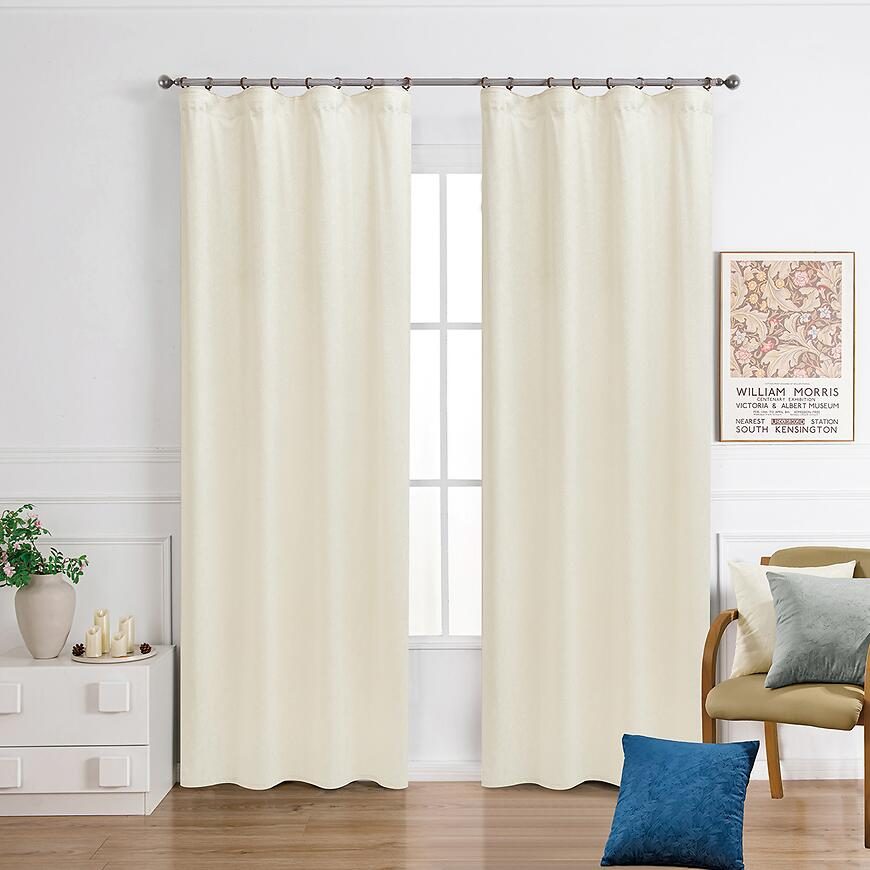
The single biggest curtain mistake is buying panels that end at the windowsill or, worse, hover awkwardly mid-wall. Unless you have a radiator or furniture directly under the window forcing your hand, curtains should just kiss the floor — the hem grazing the ground or pooling by half an inch.
Standard panel lengths are 63, 84, 95, 108, and 120 inches. Measure from where your rod will sit (more on that below) down to the floor, then round up to the nearest standard length. Too long is fixable with hem tape or a quick tailor visit; too short is not fixable at all. When in doubt between two lengths, take the longer one.
For a tailored look, aim for a "break" — the fabric just touching the floor. For a relaxed, romantic feel, let two extra inches puddle. Avoid the high-water look at all costs: curtains that stop inches above the floor make ceilings feel lower and windows feel smaller.
Width: Double the Window, Minimum
Here is the math most people miss: curtain width is not window width. For proper fullness, your combined panels should measure 1.5 to 2 times the width of the window frame. A 60-inch window needs 90 to 120 inches of panel width total — so two 60-inch-wide panels, not two 30-inch ones.
Skimpy curtains that stretch flat across the window look cheap even when the fabric is expensive, because all the beautiful folds disappear. Generous fabric creates the gathers that catch light and shadow, which is what makes curtains look luxurious. This is the rare home purchase where buying more than you need is the correct move.
If you are layering sheers behind heavier panels, the sheers follow the same rule. Each layer should be full on its own.
Rod Placement: Higher and Wider
The rod does as much work as the curtains. Mount it 4 to 6 inches above the window frame — or halfway between the frame and the ceiling in rooms with tall ceilings. This single move makes windows look taller and ceilings higher, and it costs nothing.
Extend the rod 8 to 12 inches beyond the frame on each side. When the curtains are open, the panels should stack on the wall, not cover the glass. Covering the glass with bunched fabric shrinks the window and blocks daylight; stacking on the wall frames the view and maximizes light. For a 60-inch window, that means a rod around 84 inches wide.
Use a level when you mount. A rod that slopes even slightly is visible from across the room and ruins the whole effect.
Choosing Fabric for the Job
Match the fabric to the room's needs, not just its looks. Bedrooms usually want blackout or at least room-darkening panels — morning light is lovely until it arrives at 5:40 a.m. in June. Living rooms do well with linen or cotton that filters light softly while keeping daytime privacy.
Sheers are the unsung heroes: they solve the "I want light but not the neighbors' view" problem and layer beautifully under heavier panels for evening privacy. In kitchens and bathrooms, skip floor-length fabric near water and heat; café curtains or washable short panels are the practical pick.
And check the care label before you buy. Linen wrinkles, velvet collects pet hair, and silk fades in direct sun. The prettiest curtain is the one you will actually maintain.
Frequently Asked Questions
Should curtains touch the floor? Yes, in most rooms. The hem should just graze the floor or break slightly on it. The only exceptions are windows above radiators, deep sills with furniture underneath, or kitchens and bathrooms where long fabric is impractical.
How wide should each panel be? Add up all panels to 1.5 to 2 times the window's width. For a standard two-panel setup on a 60-inch window, buy two panels that are each at least 45 to 60 inches wide.
Can I hang curtains without drilling? Yes. Tension rods work inside the window frame for lightweight café curtains, and adhesive or twist-fit brackets hold standard rods on many wall types. For heavy blackout panels, though, drilled anchors into studs are worth the effort.
Do curtains need to match in every room? No, but they should relate. Keep the same rod finish or a consistent hem length throughout the home for cohesion, then vary fabric and color by room. Identical curtains everywhere can feel like a hotel.
Measure twice, mount once, and buy more fabric than feels reasonable. Curtains are one of the few decor moves where the math matters more than the taste — get the numbers right and almost any fabric looks expensive.
Our Top Picks
LinenWeave Natural Linen Curtain Panels
Breathable European-style linen panels with a relaxed drape that softens modern and traditional rooms alike.
- Beautiful natural texture and drape
- Machine washable linen blend
- Wrinkles easily out of the dryer
Harlow Blackout Curtain Panels
Triple-weave blackout panels that block morning light and insulate drafty windows, in colors that do not scream blackout.
- Genuine light blocking, no liner needed
- Thermal backing cuts drafts
- Heavier than standard panels
CloudSoft Sheer Voile Panels
Featherweight voile sheers that filter harsh sun into a soft glow while keeping the room bright.
- Gorgeous light diffusion
- Inexpensive way to layer windows
- Offer no privacy at night
IronCraft Adjustable Curtain Rod
A sturdy adjustable rod spanning 48 to 86 inches with ball finials, strong enough for heavy blackout panels.
- Holds heavy curtains without sagging
- Easy tool-light installation
- Finial styles are limited
TailorFit No-Sew Hem Tape
Iron-on hem tape that shortens too-long panels in minutes — the renter-friendly fix for standard sizes.
- No sewing machine needed
- Holds through washes
- Not suitable for very heavy fabrics