Priya loved cooking but hated her kitchen. Not the cabinets or the stove — the counters. Every flat surface held something: the knife block, the paper towel holder, three olive oil bottles, a leaning tower of mail, the toaster she used twice a week, and a fruit bowl that mostly held receipts. Actual cooking happened in a twelve-inch clearing between the sink and the stove, like prepping dinner on an aircraft tray table.
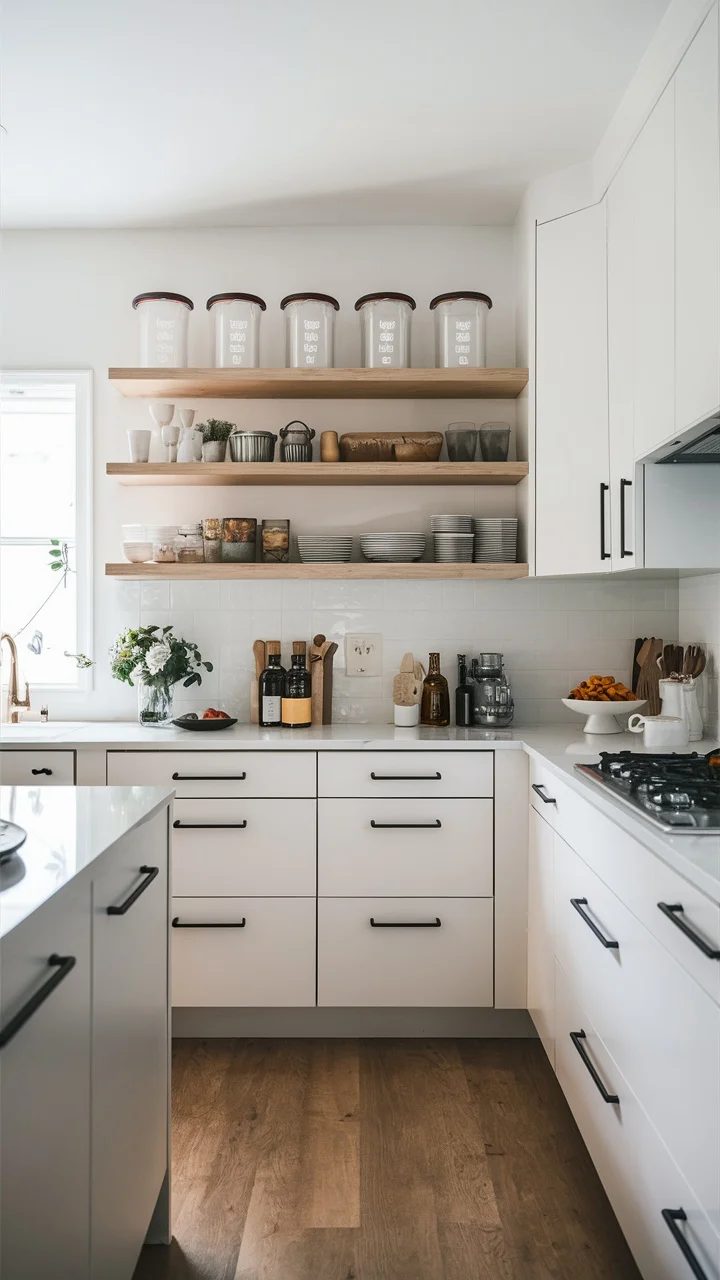
Her problem was not a lack of space. It was that everything lived on the counter by default. Counter organization is not about buying more containers — it is about deciding what earns counter space and giving everything else a real home.
The nine ideas
1. Mount your knives on the wall. A magnetic knife strip moves the entire knife block off the counter in ten minutes. Mount it on the backsplash within arm's reach of your main prep zone.
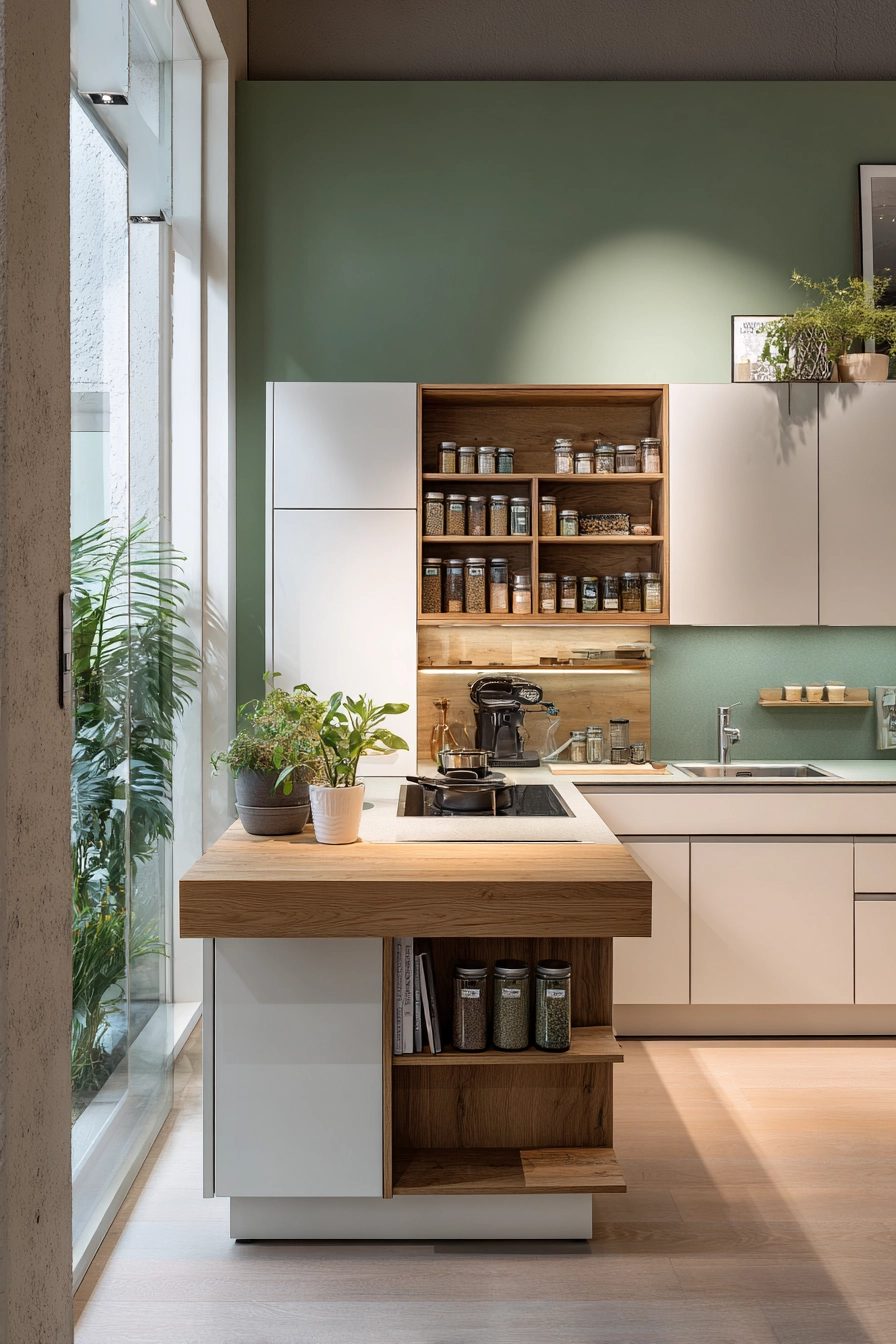
2. Decant the pantry staples. Flour, sugar, rice, and coffee migrate from crinkled bags to airtight canisters. Uniform canisters look calmer than a row of half-open bags, and airtight lids keep things fresher.
3. Move dish drying over the sink. An over-sink rack or roll-up drying mat reclaims the entire counter section that used to hold a dripping dish rack.
4. Exploit the corners. Corner counter space is where appliances go to be forgotten. A tiered corner shelf turns it into visible, reachable storage for oils, spices, and vinegars.
5. Garage the appliances. The toaster, the stand mixer, the coffee maker — if you do not use it daily, it should not live on the counter. An appliance garage (a roll-top cabinet) hides them while keeping them plugged in and accessible.
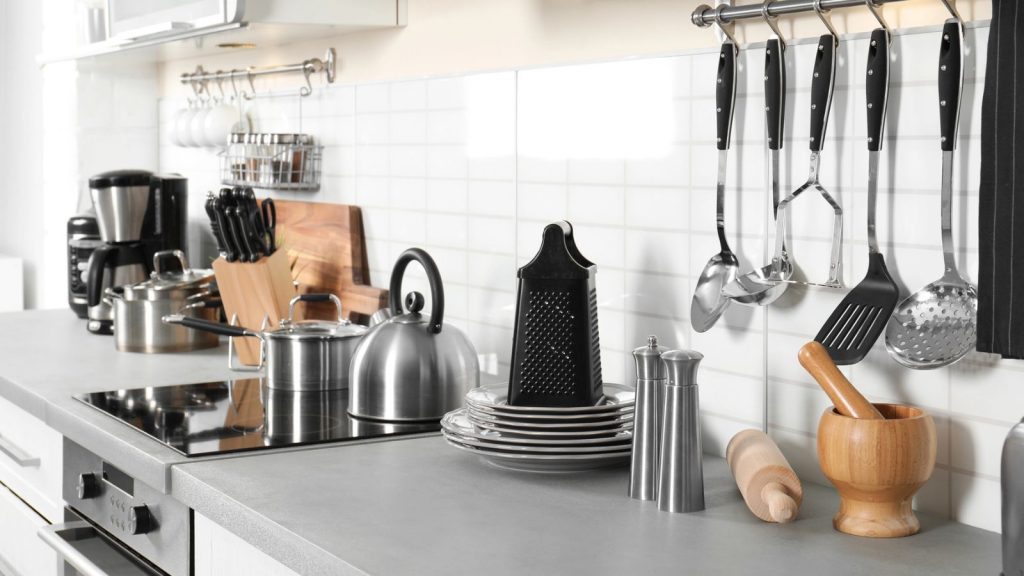
6. Go vertical with a rail system. A wall-mounted rail with S-hooks holds utensils, mugs, and small baskets. It is the single highest-impact change for small kitchens.
7. Corral the daily kit. Keep salt, pepper, cooking oil, and your most-used spatula on one small tray. The tray defines a boundary: these four things live here, everything else gets put away.
8. Relocate paper goods. Paper towels, napkins, and plastic wrap do not need counter space. Under-cabinet paper towel holders and drawer organizers for wrap and foil free surprising amounts of room.
9. Create a landing strip — somewhere else. Mail, keys, and sunglasses colonize counters because there is no better spot. A small tray or wall organizer by the door ends the migration.
What earns counter space?
Apply a simple test: does it get used at least once a day, and is it annoying to fetch from a cabinet? The coffee maker passes. The bread machine you use monthly does not. Be honest about the toaster. Most kitchens can clear a third of their counter clutter with this test alone.
Common mistakes
Buying organizers before decluttering is the classic error — you end up with tidy containers full of things you do not need. Purge first, then measure your actual remaining items, then buy. Second mistake: choosing pretty over functional. A gorgeous ceramic utensil crock that holds four spatulas when you own twelve is decoration, not organization. Third: ignoring the backsplash and wall space. In small kitchens, the walls are square footage you already own.
Frequently Asked Questions
How do I organize counters in a rental where I cannot drill? Adhesive-mounted rails, hooks, and magnetic strips designed for renters hold surprisingly well. Tension-rod under-cabinet shelves and over-sink racks need no drilling at all.
Should small appliances live on the counter? Only daily-use ones. If you use it less than five times a week, it belongs in a cabinet or appliance garage. The coffee maker stays; the waffle iron goes.
What is the cheapest high-impact change? A wall-mounted rail with S-hooks, usually under twenty dollars. It moves utensils, mugs, and small tools off the counter and onto the wall in one move.
How do I keep counters clear with kids? Give everything a labeled home at kid height for their things (snacks, cups) and keep adult clutter contained to one tray. The landing-strip-by-the-door idea matters most — backpacks and papers need a destination other than the kitchen counter.
Start with the purge test, then pick two or three ideas from the list. Priya cleared her counters in a single Saturday — knife strip on the backsplash, toaster in a garage, mail tray by the door — and says cooking dinner finally feels like cooking, not camping.
Our Top Picks
Modern Innovations Stainless Magnetic Knife Strip 16-Inch
A wall-mounted magnetic strip that frees an entire knife block's worth of counter space in ten minutes.
- Holds knives securely off the counter
- Installs with screws or adhesive
- Needs a free stretch of wall or backsplash
Anchor Hocking TrueSeal Glass Canister Set
Airtight glass canisters that consolidate half-open bags of flour, sugar, and coffee into a tidy row.
- Airtight lids keep staples fresh
- Glass lets you see levels at a glance
- Set takes up a full cabinet shelf if stored away
SimpleHouseware Over-Sink Dish Drying Rack
A roll-up or rack-style over-sink organizer that moves dish drying off the counter entirely.
- Frees the entire drying area
- Folds flat for storage
- Only fits standard-depth sinks
Greener Chef Bamboo 3-Tier Corner Shelf
A tiered corner stand that turns dead corner space into storage for spices, oils, and small jars.
- Uses wasted corner space
- Sturdy bamboo construction
- Top tier is hard to reach for shorter cooks
Home-It Moso Bamboo Appliance Garage
A roll-top bread-box-style cabinet that hides the toaster and coffee maker while keeping them plugged in.
- Hides small appliances instantly
- Roll-top door tucks away while in use
- Sized for standard appliances only