When Marcus started cooking dinner at home five nights a week, his ten-dollar grocery-store cutting board became the bottleneck of every meal. It slid across the counter while he minced garlic. It warped into a gentle taco shape after a few trips through the dishwasher. And his chef's knife, which had arrived razor sharp, went dull within two months of scraping across its scarred plastic surface.
He is not alone. The cutting board is the most-used tool in most kitchens and the least thought about. People will research a skillet for weeks and then chop on whatever flat thing came free with a knife set. But the board you choose affects your knife's edge, your prep speed, and honestly, how much you enjoy cooking.
What actually matters in a cutting board
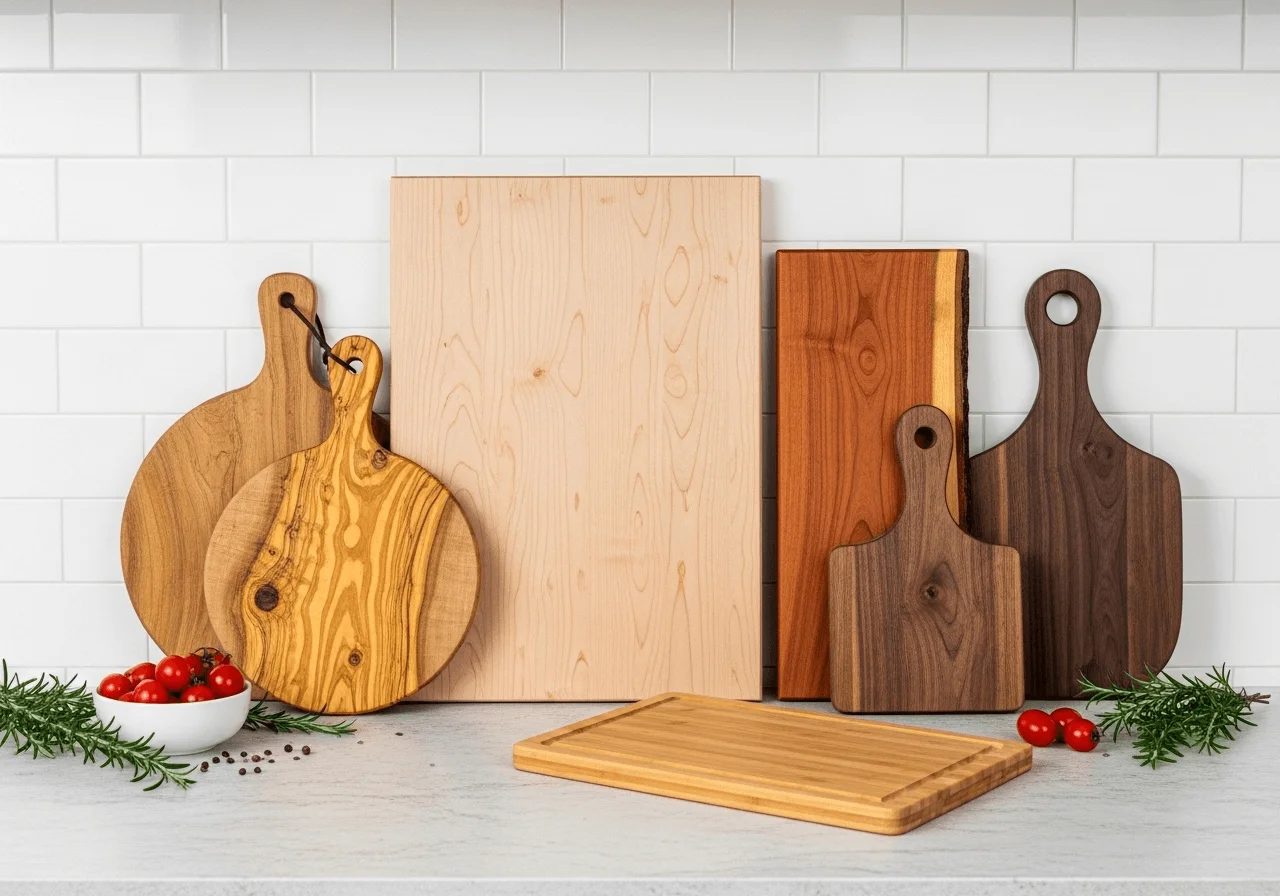
Material comes first. Wood (maple, walnut, teak, acacia) is kind to knives and, with basic care, lasts decades. End-grain boards are the premium choice: the wood fibers face upward, so knife blades slip between them rather than severing them, and the surface partially self-heals. Edge-grain boards are cheaper and still excellent. Bamboo is affordable and hard, but that hardness is a trade-off — it dulls knives faster than wood. Plastic (HDPE) boards are cheap, dishwasher-safe, and the right call for raw meat, but they scar and need replacing every couple of years. Glass and stone boards look sleek and will destroy your knives. Skip them entirely.
Size and thickness. For real cooking, you want at least 15 by 11 inches of usable surface — enough to hold a pile of diced onion without it avalanching off the edge. Thickness matters for stability: anything under half an inch will flex or slide. Heavy boards stay put; light boards need a damp towel underneath.
Juice grooves and extras. If you carve roasts or slice watermelon, a juice groove earns its keep. Reversible boards (flat on one side, grooved on the other) give you two tools in one. Avoid boards with built-in handles that shrink the cutting surface.
Common mistakes
The biggest one is putting wood boards in the dishwasher. The heat and prolonged soaking warp and crack wood — hand wash and dry upright, always. Second: using one board for everything. Keep a plastic board for raw meat and poultry (it can go in the dishwasher for true sanitizing) and wood for everything else. Third: never oiling a wood board. A monthly rub with food-grade mineral oil takes two minutes and prevents drying and cracking. Finally, scraping chopped food off with the knife's edge — flip the knife over and use the spine, or use a bench scraper. Your edge will thank you.
How to care for a wood board
Wash with hot soapy water right after use, towel dry, and stand it upright to air-dry fully. Once a month (or when the wood looks pale), rub in a generous coat of food-grade mineral oil, let it soak overnight, and wipe off the excess. If the board develops odors, rub it with half a lemon and coarse salt, then rinse. With this routine, a good wood board easily lasts ten years or more.
Frequently Asked Questions
Are bamboo cutting boards bad for knives? Not bad, but harder than wood. Bamboo's silica content dulls edges faster than maple or walnut. If you own good knives and cook often, wood is the kinder long-term choice.
Can I put a wooden cutting board in the dishwasher? No. The prolonged heat and moisture warp, crack, and split wood. Hand wash only, dry upright, oil monthly.
How often should I replace a plastic cutting board? When deep grooves no longer wash clean — typically every one to two years of daily use. Deep scars harbor bacteria that soap cannot reach.
What size cutting board do I actually need? For everyday cooking, 15 by 11 inches minimum. If you regularly prep for a family or batch-cook, go 18 by 12 or larger. Bigger is almost always better, as long as it fits your sink for washing.
A cutting board is a buy-it-once purchase if you choose well. Pick wood for daily vegetable and bread prep, keep a cheap plastic board for raw meat, oil the wood once a month, and your knives — and your dinners — will be better for it.
Our Top Picks
Teakhaus Edge Grain Teak Board 18x12
A dense, naturally oil-rich teak board that shrugs off daily chopping and needs oiling less often than maple.
- Naturally moisture-resistant teak
- Gentle on knife edges
- Heavier than plastic boards
John Boos Reversible Maple Board 20x15
The classic American butcher-block workhorse, thick enough to double as a carving station for roasts.
- 1.5-inch thickness stays put
- Reversible for double the surface
- Needs regular oiling to prevent drying
OXO Good Grips Utility Cutting Board
A lightweight, dishwasher-safe plastic board with grippy edges, ideal for raw meat and quick weeknight prep.
- Dishwasher safe
- Non-slip edges grip the counter
- Knife marks show over time
Epicurean Kitchen Series 14x10
A thin, dishwasher-safe board made from compressed wood fiber that will not warp, crack, or dull knives quickly.
- Slim profile stores anywhere
- Heat resistant to 350 degrees
- Too thin for heavy cleaver work
Ironwood Gourmet Acacia Board 18x14
A handsome acacia board with a juice groove that pulls double duty as a serving platter for cheese nights.
- Built-in juice groove
- Rich grain looks great on the table
- Hand wash only
Farberware Bamboo Board Set of 3
Three budget bamboo boards in graduated sizes, perfect for separating produce, bread, and raw proteins.
- Three sizes for under twenty dollars
- Light and easy to handle
- Bamboo is harder on knife edges than wood
Greener Chef XL Bamboo Board 18x12
An oversized bamboo board with deep juice grooves and a pour spout, built for big meal-prep sessions.
- Extra-large prep surface
- Deep grooves catch runoff
- Takes up serious counter space