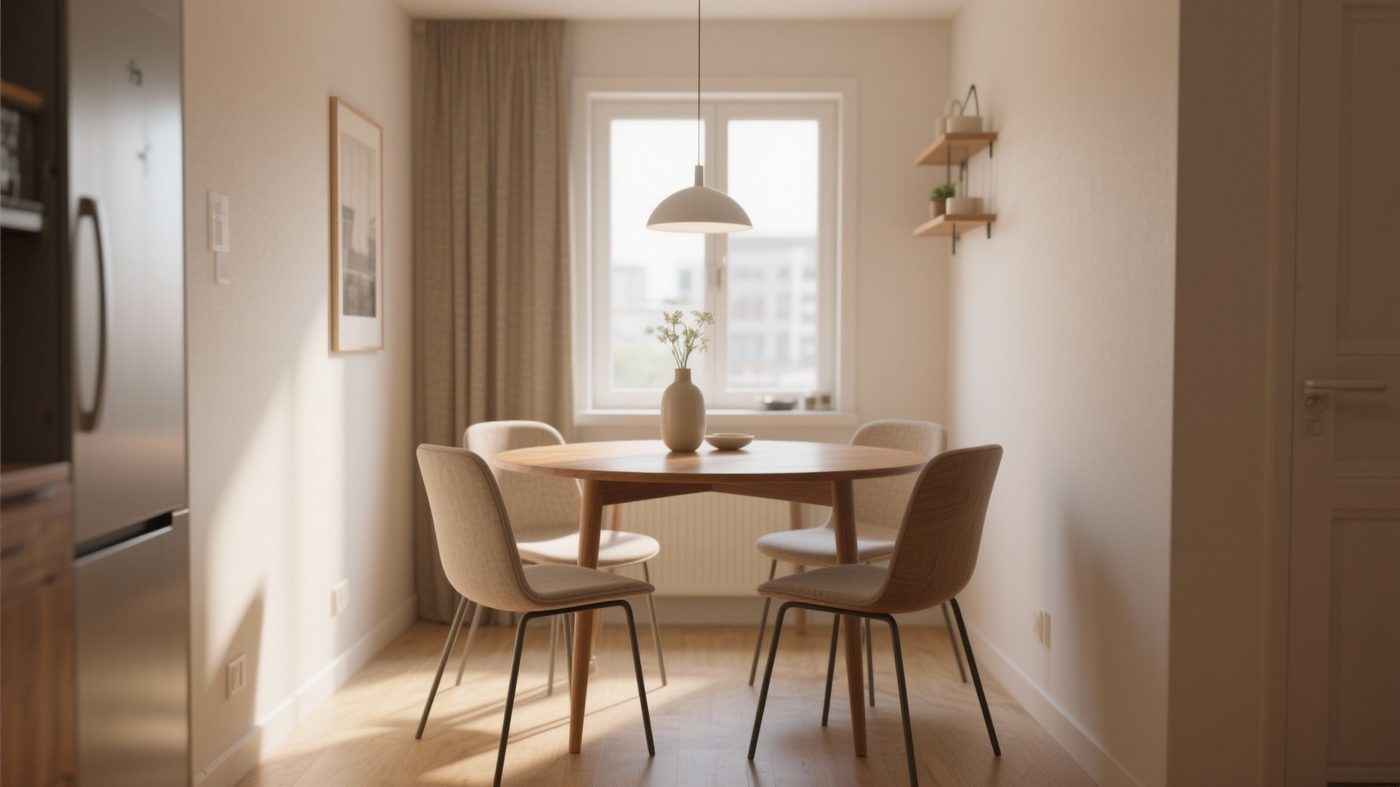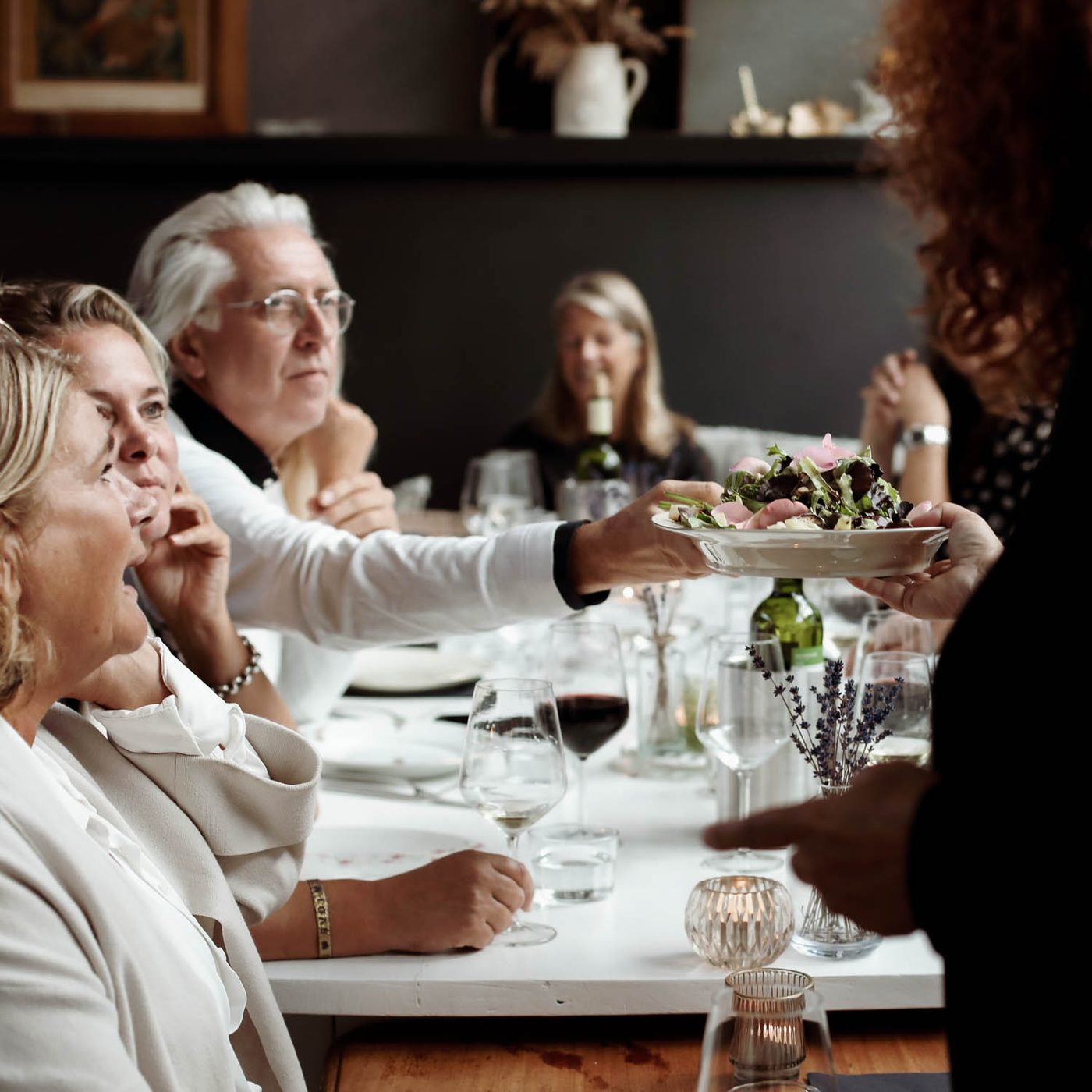
Every Thanksgiving, David did the same math. His dining room comfortably sat six. The guest list was eleven. The solutions of years past included a card table wedged against the radiator, two people eating on the couch, and one memorable year when his brother-in-law ate standing up. The food was great; the seating was a logistical humiliation.
Small dining rooms are not a character flaw — most city apartments and starter homes top out at seating for four to six. But a few times a year, you need to feed ten. The trick is seating that expands for the occasion and disappears after it.
The ten ways
1. Swap chairs for a bench on one side. A backless bench seats three where two chairs fit, and slides completely under the table when not in use. This single change is the highest-impact move for daily small dining.
2. Keep folding chairs that do not embarrass you. Modern folding chairs come in wood and padded upholstery. Store them flat in a closet or hung on wall hooks.
3. Add an extendable table. Drop-leaf and butterfly-leaf tables live small and grow for parties. If you are buying a table anyway, an 18-inch self-storing leaf is worth every penny.
4. Use the bench-plus-chairs mix permanently. Bench on one side, two chairs on the other, host chairs at the ends. It seats six at a table that looks like it seats four.
5. Borrow the desk chairs. Dining chairs and desk chairs are roughly the same height. For one night, nobody cares that the office chair has wheels — actually, kids fight over it.
6. Set up a satellite table. A folding table in the living room becomes the kids' table or the buffet, freeing the main table for adults.
7. Stack stools as flexible extras. Backless stools stack in a corner, serve as side tables daily, and become extra seats in seconds.
8. Floor cushions for casual gatherings. For low-key dinners, large floor cushions around a coffee table seat four more and store in a closet.
9. Extend with a table extender. A plywood board with clamps (or a commercial table extender) can add a foot to each end of a sturdy table for the night.
10. Serve buffet-style. When seating truly maxes out, move the food to a sideboard and let the table hold only plates and people. You fit two more diners without the serving dishes.
Measuring for extra seating
Allow 24 inches of table width per person minimum, 30 for comfort. A 48-inch table seats four comfortably, six squeezed. Chairs need 36 inches of clearance behind them to pull out — measure your room before buying that bench. And check door swing: nothing ruins a dinner like a chair blocking the kitchen door.
Common mistakes
Buying "extra" chairs that match perfectly but never get stored — they become permanent clutter. Choose extras designed to disappear: folding, stacking, or bench-style. Second mistake: forgetting table height. Counter stools (24-inch seat) do not work at a standard 30-inch dining table; you need 18-inch dining-height seats. Measure twice.
Making it feel intentional, not crowded
Extra seating only works if the room still feels like a dining room and not a furniture warehouse. Keep the color palette tight — mismatched chairs look deliberate when they share a color family, and chaotic when they do not. A tablecloth unifies a folding table with your real furniture instantly. And give the room breathing space: it is better to seat eight comfortably with a buffet than to cram ten around a table nobody can leave without a choreography. Guests remember the food and the company; nobody remembers whether the chairs matched.
Frequently Asked Questions
How many people can I fit at a 60-inch table? Six comfortably, eight cozy. Add a bench on one side and you can squeeze nine for a holiday.
Are benches comfortable for long dinners? For an hour or two, yes, especially with a cushion. Beyond that, backs matter. Put the most senior guests in real chairs.
What is the best folding chair for dinner parties? Padded upholstered folding chairs — comfortable enough that guests forget they are folding, and they still store flat in a closet.
How do I store extra seating in a small apartment? Wall hooks for flat folding chairs, under-bed for cushions, and benches that live under the table full-time. If it cannot disappear, it should earn its floor space daily.
David's solution, refined over the years: a bench on one side of the table, four decent folding chairs in the coat closet, and a folding table in the storage unit for the Thanksgiving overflow. Eleven guests, zero couch dinners.
Our Top Picks
IKEA TERJE Folding Chair
A slim solid-wood folding chair that hangs on a wall hook when not in use and actually looks decent at the table.
- Folds flat for wall storage
- Solid wood, not plastic
- No cushion — add a pad for long dinners
Winsome Wood 2-Piece Dining Bench
A backless bench that slides under the table and seats two to three where chairs would fit two.
- Seats more people per foot
- Tucks fully under the table
- No back support for long meals
MECO StakMore Padded Folding Chair
A padded, upholstered folding chair comfortable enough for a two-hour dinner party.
- Padded seat and back
- Folds for closet storage
- Bulkier than flat folding chairs
Nathan James Amalia Counter Stools Set of 2
Stackable stools that work as extra dining seats, side tables, or plant stands between parties.
- Stacks for compact storage
- Doubles as side tables
- Counter height — check your table height first
COSCO 6-Foot Folding Table
The classic folding table for when the guest list outgrows the dining table entirely — kids' table or buffet.
- Seats six to eight
- Folds flat against a wall
- Utilitarian looks need a tablecloth