Claire's sister had one, and Claire had always rolled her eyes at it — a towel warmer, the most first-world of bathroom gadgets. Then she visited in January, stepped out of the shower into a towel that felt like it came from a dryer, and understood completely. "It was maybe ninety seconds of my day," she said, "but I thought about it for weeks."
A towel warmer is pure, unapologetic luxury — which is exactly why it's worth evaluating honestly. Some models genuinely transform the daily shower; others are expensive towel racks that barely get lukewarm. The difference comes down to heat output, warm-up time, and whether the design fits your bathroom. Here's how to choose.
The Three Types
Freestanding racks plug into any outlet and need no installation. They're the easiest entry point and the best choice for renters. The trade-off is floor space — they occupy roughly the footprint of a small laundry hamper.
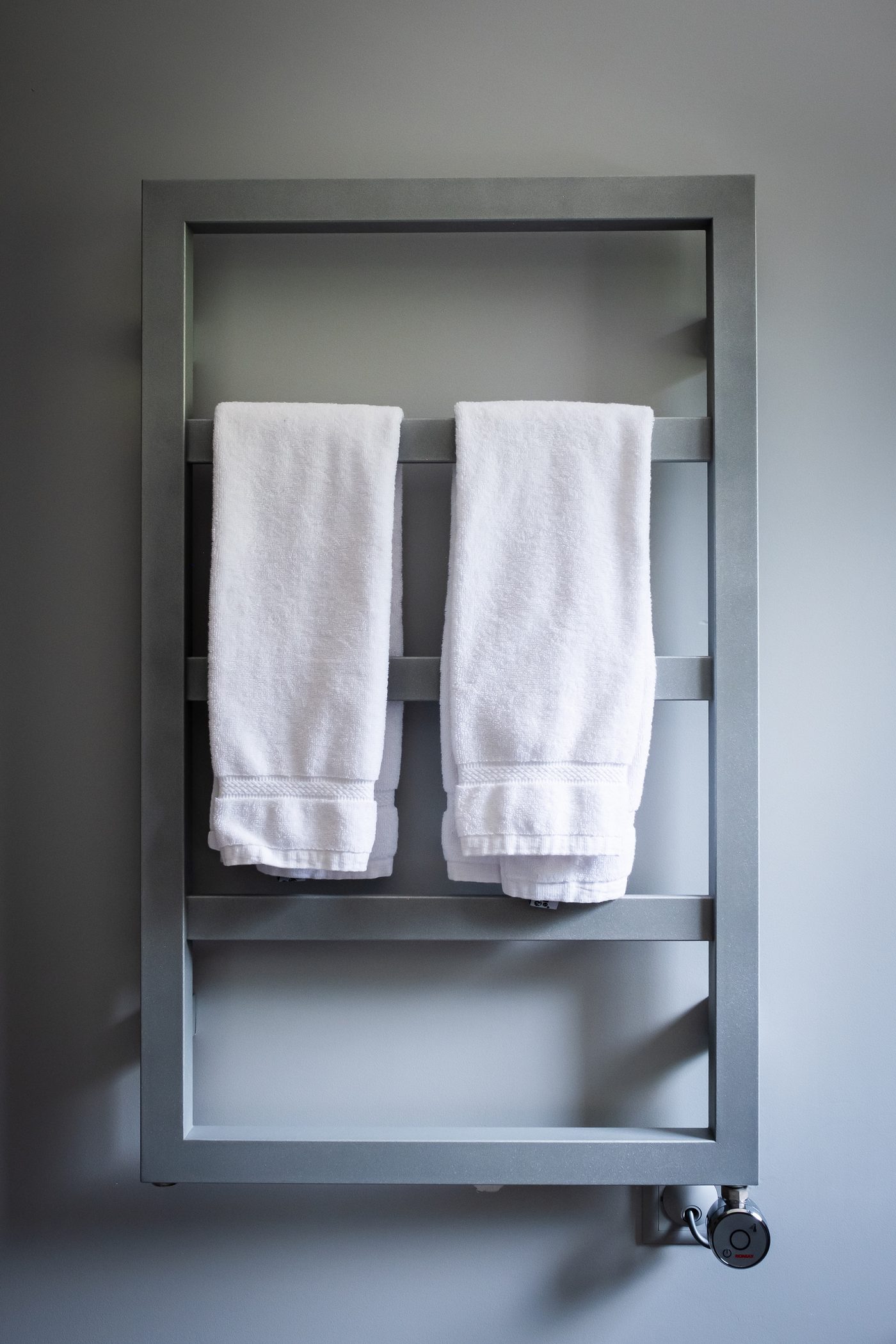
Wall-mounted rails (plug-in or hardwired) save floor space and look built-in. Plug-in versions need only a nearby outlet; hardwired versions need an electrician but look cleaner and often include timers. Both double as gentle bathroom heaters.
Towel warming buckets are the wildcard: insulated cylinders that heat one towel or robe to genuinely toasty temperatures. They don't dry or warm the room — they do one thing, intensely well.
What to Look For
Heat-up time and temperature. Good warmers reach 120–140°F (50–60°C) in 15 to 30 minutes. Anything slower means planning your shower around the warmer; anything cooler is just a rack.
Capacity vs. your towels. Count your household's shower towels. A couple needs at least six to eight bars; a family of four should look at wide freestanding units or two rails. Oversized bath sheets need wider spacing than standard bars provide.
Timer and auto-shutoff. A warmer left on all day wastes electricity and wears out faster. Built-in timers or smart-plug compatibility let you schedule warming for shower time only.
Installation reality. Be honest about your situation. Renters should stick to freestanding or plug-in models. Homeowners doing a bathroom refresh can justify hardwired — the clean look and timer integration are genuinely nicer.
Safety certifications. Any plug-in heating appliance in a bathroom should be UL or ETL listed for damp locations. This is non-negotiable.
Running Costs, Honestly
Let's do the math, because "luxury" sounds expensive until you price it. A typical towel warmer draws about 120 watts. Run it two hours a day — one hour before and after your morning shower — and that's 0.24 kWh daily. At the US average of around 17 cents per kWh, you're looking at roughly $1.20 a month. A plug-in timer or smart plug (about $12) automates the schedule so you never heat an empty bathroom. Compared to the dryer cycle you'd otherwise use to warm a towel, the warmer usually wins on energy too.
Frequently Asked Questions
Do towel warmers use a lot of electricity? No — most draw 100 to 150 watts, similar to a light bulb, and only while heating. With a timer set to shower hours, the monthly cost is typically a dollar or two.
Can a towel warmer dry wet towels? Warmer rails keep towels warm and help them dry between uses, but they're not a substitute for proper drying. A damp towel left bunched on a warm bar can still develop mildew — drape it loosely so air circulates.
Are towel warmers safe in small bathrooms? Yes, with proper clearance. Keep them away from direct water spray, ensure the outlet is GFCI-protected (as all bathroom outlets should be), and follow the manufacturer's clearance specs.
Plug-in vs. hardwired — which is better? Hardwired looks cleaner, hides the cord, and usually includes a timer. Plug-in costs a fraction to install (nothing) and moves with you. For most people, plug-in is the sane choice unless you're already renovating.
Ninety seconds of warm-towel bliss, twice a day, for years. Some splurges are frivolous. This one earns its keep every single morning — and on the coldest day of winter, you'll consider it the best money you ever spent on your bathroom.
Our Top Picks
CozyRail Freestanding Towel Warmer
A plug-in freestanding rack with eight heated bars. No installation — roll it next to the shower, plug it in, and enjoy warm towels in 20 minutes.
- Zero installation required
- Heats quickly and evenly
- Takes up floor space
SlimWall Wall-Mounted Towel Warmer
A hardwired wall-mounted ladder warmer with a built-in timer. Heats the bathroom as well as the towels — a genuine two-for-one.
- Doubles as a bathroom space heater
- Timer avoids wasting electricity
- Requires an electrician to install
BucketGlow Towel Warming Bucket
An insulated bucket warmer that heats a full-size bath towel or bathrobe in minutes. The coziest, most focused warmth of the bunch.
- Intensely warm, spa-like results
- Compact footprint
- Only warms one towel at a time
PlugPlay Heated Towel Rail
A plug-in wall-mounted rail with an on/off switch and 10-foot cord. All the wall-mounted benefits without opening up the wall.
- No electrician needed
- Slim profile hugs the wall
- Visible cord needs managing
DualHeat Towel Warmer with Drying Rack
A wide freestanding unit with heated bars plus a top drying shelf for delicates. Warms towels and dries hand-wash items overnight.
- Doubles as a delicates drying rack
- Wide bars fit bath sheets
- Larger footprint than rail models
MiniWarm Compact Towel Warmer
A small plug-in warmer sized for hand towels and washcloths — perfect for powder rooms or as a supplement to a full-size unit.
- Fits tiny bathrooms
- Very low energy use
- Too small for bath towels