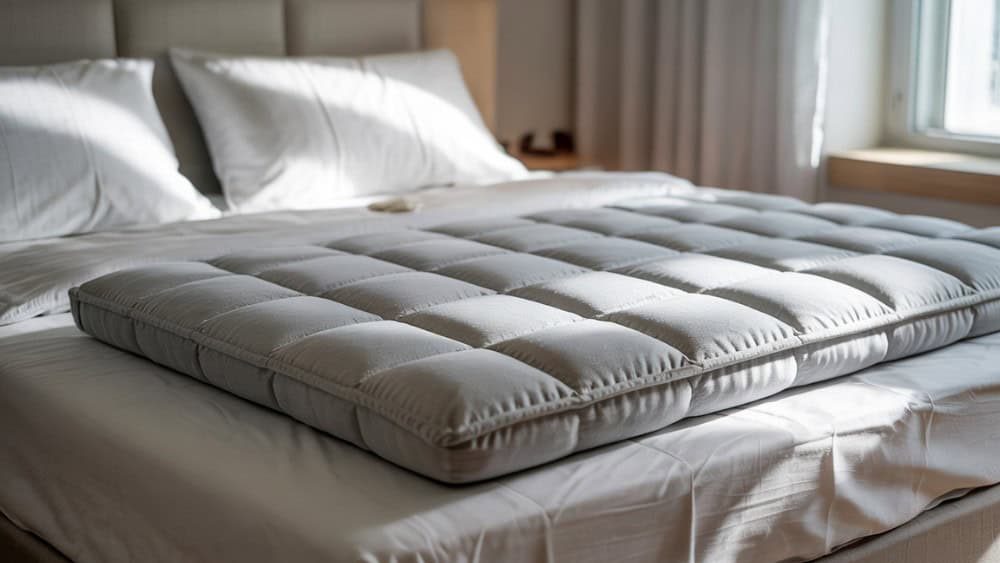
Elena had a morning ritual she hated: the duvet shake. Every day, she'd grab two corners of her duvet cover and flap it like a flag, trying to redistribute the comforter that had migrated into a sad lump at the foot of the bed overnight. Her cover had ties, technically — four flimsy ribbons that had snapped within a month. "I spent good money on a down comforter," she said, "and every morning it looked like a deflated balloon animal."
She is not alone. A duvet cover that won't stay put is one of the most common bedroom complaints, and it's almost never the insert's fault. The cover is doing the holding, and most covers are designed to look good in product photos, not to grip. The fix isn't a new comforter — it's a cover engineered to stay put: real corner ties, a closure that actually closes, and fabric with enough body to hold its shape.
Why Duvet Covers Shift (And What Actually Fixes It)
A duvet insert moves inside its cover for three reasons. First, no anchor points: without interior ties or loops, the insert is just fabric floating inside fabric. Second, a gaping closure: button or envelope closures that pop open let the insert creep out. Third, slippery fabric paired with restless sleep: sateen and microfiber are smooth against sheets, which is lovely until the whole sandwich slides.
The covers that stay put solve all three. Look for interior corner ties (eight beats four), a hidden zipper or secure button closure, and corner loops sturdy enough to thread through your insert's tabs. If your insert has no tabs, ties alone still help — they cinch the cover's corners around the insert's corners.
What to Look for Before You Buy
Closure type. Hidden zippers are the gold standard — nothing to pop open, nothing to snag. Buttons look classic but can gap; if you love buttons, check they're sewn tightly and spaced closely. Avoid envelope (fold-over) closures if shifting is your main complaint.
Corner ties and loops. Four ties is the bare minimum; six to eight is meaningfully better. Ties should be fabric ribbons or twill tape, not thin string. Bonus points for covers with snap anchors, which are faster to fasten than bows.
Fabric with body. Crisp percale, linen, and brushed flannel all grip better than slick sateen. That's not a knock on sateen — it feels wonderful — but if you toss and turn, a textured weave will hold position better.
True sizing. A cover that's even two inches too big in each direction gives the insert room to roam. Measure your insert and match the cover's listed dimensions, not just the "Queen" label — sizing varies wildly between brands.
Care reality. You'll wash the cover far more than the insert, so check the care label. Machine-washable cotton and microfiber are the lowest-maintenance; linen needs a gentler cycle but rewards you with softness.
Frequently Asked Questions
Should the duvet cover be the same size as the insert? Ideally, yes — or the cover up to two inches smaller for a plumper look. Never buy a cover larger than your insert; the extra room is exactly where bunching starts.
Do I need an insert with loops for the ties to work? It helps, but it's not required. Ties cinch the cover's corners snugly around the insert's corners either way. If your insert lacks loops, you can sew simple twill-tape tabs onto its corners in about ten minutes.
Percale vs. sateen for a cover that stays put? Percale. Its crisp, matte weave has more friction against the insert, so everything shifts less. Sateen feels silkier but slides more — better for calm sleepers.
How often should I wash a duvet cover? Every one to two weeks, same as sheets. One of the underrated perks of a good cover: you can wash it frequently without the insert losing its loft.
A duvet cover has one job beyond looking nice: holding still. Get the ties, the closure, and the size right, and the morning duvet shake becomes a ritual you finally get to retire. Your future self — the one who just rolls out of a perfectly even bed — will wonder why you waited so long.
Our Top Picks
CloudRest Cotton Percale Duvet Cover
A crisp 400-thread-count cotton percale cover with eight interior corner ties and a hidden zipper. The insert stays exactly where you put it.
- Eight corner ties beat the usual four
- Percale stays cool for hot sleepers
- Wrinkles more than sateen weaves
LinenHaven Stonewashed Linen Duvet Cover
Stonewashed European flax linen with coconut-button closure and interior ties. Gets softer with every wash and never looks fussy.
- Breathable and gets softer over time
- Relaxed look hides wrinkles beautifully
- Premium price for a full linen set
SateenDream Silky Sateen Duvet Cover
A smooth cotton sateen cover with a silky hand-feel, hidden button closure, and reinforced corner loops that fit chunky duvet tabs.
- Lustrous finish feels luxurious
- Reinforced loops fit thick comforter tabs
- Shows wrinkles more than linen
EverSoft Brushed Microfiber Duvet Cover
The budget hero: a brushed microfiber cover with a full-length zipper and six interior ties. Surprisingly grippy for the price.
- Very affordable
- Wrinkle-resistant and quick-drying
- Sleeps warmer than natural fibers
PureNest Organic Cotton Duvet Cover
GOTS-certified organic cotton with a simple envelope-free zipper closure and interior corner ties. No dyes, no fuss, no slipping.
- Certified organic with no chemical finishes
- Zipper lies completely flat
- Limited color range
BambooBliss Cooling Duvet Cover
A bamboo-viscose cover that stays cool to the touch, with snap-button corner anchors that lock onto duvet loops in seconds.
- Noticeably cool for night sweats
- Snap anchors are faster than ties
- Fabric pills if washed with rough items
FlannelHaven Heavyweight Flannel Duvet Cover
A brushed cotton flannel cover for cold sleepers, with a button closure and deep interior ties that hold lofty down inserts in place.
- Warm without feeling heavy
- Holds thick winter inserts securely
- Too warm for summer use