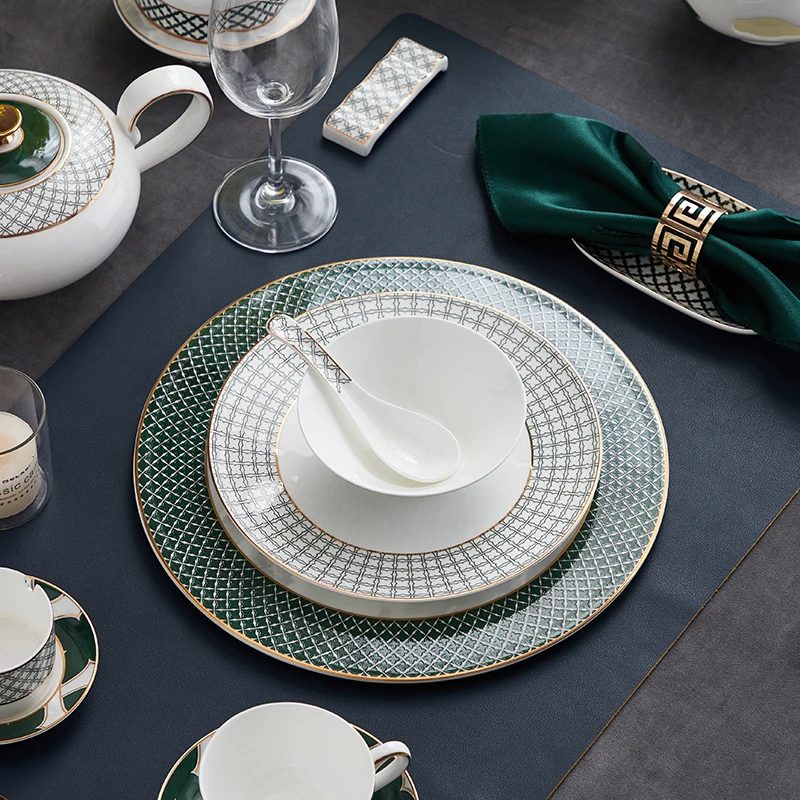
When Elena and her partner registered for their wedding, they picked the fanciest patterned china on the list. Three years later, those plates lived in a high cabinet while the couple ate off a mismatched fleet of chipped hand-me-downs. The good dishes were too precious for Tuesday tacos; the daily dishes were too sad for the in-laws. They needed what most households actually need: one set tough enough for every day and handsome enough for guests.
Everyday dinnerware has a harder job than fine china. It gets microwaved, stacked wet, knocked against the faucet, and run through the dishwasher hundreds of times a year. The right set disappears into your routine for a decade. The wrong set chips within a month and slowly migrates to the back of the cabinet.
What to look for
Material is the whole decision. Porcelain is the sweet spot for most people: non-porous, stain-resistant, dishwasher and microwave safe, with a refined feel. Stoneware is heavier and more casual, with lovely glazes, but it chips more easily at the rims and can craze (fine surface cracks) over time. Tempered glass (Corelle and its cousins) is nearly indestructible and featherlight, though it lacks the heft some people associate with a nice table. Melamine is for patios and kids, not daily indoor dining — it stains and cannot go in the microwave.
Weight and feel matter more than you think. You will lift these plates thousands of times. Stoneware place settings can weigh over five pounds per setting; if anyone in the house has wrist issues or you simply hate heavy dishes, lean porcelain or tempered glass.
The service count. A 16-piece set serves four (dinner plate, salad plate, bowl, mug each). For most couples, buy two 16-piece sets or one larger set to serve six or eight — running out of clean plates mid-week is the fastest way to hate a set you otherwise like.
Common mistakes
Choosing pattern over practicality is the classic one — bold patterns limit what you serve on them and date quickly. White or solid colors are the most versatile and the easiest to replace piecemeal. Second: ignoring the mug situation. Many sets include mugs you will never use because you already own favorites; check whether the set's value still works for you without them. Third: not checking replacement availability. Plates break. Buy from brands that sell open-stock replacements so one casualty does not orphan the set.
Care tips
Even dishwasher-safe stoneware lasts longer on the top rack away from the heating element. Stack with felt or paper plate separators if your cabinet is tight — most rim chips happen in storage, not at the table. Avoid thermal shock: do not move stoneware straight from a hot oven to a cold counter.
Matching the set to how you actually eat
Think about your real week, not an imagined dinner party. If you microwave leftovers daily, prioritize microwave-safe porcelain over delicate handmade stoneware. If you have toddlers, tempered glass or sturdy stoneware will outlive anything precious — you can always add a few nicer serving pieces later. Pasta-and-salad households should weight the decision toward large, generous bowls; if your set's bowls are cereal-sized, you will be annoyed every night. And if you entertain often, buy service for twelve in a pattern with open-stock replacements rather than two mismatched sets of eight. The most sustainable dinnerware is the set you never want to replace.
Frequently Asked Questions
Is stoneware or porcelain better for everyday use? Porcelain wins on durability and stain resistance; stoneware wins on style variety and a casual, hefty feel. For a busy household with a dishwasher, porcelain is the lower-maintenance choice.
Are expensive dinnerware sets worth it? Up to a point. The jump from a twenty-dollar set to an eighty-dollar set buys real durability. Beyond that you are paying for design and brand. Denby-level investment makes sense if you want one set for fifteen years.
Can you microwave stoneware? Most modern stoneware is microwave safe, but pieces with metallic trim are not, and very old or handmade pieces may contain materials that get hot. Check the manufacturer's marking on the bottom.
How many place settings do I need? Serve your household plus four. A family of four should own service for eight — it covers guests and the inevitable dishwasher backlog.
Buy for the Tuesday taco, not the wedding registry fantasy. A sturdy set you reach for every single day beats precious china that lives in a cabinet.
Our Top Picks
Corelle Winter Frost 16-Piece Set
Featherlight, nearly unbreakable glass dinnerware that survives drops, dishwashers, and decades of daily use.
- Chip and break resistant
- Stacks incredibly thin
- Can shatter dramatically if it does break
Gibson Home Soho Lounge 16-Piece Set
A budget stoneware set with a reactive glaze look that punches far above its price on the table.
- High-end look for little money
- Generous coupe-shaped bowls
- Heavier than porcelain or Corelle
Amazon Basics 18-Piece Porcelain Set
Simple white porcelain for six that goes from microwave to dishwasher without complaint.
- Classic white matches everything
- Porcelain resists staining
- Basic styling will not excite anyone
Lenox Portola 18-Piece Set
Crisp white porcelain with a subtle embossed rim — everyday durable with just enough polish for dinner parties.
- Dishwasher and microwave safe
- Timeless design
- Pricier than stoneware alternatives
Mikasa Italian Countryside 16-Piece Set
Rustic stoneware with hand-painted-style fruit motifs for people who want character, not minimalism.
- Charming rustic pattern
- Sturdy stoneware body
- Patterned rim limits food presentation
Noritake Colorwave 16-Piece Set
Modern stoneware in saturated solid colors with a speckled glaze, available in a dozen shades.
- Huge color range
- Contemporary coupe shapes
- Dark colors show scratches over time
Denby Halo 16-Piece Set
English-made stoneware fired for exceptional chip resistance — the investment pick that outlasts trends.
- Outstanding chip resistance
- Oven safe to high heat
- Premium price
Sweese 24-Piece Stoneware Set
A complete service for six with a matte glaze in muted tones, including the often-skipped dessert plates.
- Includes dessert plates
- Matte finish hides wear
- Matte glaze can mark with metal utensils