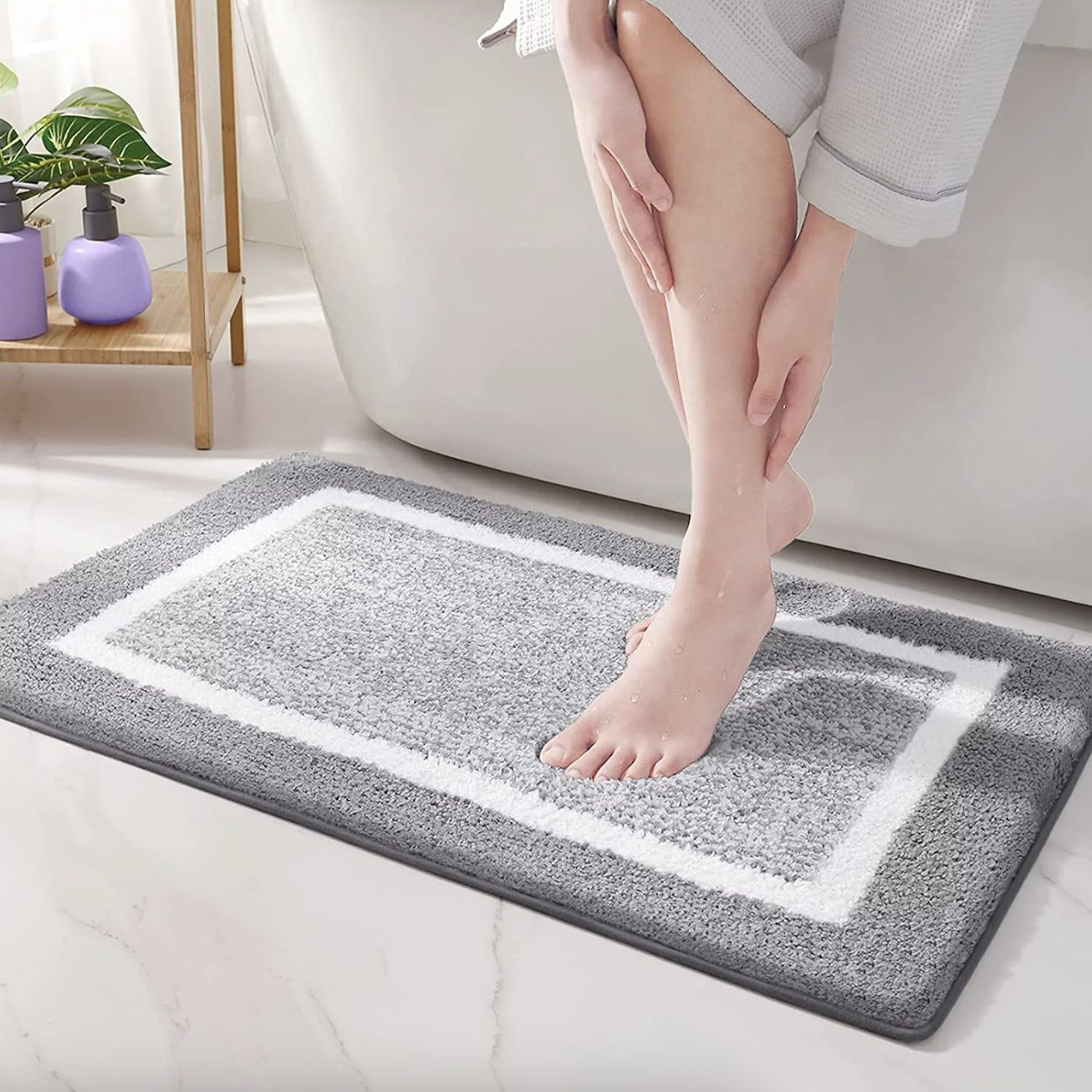
Nobody sets out to grow a science experiment in their bathroom. But there it was under Jen's bath mat: a constellation of dark spots on the tile, and a smell she'd been blaming on the drain for weeks. She'd bought the mat for its cloud-like thickness — the denser the pile, the longer it held water against the floor. "I was basically running a petri dish with my feet," she said.
Bath mats get moldy for one reason: they stay damp. Thick cotton pile, solid rubber backing that traps moisture underneath, and a bathroom with no ventilation is the perfect recipe. The fix isn't scrubbing harder — it's a mat designed to dry. Here's what actually works.
Why Bath Mats Grow Mold
Mold needs three things: moisture, warmth, and food (soap residue, skin cells, dust). A bath mat provides all three generously. Dense pile holds water for hours; a solid rubber backing seals that moisture against the tile; and every shower adds fresh soap film. Within days, you've got mildew. The mats that resist it attack the moisture part of the equation: fast-drying materials, airflow underneath, and nothing for water to pool in.
What to Look For
Fast-drying material. Diatomaceous earth and bamboo dry in minutes. Linen and open-weave cotton dry in an hour or two. Dense memory foam and thick cotton can take all day — that's the danger zone.
Airflow underneath. Solid rubber backing is the enemy: it traps a damp layer against the floor. Look for mesh backing, slatted designs, or rigid mats with raised feet that let air circulate.
Washability. Even the best mat needs occasional washing to remove soap buildup. Machine-washable mats (linen, cotton, chenille, microfiber) are lowest-maintenance. Stone and wood mats just need a wipe and occasional sanding or oiling.
Right size for the space. A mat that extends under the vanity or bunches against the tub stays damp at the edges. Measure your landing zone and leave a finger's width of clearance on each side.
Daily Habits That Help Any Mat
Hang the mat over the tub edge or a hook after your morning shower instead of leaving it flat on the floor — even two hours of hanging doubles its drying. Run the bathroom fan for 20 minutes after showering (or crack a window). And wash fabric mats weekly in hot water; soap residue is mold food, and regular washing starves it.
Matching the Mat to Your Bathroom
Not every bathroom needs the same mat. In a shower-only bathroom with good ventilation, a stone or bamboo mat shines — it dries between uses and never needs the laundry. In a family bathroom with kids, prioritize washability and grip: a machine-washable cotton or chenille mat with real non-slip backing survives the chaos. For older adults or anyone unsteady, cushioning and stability matter more than fast drying — a low-profile memory foam mat with a full non-slip base reduces both slip and joint impact. And in a rental, a mid-range washable mat is the sweet spot: good enough to feel nice, cheap enough to leave behind.
Frequently Asked Questions
How often should I replace a bath mat? Fabric mats: every 1 to 2 years, or sooner if the backing cracks or the smell survives washing. Stone mats last 3+ years; wood mats last indefinitely with occasional maintenance.
Can I just bleach a moldy mat clean? You can kill surface mold with diluted bleach, but if the mat smells musty after a hot wash, the mildew is deep in the fibers or backing. Replace it — and choose a faster-drying design next time.
Are stone bath mats cold in winter? They're room temperature, not icy — but they're undeniably hard. If you want the anti-mold benefit with softness, pair a stone mat outside the shower with a small washable rug elsewhere.
Do bath mats need a non-slip backing? On smooth tile, yes — a mat that slides is a fall risk. Look for ventilated or mesh non-slip designs rather than solid rubber sheets, so you get grip without the moisture trap.
The goal is simple: a mat that's dry by the time you step on it tomorrow. Get the drying right, and the mold never gets its chance.
Our Top Picks
StoneDry Diatomaceous Earth Bath Mat
A rigid stone mat that absorbs water in seconds and dries in minutes. Mold literally cannot get a foothold — there's nothing to grow on.
- Dries in minutes, never smells
- Lasts years without washing
- Hard underfoot — not plush
BambooSlat Wooden Bath Mat
Slatted bamboo that lets air circulate underneath while water drains through. Naturally antimicrobial and handsome enough to leave out.
- Excellent airflow prevents mildew
- Naturally resistant to moisture
- Needs occasional oiling to prevent cracking
QuickDry Microfiber Memory Foam Mat
A plush memory-foam mat with a fast-drying microfiber top and ventilated non-slip base. Comfort of foam without the swamp.
- Soft and cushioned underfoot
- Dries much faster than cotton
- Foam core can't go in a hot dryer
LinenWeave Flax Bath Mat
A flat-woven linen mat that wicks moisture and dries fast. Gets softer with washing and never develops that damp-towel funk.
- Naturally antimicrobial fibers
- Machine washable and quick-drying
- Thin — minimal cushioning
RibbedLoop Cotton Bath Mat
A classic looped-cotton mat with an open weave designed for airflow, plus a latex-free non-slip backing. The cotton mat, fixed.
- Familiar cotton comfort
- Open weave dries faster than dense pile
- Still needs weekly washing
TeakStep Solid Teak Bath Mat
A solid teak platform mat with natural oils that resist water and mildew. Spa-level luxury that shrugs off daily showers.
- Naturally water- and mildew-resistant
- Beautiful spa aesthetic
- Heavy and the priciest option here
MeshBack Washable Chenille Mat
A chenille mat with an open mesh backing instead of solid rubber, so air reaches the underside. Fully machine washable, dries fast.
- Plush chenille feel
- Mesh backing prevents trapped moisture
- Lighter weight can shift on tile