The bathroom in Rosa's Philadelphia rowhouse is exactly five feet wide. There is no linen closet, the vanity holds about four items, and the towels lived in a hallway bin for two years — which meant a damp sprint down the hall after every shower. "I measured the space above the toilet like five times," she says, "because I was convinced nothing would fit." Then she bought a $60 over-toilet shelf, and the towels moved into the bathroom where they belong.
The air above the toilet tank is the most reliably wasted space in American bathrooms: roughly two feet wide, two feet deep, and five feet tall, sitting empty in almost every small bathroom in the country. Over-toilet storage turns it into a linen closet. But the category is full of wobbly, wrong-sized options, so here is how the main types compare and how to choose.
The Three Main Types
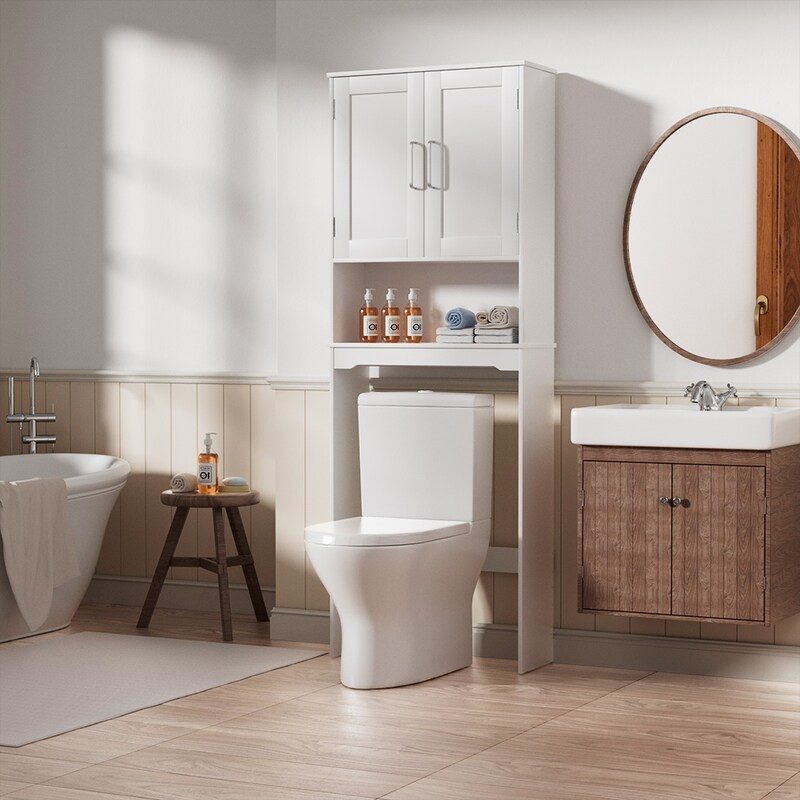
Freestanding cabinets straddle the toilet with legs on either side. They offer the most enclosed storage — typically two doored shelves plus an open shelf — which is ideal if you want cleaning supplies and spare toilet paper out of sight. Downsides: they are the bulkiest visually, and cheap ones wobble.
Open etageres are freestanding shelf towers with no doors. They look lighter and airier, keep daily items within grab-and-reach, and cost less. The trade-off is that everything is visible, so they demand tidiness — rolled towels and matching baskets look great; a jumble of half-used bottles does not.
Wall-mounted cabinets bolt directly to the wall with no legs touching the floor. They are the most stable, the easiest to clean around, and the best-looking in modern bathrooms. The trade-off is installation: you need to drill into studs (or use serious wall anchors), which rules them out for many renters.
Measure Before You Buy Anything
Three measurements decide everything:
- Tank height: Measure from the floor to the top of the closed tank lid. Standard tanks run 27 to 30 inches; comfort-height and one-piece toilets can reach 32. The unit's bottom shelf must clear the lid with room to lift it for... maintenance access.
- Width available: Measure wall to wall or fixture to fixture. Standard units are 24 to 27 inches wide; narrow bathrooms need the 20-inch "slim" models.
- Depth: Check that the unit's legs or body will not block the flush handle or crowd the bowl. Most units are 8 to 10 inches deep — fine for standard tanks.
Also note your toilet type. Wall-hung toilets and corner toilets do not work with standard straddle units; wall-mounted cabinets are the answer there.
What to Look For
Stability first. A top-heavy cabinet in a bathroom is a hazard. Look for units with anti-tip hardware (a strap or bracket anchoring the top to the wall) — use it, even in rentals, with a removable adhesive anchor. Cross-braces on the back add rigidity to freestanding models.
Materials that survive humidity. Powder-coated steel and sealed engineered wood handle bathroom moisture; raw particleboard swells and sags within a year. If the unit will hold damp towels, favor open or ventilated designs over sealed boxes.
Adjustable shelves. Bottles come in absurd heights. Shelves that adjust in one-inch increments mean the tall shampoo actually fits instead of living on top of the cabinet.
Weight capacity. A realistic load — towels, toilet paper packs, cleaning supplies — easily reaches 25 to 40 pounds. Check the per-shelf rating, not just the total, and keep the heaviest items on the lowest shelf.
Styling It So It Doesn't Look Like a Dorm Room
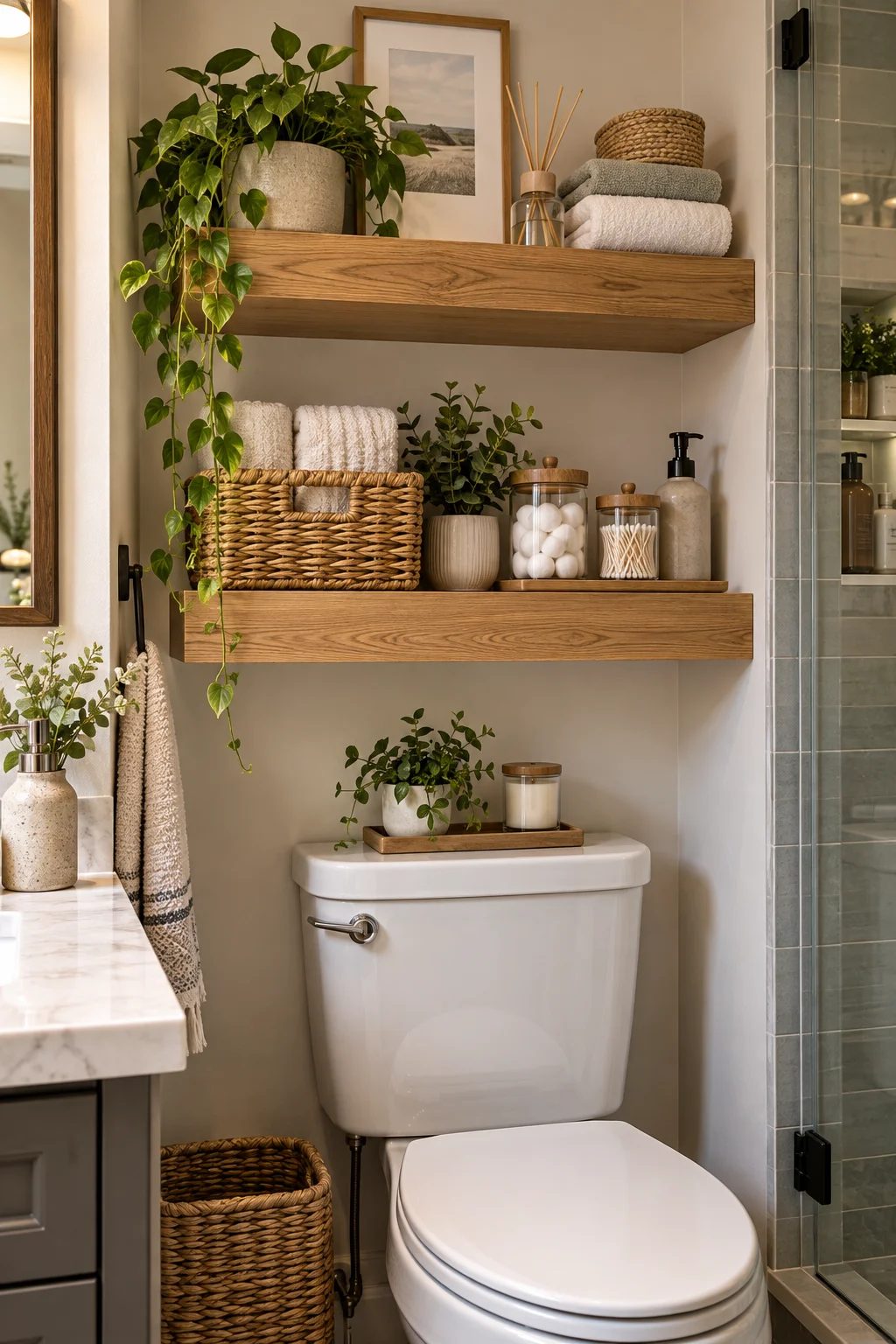
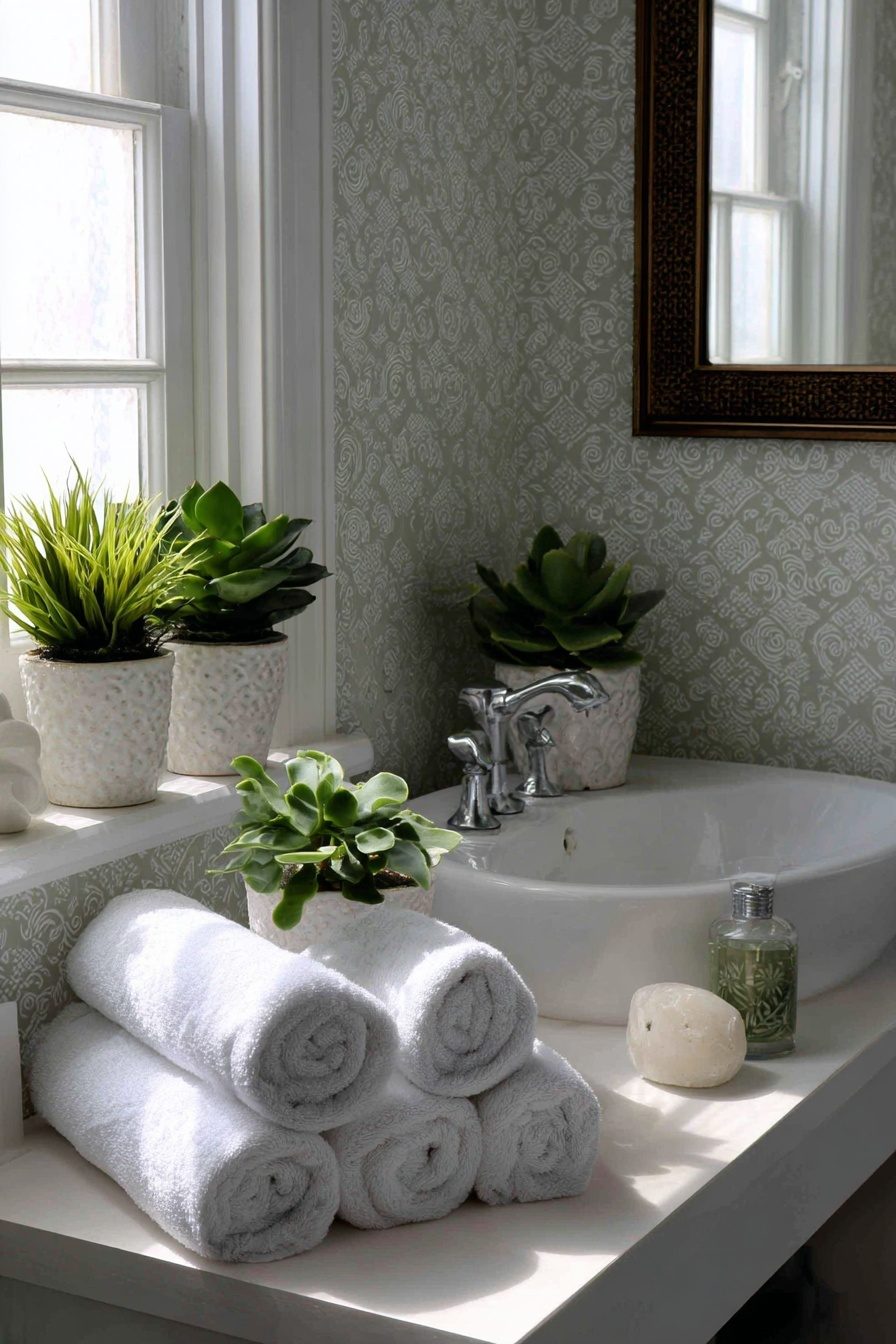
The difference between "storage" and "eyesore" is styling. Keep the top shelf decorative — a plant, a rolled towel stack, a candle. Use matching baskets or bins on one shelf to corral small items into visual calm. Fold towels in thirds, spa-style, instead of draping them. And leave some breathing room: a shelf packed edge-to-edge reads as clutter no matter how organized it is.
Common Mistakes
- Blocking the flush or the lid. The number one fit error. The unit must clear the tank lid fully — you need to lift it.
- Buying before measuring the tank height. Tall toilets plus standard units equals a return shipment.
- Skipping the anti-tip anchor. Especially with kids or in earthquake zones, an unanchored tall unit is genuinely dangerous.
- Storing the plunger on display. Over-toilet storage is prominent storage. Keep ugly necessities in the doored section or under the sink.
- Overloading the top shelf. Heavy items up high make the unit top-heavy and hard to reach. Top shelf is for light, pretty things.
Frequently Asked Questions
Are over-toilet storage units safe? Will they tip over? They are safe when anchored. Use the included anti-tip strap or bracket — it takes five minutes and eliminates the tip risk. Keep heavy items low, and never let children climb the shelves.
Can renters use over-toilet storage? Freestanding cabinets and etageres need no drilling at all — they just stand there. For the anti-tip anchor, a removable adhesive wall anchor works without damage. Only wall-mounted cabinets truly require drilling.
What should I store above the toilet? Towels, toilet paper, and daily toiletries on the reachable shelves; cleaning supplies and backstock behind doors or up high. Avoid anything you use with wet hands directly over the tank — drips happen.
How do I clean around and behind one? Choose a unit with open leg space so you can mop underneath, and pull it forward monthly to wipe the wall behind it. Wall-mounted cabinets eliminate this chore entirely.
Rosa's towels now live twelve inches from the shower instead of down the hall. Total cost: $60 and an afternoon. If your bathroom has a toilet — and it does — you have a linen closet waiting to happen. Measure the tank, anchor the unit, and style the top shelf. The hallway bin can retire.
Our Top Picks
LinenHaus Over-Toilet Cabinet with Doors
A classic freestanding cabinet with two doored shelves and an open bottom shelf — the most storage per square inch of the bunch.
- Doors hide toiletries and cleaning supplies
- Adjustable shelves fit tall bottles
- Assembly takes 30-45 minutes
OpenAir 3-Tier Bathroom Etagere
An open three-shelf etagere in powder-coated steel. Airy look, easy access, and sturdy enough for folded towels.
- Open shelves keep daily items reachable
- Slim profile suits narrow bathrooms
- Open design needs regular tidying to look good
SlimFit Narrow Over-Toilet Shelf
A compact two-shelf unit designed for small tanks and tight bathrooms where standard units overwhelm the space.
- Fits bathrooms under 5 feet wide
- Lightweight and easy to reposition
- Lower weight capacity than full-size units
AnchorSafe Wall-Mounted Over-Toilet Cabinet
A cabinet that bolts to the wall above the toilet — no legs, no wobble, and the floor underneath stays clear for cleaning.
- Most stable option, zero tip risk
- Floor stays open and easy to mop
- Requires drilling into wall studs
BathSpace Bamboo Over-Toilet Etagere
A mid-priced bamboo etagere with three open shelves. The warm wood tone softens white bathrooms and the open design keeps things reachable.
- Bamboo handles humidity well
- Open shelves keep daily items handy
- Open shelves show clutter; style them intentionally
HideAway Over-Toilet Cabinet with Barn Doors
A premium cabinet with sliding barn doors that conceal everything behind them. The farmhouse look works in both modern and traditional baths.
- Sliding doors need no swing clearance
- Conceals clutter completely
- Sliding track needs occasional cleaning
SteelFrame Industrial Over-Toilet Rack
A budget metal-frame rack with wood-look shelves. Sturdy, simple, and honest about what it is — great for first apartments.
- Very affordable and sturdy
- Assembles in about 20 minutes
- Wood-look shelves are laminate, not real wood
CurveTop Arched Over-Toilet Shelf
A mid-range shelf unit with an arched top rail that adds a soft architectural detail. Two shelves plus a towel bar cover the basics elegantly.
- Arched detail looks custom
- Built-in towel bar is genuinely useful
- Arched top limits what fits on the top shelf